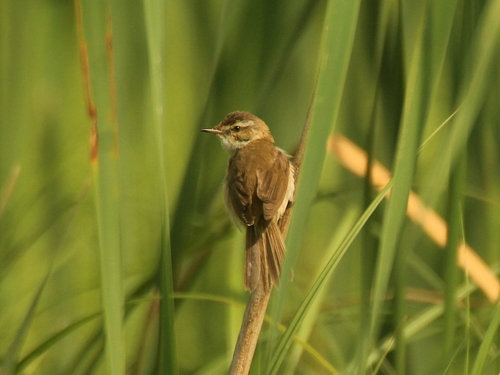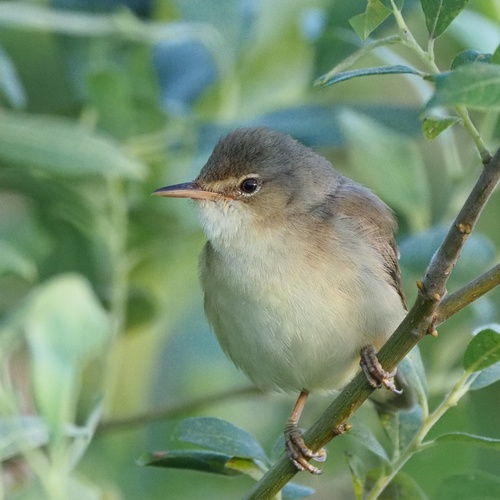
About Acrocephalus palustris (Bechstein, 1798)
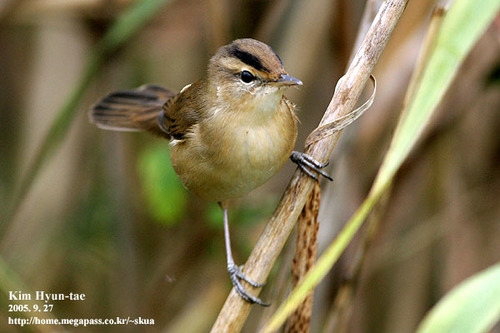
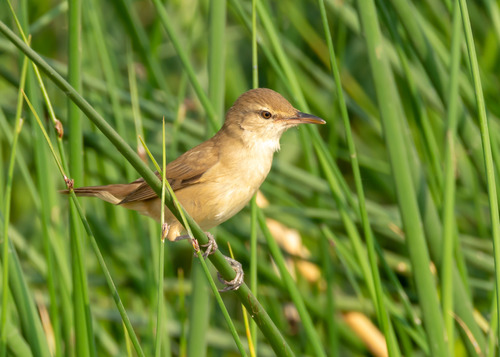
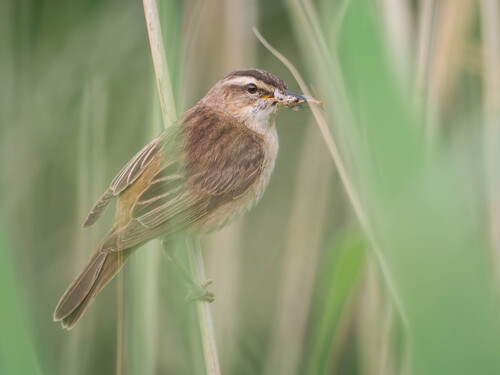
This species, the marsh warbler, is a medium-sized warbler. It closely resembles several other acrocephaline warblers, including the reed warbler, which shares similar wetland habitats and overlapping breeding ranges. Males can be easily identified by their distinctive song, as no other member of the genus mimics other birds to this significant extent. Marsh warblers also tend to avoid the pure reed stands that are the preferred habitat of reed warblers. The two sexes look identical in appearance. Occasional hybridisation between marsh warblers and both reed warblers and Blyth's reed warblers has been recorded. Marsh warblers are best known for the highly imitative song produced by males, and very occasionally by females. Each male marsh warbler includes imitations of a wide variety of other birds in its song. Most imitated species are other passerines, but calls from other types of birds such as waders, hornbills and pigeons have also been documented. On average, each male includes imitations of 75 other species in its song, with more African species mimicked than northern species. All song learning occurs during the summer after the bird hatches in Europe or Asia, and during its first winter in Africa. The bird does not add calls of birds heard in later years to its song repertoire. Females may produce a simple, non-imitative song, and a variety of other calls are also known for this species. The marsh warbler breeds in middle latitudes of Europe and western Asia, ranging from the English Channel east to approximately 70 degrees east. It mostly occurs in areas with a continental climate, but it currently or historically breeds in Britain and northern France as well. It is primarily a lowland bird, but can be found at altitudes up to 3000m in Georgia. In recent decades, it has expanded its range northward, with increasing numbers breeding in Scandinavia and north-west Russia. Singing males are occasionally recorded in Ireland, with the most recent sighting in 2017. In western Europe, the marsh warbler breeds mainly in dense rank vegetation growing on damp or seasonally flooded soils, and is especially attracted to tall herbaceous plants such as nettles, meadowsweet, and willowherbs, as well as young osiers and other low woody plants. It may breed on urban brownfield sites that have suitable vegetation, such as sites in Berlin, and also occasionally nests in arable crops. In the eastern part of its breeding range, it breeds on dry, shrub-covered hillsides, in open woodland, and also uses the damper habitats it favours in western Europe. The marsh warbler winters mainly in south-east Africa, ranging from Cape Province north to Zambia and Malawi. During the winter it uses a variety of well-vegetated habitats, from moist scrub to dense thickets and woodland edges, at altitudes up to 2400m. Marsh warblers typically migrate from Europe to Africa via the Middle East, with many crossing Arabia and arriving in Africa on Sudan's Red Sea coast. Adults usually leave their breeding grounds soon after their young become independent, with the juveniles following approximately two weeks later. On the Red Sea coast, most birds arrive between mid-August and mid-September, with adult numbers peaking in August and young bird numbers peaking in September. Birds generally spend most of the autumn in north-east or east Africa before continuing further south, arriving on their wintering grounds in December or January. In spring, marsh warblers leave their wintering grounds in March or April. They are believed to follow broadly the same migration routes they use in autumn. Birds breeding in south-east Europe, for example on the Black Sea coast, may arrive by late April. In most other parts of their breeding range, the majority of birds do not arrive until mid-May. On the western and northern edges of the range, such as in England, birds usually do not arrive until the end of May or early June. As a vagrant, this species has been recorded as far from its core range as Iceland and Madeira. The marsh warbler is mostly insectivorous, but it also eats some spiders and small numbers of snails. It generally gleans insects from vegetation, but sometimes catches prey on the ground or in mid-air. In autumn, small numbers of berries are consumed. No detailed studies have been conducted on this species' diet in Africa, though it is known that foraging techniques during winter are very similar to those used in other seasons.