About Acrobasis advenella (Zincken, 1818)
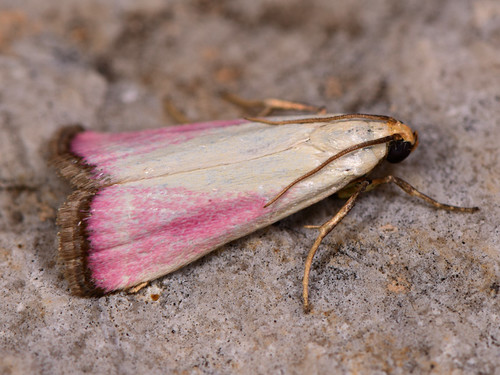
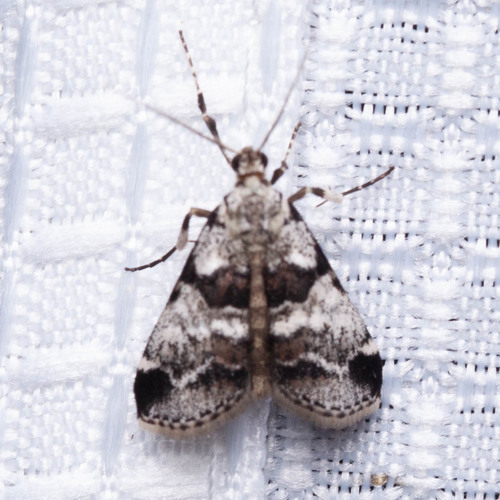
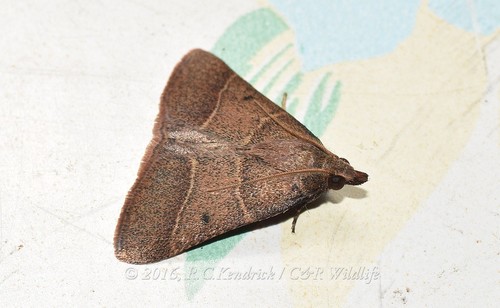
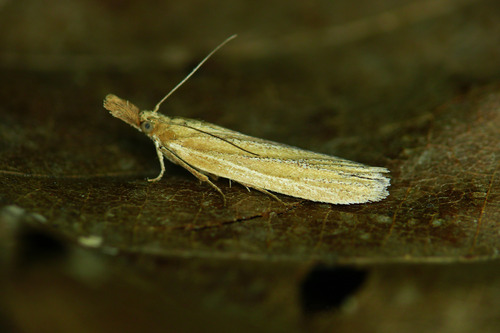
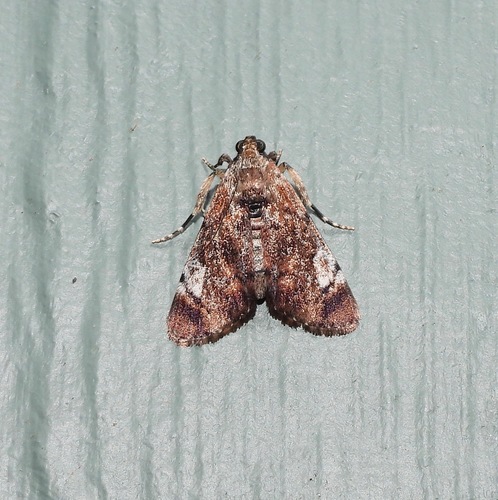
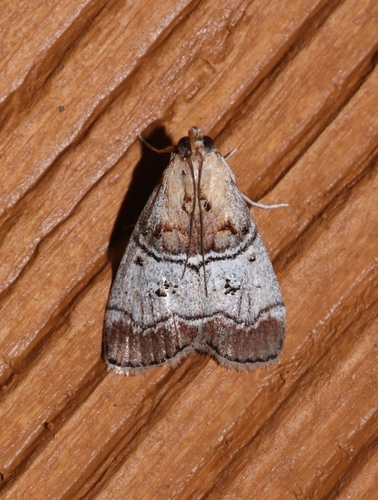
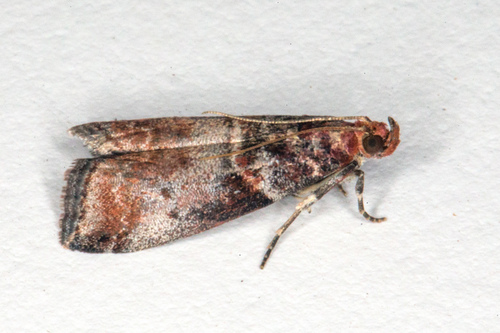
Acrobasis advenella is a species of snout moth in the genus Acrobasis. It was first described by Johann Zincken in 1818, and is found in most of Europe. This moth has an oligophagous diet, and feeds primarily on plants in the Rosaceae family, including the black chokeberry (Aronia melanocarpa). It causes significant damage to organic chokeberry farming, due to its widespread negative impact on both the quality and quantity of black chokeberry plants. The wingspan of Acrobasis advenella ranges from 17 to 24 mm. It is similar in appearance to Acrobasis suavella, but can be distinguished by differences in wing and body markings: the area on the dorsal half of the forewing that is enclosed by the sub-basal line and pre-median line is more sharply defined in A. advenella. In A. advenella, the red scales (mixed with black and white) that this enclosed area contains cover the basal wing area, thorax, and head to a lesser extent than in A. suavella, which has a grey head. The two species also differ in the position of their discal spots. Meyrick's description of the species reads as follows: Head and front of thorax ferruginous-reddish. Forewings brownish-ochreous, with no, or less, mixing or suffusion with reddish and dark fuscous; lines slender, obscurely whitish, first bent, preceded by a straight whitish line joining it near costa, space between them reddish suffused anteriorly with dark fuscous, second darker-edged; a broad fascia of grey-whitish irroration from costa before second line to lower extremity of first, including two obliquely placed darker discal dots; some whitish irroration towards termen. Hindwings fuscous. The larva is light green, with a purplish-pink subdorsal line, and a pale brown head. It lives in a silken gallery amongst flowers and leaves of hawthorn and Pyrus, and can be found in May and June. The adult moth flies in one generation from July to August. In addition to black chokeberry, larvae feed on Crataegus, Pyrus and Sorbus aucuparia.