About Acritoscincus trilineatus (Gray, 1838)
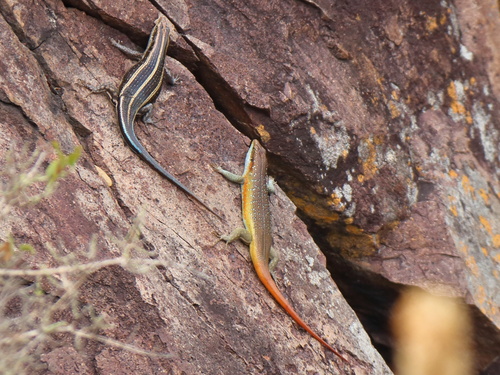
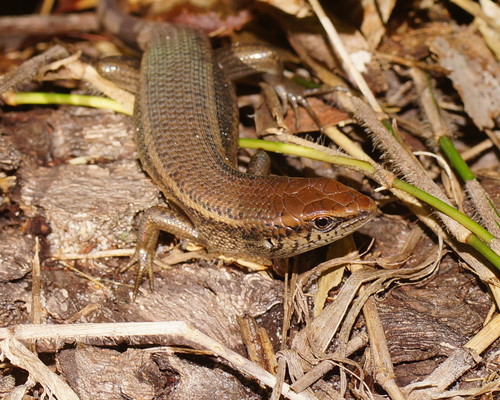
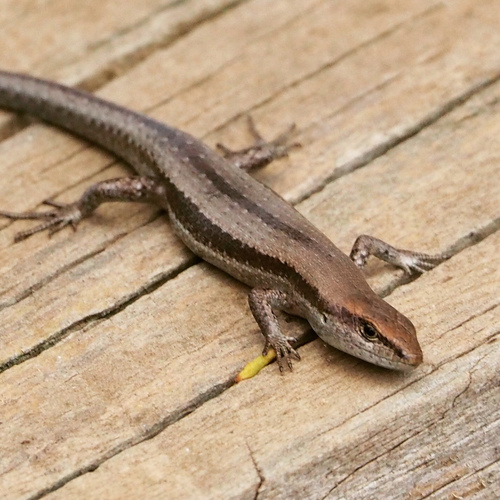
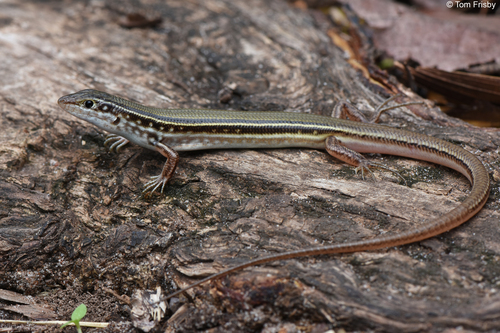
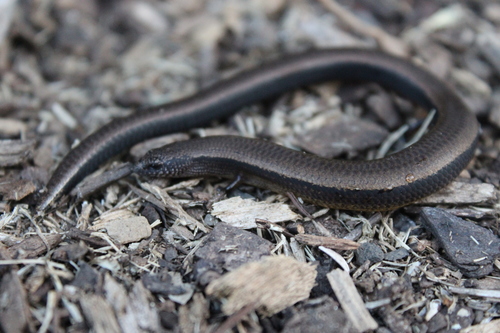
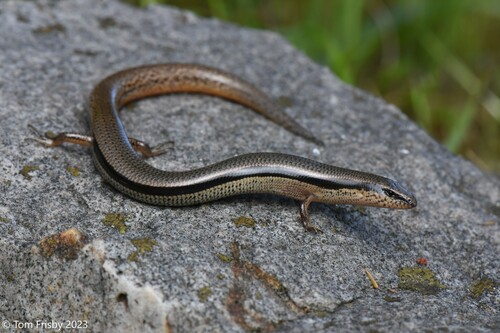
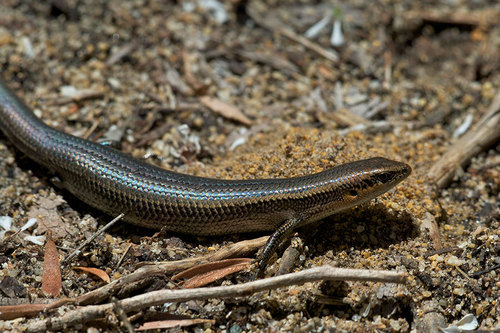
Acritoscincus trilineatus is a species of skink in the Acritoscincus genus, found in southwestern Australia, with an isolated small population near the tip of Eyre Peninsula in South Australia. Its overall body form is moderately stocky, it has smooth scales, and functional, strong limbs, each bearing five digits. The total length from head to tail is approximately 190 millimetres, and the snout to vent length measures 70 mm. Both males and females have a red patch on the throat; the intensity of this red patch varies, and it becomes more visible during the breeding season. The coloration of A. trilineatus is similar to that of Pseudemoia entrecasteauxii, the southern grass-skink, which shares a similar distribution range. This species inhabits cool, damp environments such as wetlands, and also occupies areas that are seasonally wet, as long as some native vegetation remains present in the habitat. It frequently basks in sunny spots in the early morning. All of its foraging activity, in which it seeks small insect prey, takes place during the day; it switches between feeding and basking depending on weather conditions. Its distribution range stretches from Israelite Bay to Gingin in southwestern Australia, and it also occurs on the offshore Rottnest Island. It is considered common across its entire range, and is regularly recorded in reptile fauna surveys. In 2017, the IUCN Red List assessed this species as least concern.