About Acmispon glaber (Vogel) Brouillet
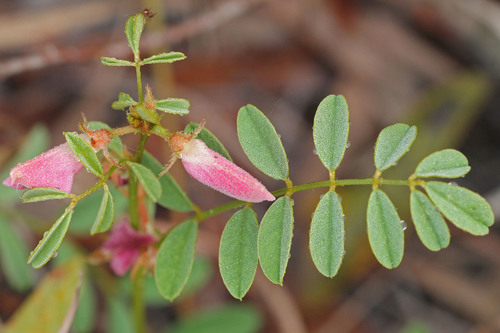
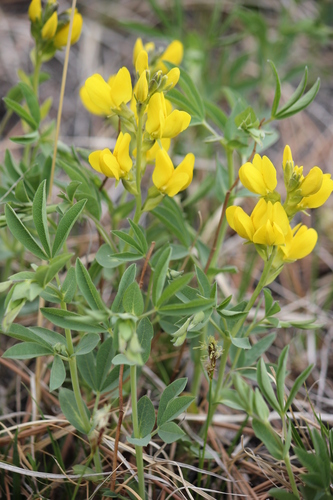
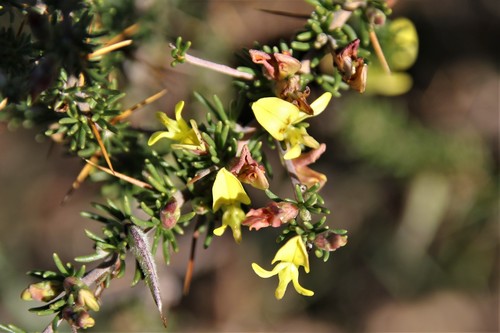
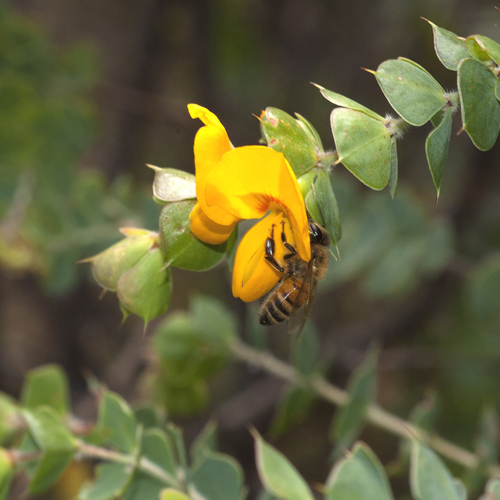
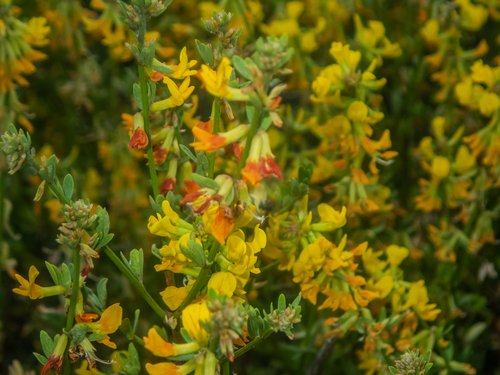
Acmispon glaber has green, erect, moderately branched stems, and bears small deciduous pinnate leaves made up of 3 to 6 leaflets. It blooms roughly between March and August. Its flowers are small, measuring 7–11 mm across, bilateral in shape, yellow, and arranged in clusters of 2 to 7 flowers that form in upper leaf axils. As flowers age, they turn reddish. The fruit is a curved legume pod that holds two seeds. In ecology, Acmispon glaber is a food source for many types of wildlife, including hummingbirds, bees, deer, and multiple butterfly larvae. The butterfly larvae that feed on it include Acmon blue, Afranius duskywing, Avalon scrub hairstreak, bramble hairstreak, funereal duskywing, northern cloudywing, and the now-extinct Xerces blue. In chaparral, particularly in the transition zone between coastal chaparral and coastal sage scrub, common associate plant species are California sagebrush and toyon. Landowners working to reintroduce the Palos Verdes blue butterfly are required to maintain enough Acmispon glaber plants to provide shelter for the butterflies. Mature Acmispon glaber plants are typically killed by fire, because they have thin epidermal tissue and broom-like foliage that burns easily. However, fire scarifies the species' seeds, which germinate readily in the first rainy season following a fire. For the first 2 to 3 years after a fire in sage scrub habitat, the plant community is dominated by herbaceous annuals and short-lived herbaceous perennials. After this initial 2–3 year period, Acmispon glaber generally becomes the dominant species. Between 5 and 10 years after the fire, it is gradually replaced by long-lived shrubs. Because of the species' seed adaptation to fire, Acmispon glaber benefits from heat scarification when grown in cultivation, and heat treatment significantly increases its germination rate. Acmispon glaber var. brevialatus is endemic to California.