About Acleris literana (Linnaeus, 1758)
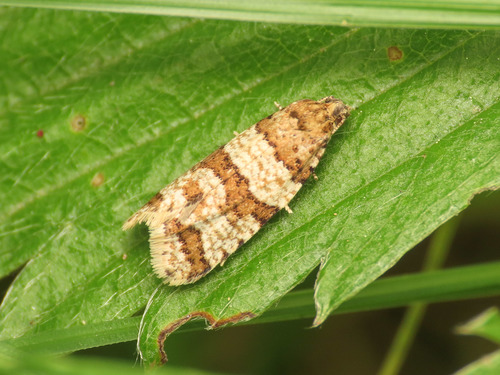
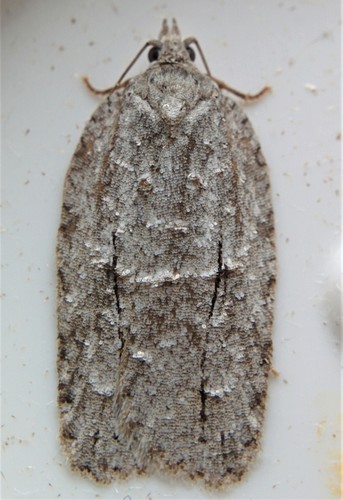
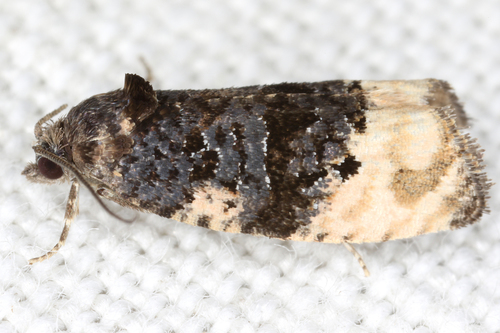
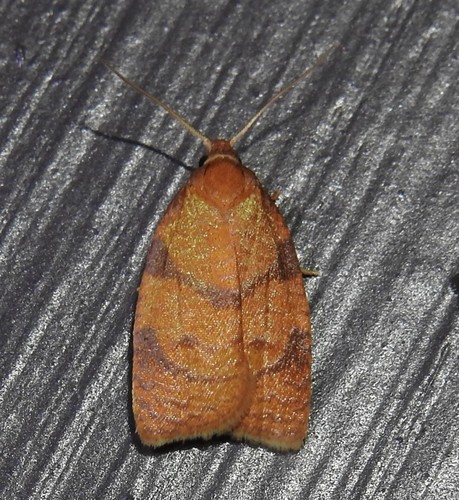
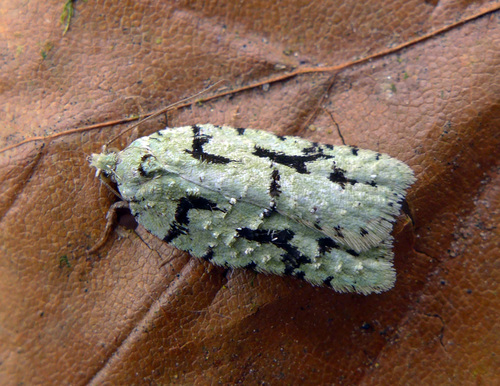
Acleris literana, commonly known as the sprinkled rough-wing, is a moth species belonging to the family Tortricidae. This species was first described by Carl Linnaeus in 1758, in the 10th edition of his work Systema Naturae. It is distributed across most of Europe and the Near East. The thorax of this moth has a prominent posterior crest. The forewings are oblong, and are typically pale green; they are sometimes mixed with or marked by fine grey streaks (strigulated), and have numerous tufts of raised scales. The forewings usually bear a number of irregular scattered black marks, and sometimes have ochreous spots or color suffusions in the disc, or suffused blackish spots. The hindwings are grey, and become darker toward the apex. Acleris literana is a highly variable species, and many distinct forms have been described, but all forms share the same characteristic pattern: blackish and whitish markings on a pale green base color. Julius von Kennel has published a full, detailed description of the species. The wingspan of Acleris literana ranges from 18 to 21 mm (0.71–0.83 in). Adult moths are active on the wing from August to September; they overwinter as adults, and become active again from April to May the following year. The larvae of Acleris literana feed on plant species belonging to the genus Quercus. The larvae live between leaves that they spin together with silk.