About Acleris hastiana (Linnaeus, 1758)
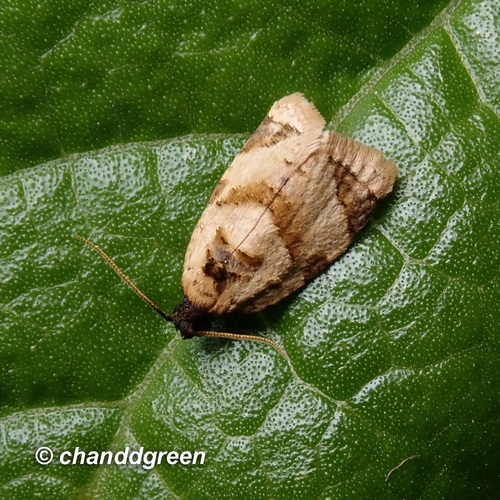
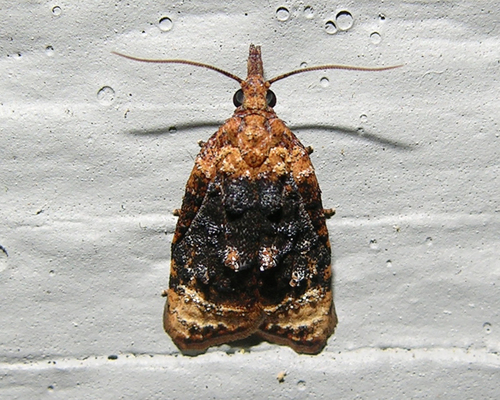
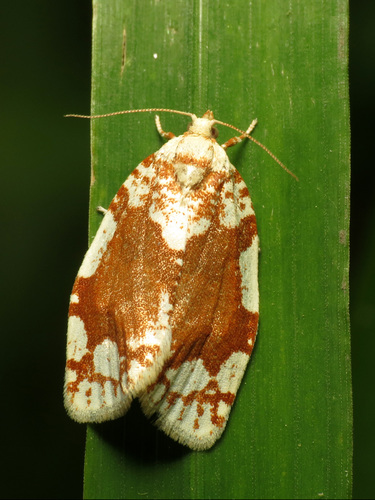
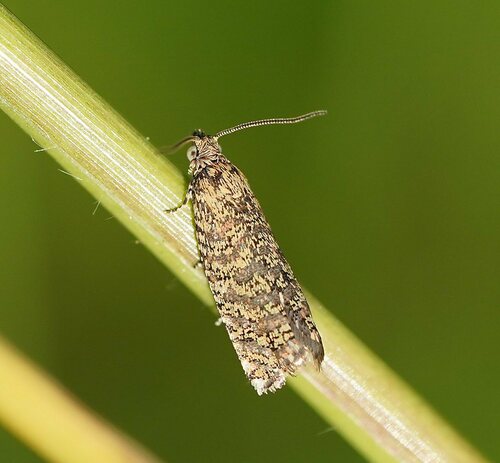
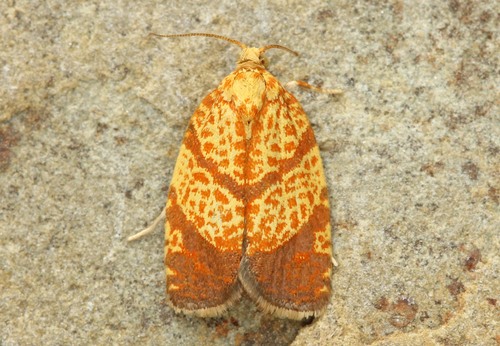
Acleris hastiana is a moth of the family Tortricidae, first described by Carl Linnaeus in 1758. Its species epithet was chosen to honor Linnaeus's student, Finnish physician Barthold Rudolf Hast, who studied natural sciences under Linnaeus at Uppsala University. This species is found across Europe, northern Iran, Kazakhstan, Ala Tau, central Siberia, Irkutsk, the Amur region and China. In North America, it occurs from the north-eastern United States across southern Canada to British Columbia, and extends south along the Pacific Coast to California. The wingspan of adults is about 20 mm. Its thorax has a strong longitudinal crest. Forewings are oblong, and can be grey, ochreous-brown, or dark purplish-fuscous; tufts on forewings are slight. Veins are sometimes pale, and are seldom broadly whitish-ochreous. The edge of the basal patch is sometimes marked with dark color. The central fascia and costal patch are confluent, darker or red-brown, and often obsolete. Sometimes there is a white subcostal streak edged beneath with blackish, an ochreous and ferruginous median longitudinal streak, or a broadly whitish-ochreous dorsum. Hindwings are light grey, with somewhat darker strigulation. Larvae are pale green; the head and second thoracic plate are often tinged brownish, and sometimes black. This is a very variable species, with dozens of named forms and many intermediate types. This variability has resulted in over 125 published synonyms for the species. Some forms look very similar to Acleris cristana, so certain identification requires microscopic examination of the genitalia. Adults are on the wing from June to July, and again in August. Most of the species' range has two generations per year. In Europe, larvae feed on Salix species. First instar larvae bore into buds, while later instars feed in spun leaves. Other recorded food plants for larvae are Vaccinium, Andromeda, Ceanothus, Gaylussacia, Quercus and Rhododendron.