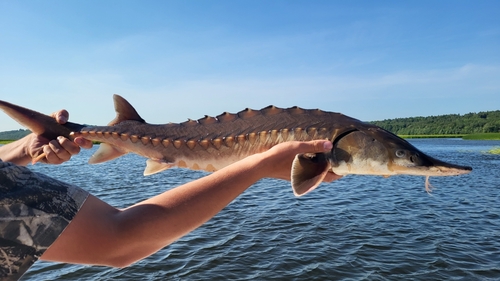
About Acipenser oxyrinchus Mitchill, 1815
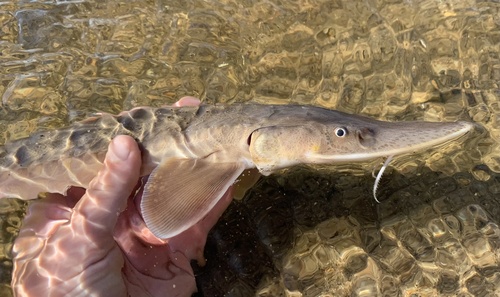
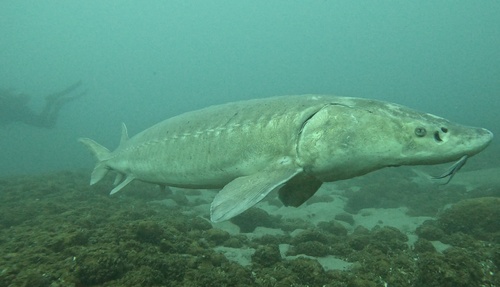
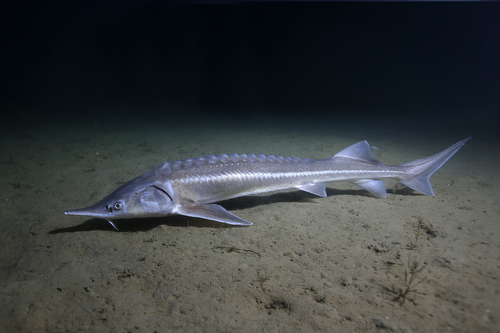
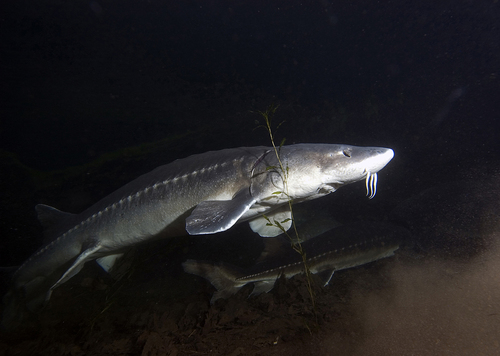
The Atlantic sturgeon, scientifically named Acipenser oxyrinchus, is a large sturgeon species in the family Acipenseridae, native to both sides of the Atlantic Ocean and its connected river basins. Like other sturgeon, it is sometimes considered a living fossil. Its main range lies along eastern North America, stretching from New Brunswick, Canada, down to the eastern coast of Florida, United States. A small, highly endangered separated population exists in Europe’s Baltic region, which today survives only through an ongoing reintroduction project. When European settlers first arrived in North America, Atlantic sturgeon were extremely abundant. Populations have since declined sharply due to overfishing, water pollution, and barriers to habitat such as dams. Currently, the species is classified as threatened or endangered across much of its original range, and is even locally extinct in many former habitats. Adult Atlantic sturgeon can live up to 60 years, reach 15 feet (4.6 meters) in length, and weigh over 800 pounds (360 kilograms). Young Atlantic sturgeon under six years old remain in the brackish water of their birth habitat before moving out into the ocean. At this juvenile stage, they typically measure between 3 and 5 feet (0.91 to 1.52 meters) long. In regions where both Atlantic sturgeon and shortnose sturgeon live, adult shortnose sturgeon have been confused with immature Atlantic sturgeon for centuries, and this confusion still occurs today. Once mature, Atlantic sturgeon travel upstream into rivers to spawn. In a single spawning year, a female can lay between 800,000 and 3.75 million eggs, and females only spawn once every two to six years. After spawning, females immediately travel back downstream. Males may stay upstream after spawning until falling water temperatures force them to return downstream, and eventually move back to the ocean to stay near the coast. Atlantic sturgeon are known for their occasional leaping behavior, where the fish launches itself fully out of the water with great force. This leap can be dangerous to any person or object that happens to be in its path. The exact reason for this leaping is still unknown, though some researchers hypothesize that it acts as a form of group communication.