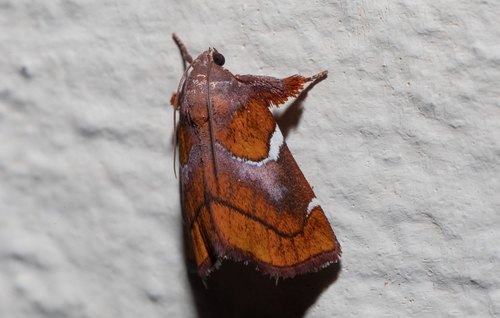
About Achroia grisella (Fabricius, 1794)
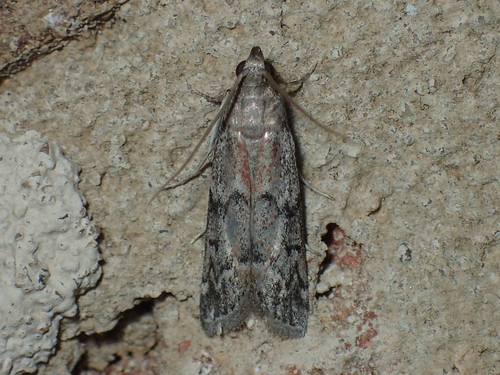
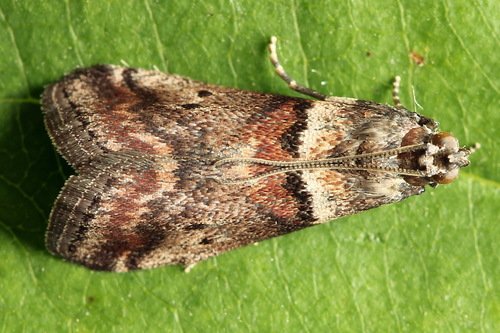
The lesser wax moth, scientifically named Achroia grisella, is a small moth in the subfamily Galleriinae of the snout moth family Pyralidae. This species was first formally described by Johan Christian Fabricius in 1794. Adult lesser wax moths reach roughly 0.5 inches (13 mm) in length, with a distinct yellow head and a silver-grey or beige body. This moth is common across most of the world, only absent from regions with cold climates. Human activity has helped its global geographic spread, as humans have accidentally introduced the species to many regions. The mating systems of the lesser wax moth are well-studied, because they rely on sound production. Male lesser wax moths generate ultrasonic pulses to attract females. Females search for the most attractive males, making their choice based on the characteristics of the male’s sound. Although males also produce sex pheromones, male sound-based calling is more effective at attracting mates. Lesser wax moths feed on unoccupied honey bee combs, so they are considered pests by bees and beekeepers. That said, unoccupied honey combs can hold harmful pathogens that damage nearby insects. When the moths eat these combs, they reduce the harm these pathogens cause to local insects, and leave a clean space for other organisms to live. This species is confirmed or suspected to live across most of Africa (including Madagascar), Australia, Europe (particularly in more remote areas like Greece), North America, parts of the Neotropics (including Colombia, Jamaica, Puerto Rico and Trinidad), the Bengal region, Japan, Sri Lanka, New Zealand, and the Marquesas Islands and Tahiti in French Polynesia.