About Acharia stimulea (Clemens, 1860)
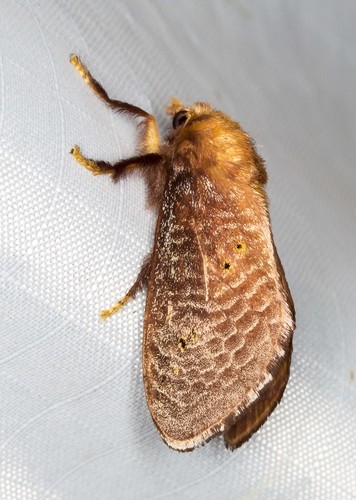
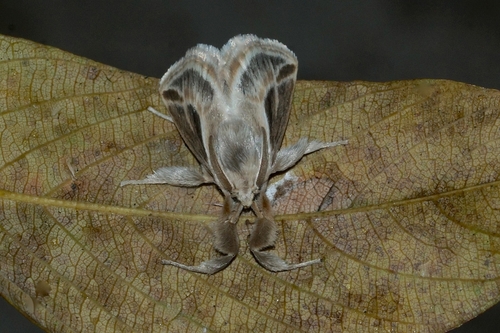
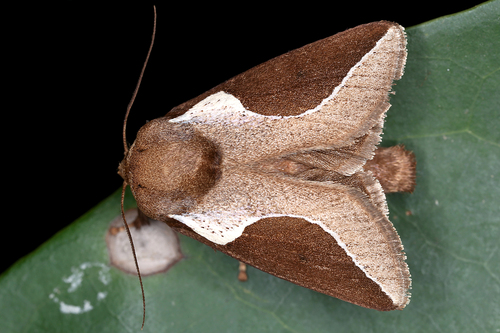
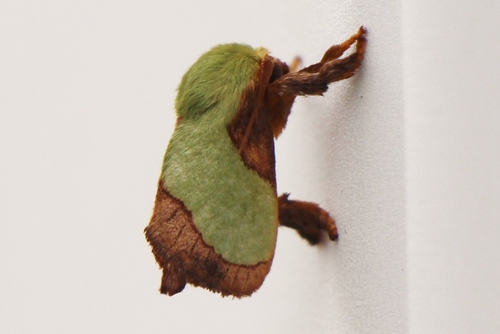
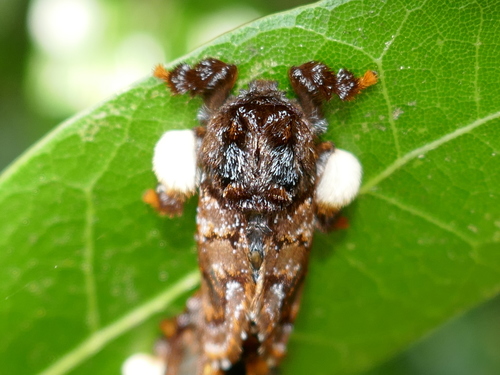
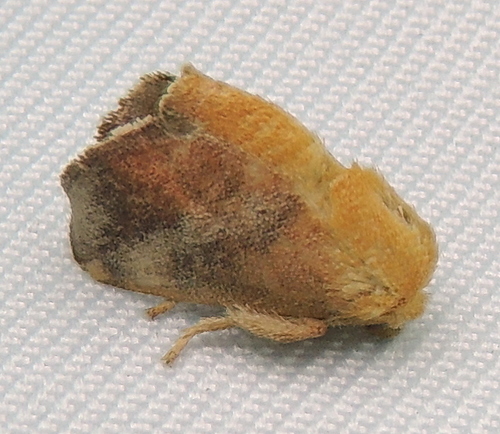
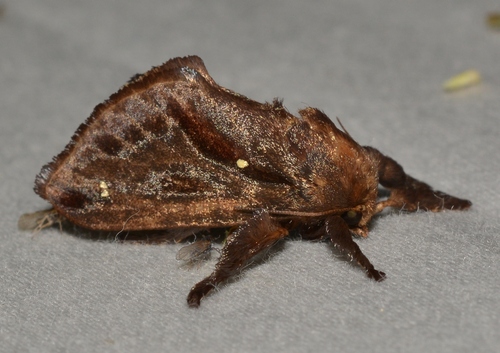
Acharia stimulea, formerly named Sibine stimulea, is a moth species in the family Limacodidae, best known and most recognizable for its larval stage. During mid and late instars, the developmental phase between two molting events, Acharia stimulea larvae have a characteristic lime-green color along the top of their body. Their most identifiable feature is a central dark marking, outlined in white and black, that resembles a saddle. The bright green body contrasts with the dark anterior head region and posterior rear end. Along with the fringe of the body, these dark regions bear tubercles topped with hollow spines; when broken, these spines release an irritating toxin that acts against predators. Like other members of Limacodidae, this species relies on slug-like anatomy for movement. Just as in slugs, Acharia stimulea larvae use suckers and mucus to roll and adhere to surfaces. After pupation, adult Acharia stimulea lose all their bright larval coloration, and develop velvety dark brown anterior wings and cream-colored posterior wings. Acharia stimulea is native to North America. It is most commonly found in warmer climates such as the Yucatan Peninsula, Mexico, but can also survive in the slightly cooler temperatures of the eastern United States. Adult moths are active fliers during warm months: this can be year-round in the southern portion of the range, or between July and August in the United States. Acharia stimulea is polyphagous, meaning it does not depend on a single plant species to survive, though it tends to favor palms. The life cycle of Acharia stimulea proceeds through full metamorphosis. Adult Acharia stimulea mate as early as two days after emerging from their cocoon, and mating copulation can last up to 24 hours. In the wild, mating takes place on warm nights, occurring between February and July in the United States. After mating, the female selects a host plant and lays her eggs on the underside of a leaf. She visits the eggs frequently until they successfully hatch.