About Aceria nervisequa (G.Canestrini, 1891)
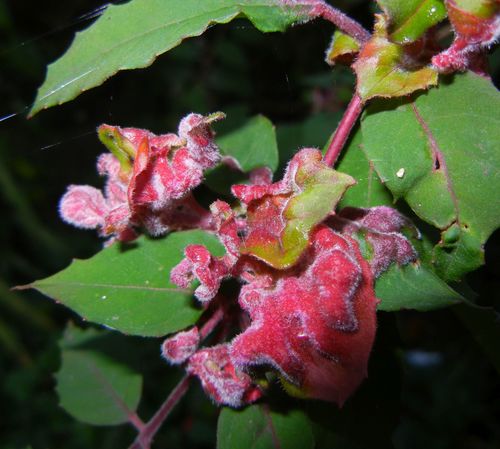
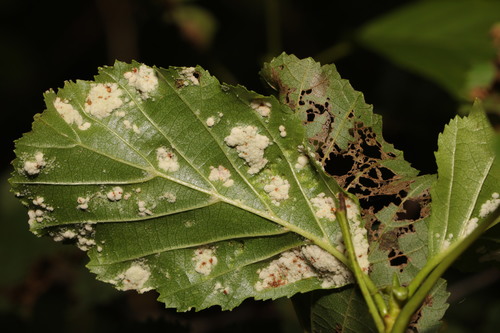
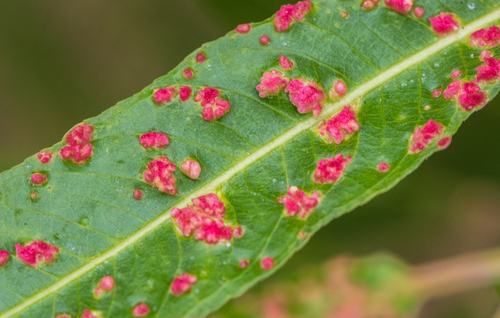
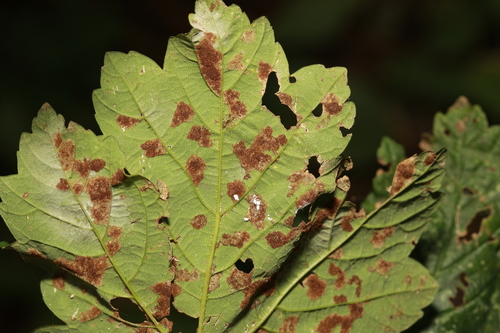
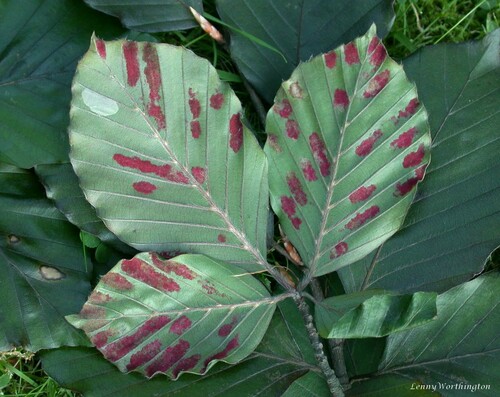
Aceria nervisequa (first described by G.Canestrini in 1891) causes felt-like galls called erinea on the underside of leaves of three beech taxa: European beech (Fagus sylvatica), copper beech (Fagus sylvatica purpurea), and Crimean beech (Fagus × taurica). The erinea start out white, then turn pink and eventually brown by autumn. On copper beech, these erinea are pink, bright crimson, or purple. The mites also produce erinea along the veins on the upper side of leaves. These upper-side erinea were once incorrectly attributed to a separate species named Aceria faginea. The mites overwinter in bark crevices or inside host plant buds. This species is distributed across Europe, with confirmed records in Bosnia and Herzegovina, Croatia, the Czech Republic, Denmark, France, Germany, Great Britain where it is common, Ireland, Italy, Kosovo, Latvia, Luxembourg, Montenegro, the Netherlands, North Macedonia, Poland, and Serbia.