About Aceria chondrillae (Canestrini, 1890)
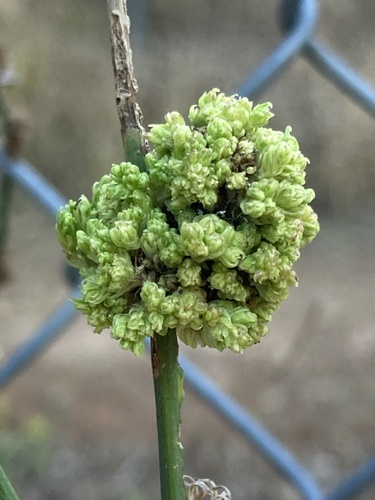
At maturity, Aceria chondrillae mites are yellowish-orange. Females measure 0.19 to 0.26 mm in length, while males are slightly smaller, ranging from 0.165 to 0.180 mm. Males and females are externally similar except for their genitalia. Larvae are smaller than adult mites, can be identified by their humpback shape, and have no external genitalia. Eggs are soft and round, with a diameter of 0.04 mm; they are colorless when first laid, and turn light orange as they develop. The growth and development of A. chondrillae depends on environmental and climatic conditions, and the species has an average generation cycle of 10 days. Aceria chondrillae is commonly used as a biological control agent against the perennial herb skeleton weed (Chondrilla juncea), which is found in Europe, North America and Australia. It was introduced to Australia in 1971 as part of a program to suppress skeleton weed in regions where the weed dominates the landscape.