About Acer monspessulanum L.
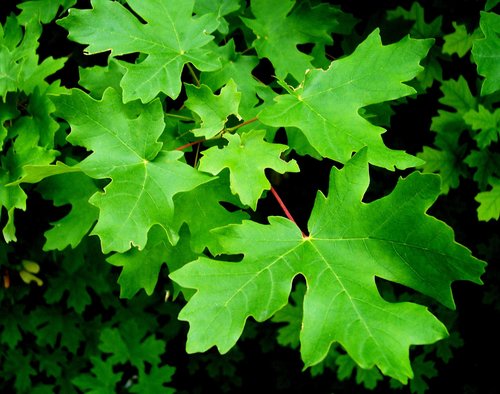
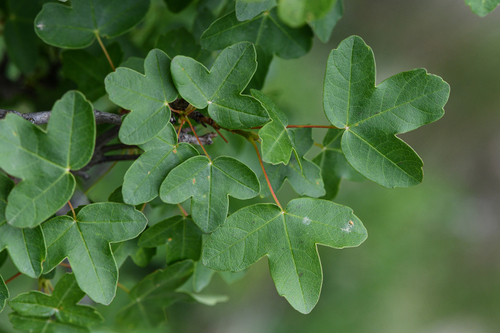
Acer monspessulanum L. is a medium-sized deciduous tree or densely branched shrub. It typically grows 10 to 15 metres (33 to 49 ft) tall, and rarely reaches as high as 20 m (66 ft). Its trunk can grow up to 75 centimetres (30 in) in diameter. Young trees have smooth, dark grey bark, which becomes finely fissured as the tree ages. It is most easily distinguished from similar maple species by its small three-lobed leaves: each leaf is 3–6 cm long and 3–7 cm wide, glossy dark green, sometimes slightly leathery, with a smooth margin and a 2–5 cm petiole. The leaves drop very late in autumn, typically in November. Its flowers grow in spring, forming pendulous yellow to white corymbs that are 2–3 cm long. Its winged samaras are 2–3 cm long, with rounded nutlets. Among maples that are not endemic to Japan, Acer monspessulanum (along with the similar species Acer campestre) is popular with bonsai enthusiasts. Its small leaves and naturally shrubby growth habit respond well to bonsai techniques that encourage leaf reduction and increased branch ramification. Bonsai created from this species look different from those made from maples like Acer palmatum, which have frillier, more translucent leaves. Outside of use for bonsai, Acer monspessulanum is rarely cultivated outside of arboreta. In the United States, mature specimens can be seen at the Arnold Arboretum in Boston, Massachusetts, and at the Fort Worth Botanic Gardens in Fort Worth, Texas. A specimen is also held in the arboretum of the Montreal Botanical Gardens.