About Acanthurus nigrofuscus (Forsskål, 1775)
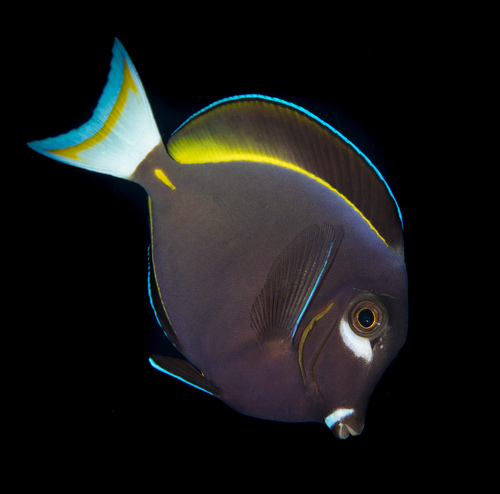
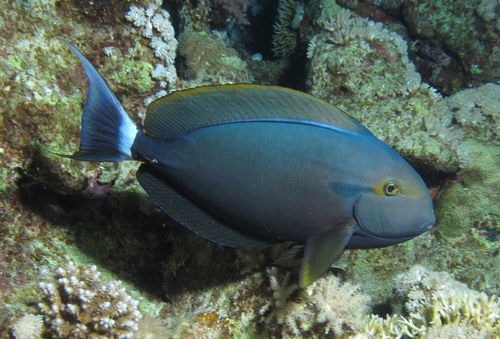
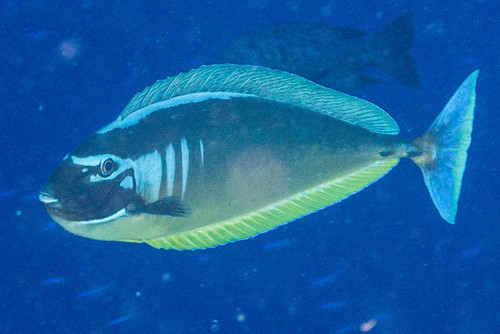
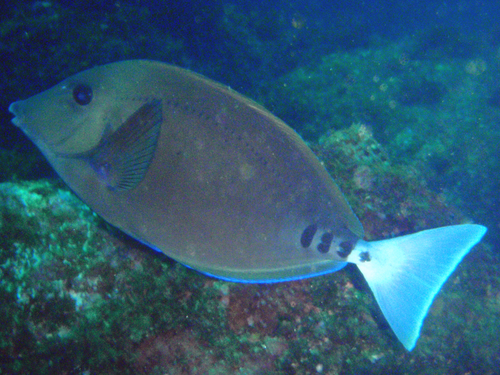
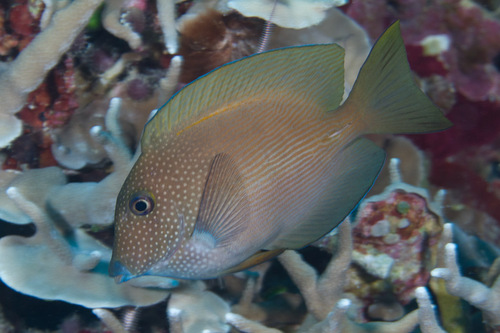
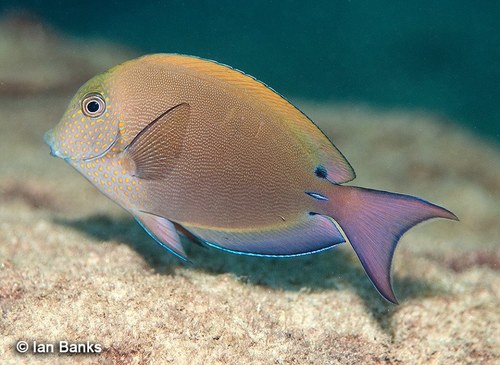
Acanthurus nigrofuscus, formally described by Forsskål in 1775, has 9 spines and between 24 and 27 soft rays supporting its dorsal fin, while its anal fin is supported by 3 spines and 22 to 24 soft rays. The dorsal profile of its head is slightly humped. Its overall body colour varies from brown to purplish to bluish-brown, marked with small orange spots on the head and breast. There are small black spots at the base of both the dorsal and anal fins, and these fins have a pale blue margin. The spine on the caudal peduncle sits within a patch of black pigment. Sinuous horizontal lines of small blue dots may be present or absent on the body. This species has a maximum published total length of 21 centimetres (8.3 inches). Acanthurus nigrofuscus has a wide Indo-Pacific distribution, ranging from the coast of eastern Africa, north to Israel’s Red Sea coast and south to the Aliwal Shoal in South Africa, across the Indian Ocean and eastward to the Pitcairn Islands and Hawaii, north to southern Japan, and south to New South Wales. This is a numerous, common species of surgeonfish that lives in small schools on sheltered coral and rocky reefs, frequently around isolated rocky reefs, at depths down to 25 metres (82 feet).