About Acanthurus chirurgus (Bloch, 1787)
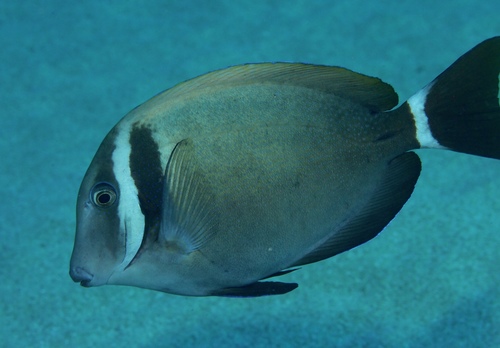
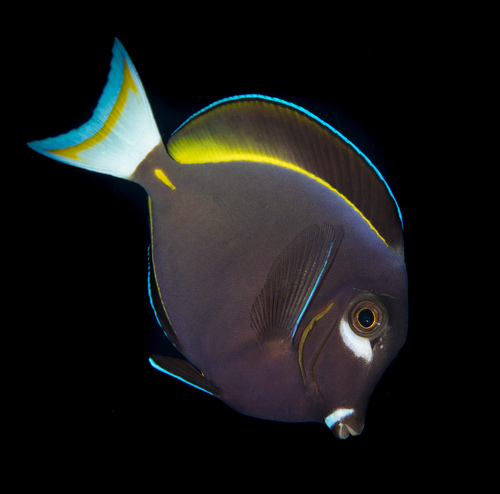
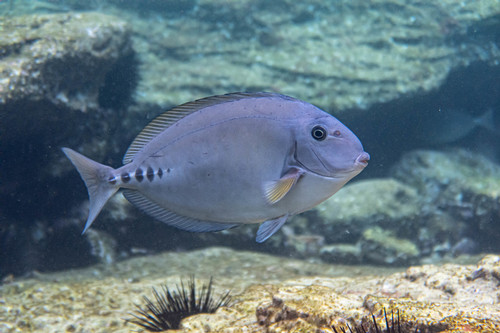
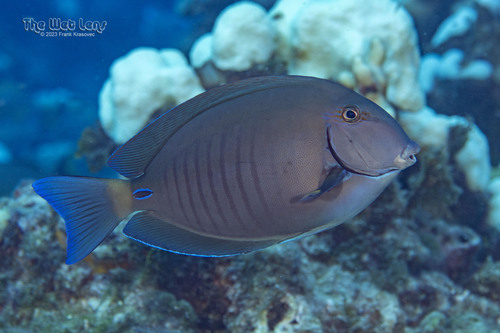
The doctorfish tang, Acanthurus chirurgus, reaches a maximum size of 39 centimeters (15 inches) in length and 5.1 kilograms (11 pounds) in weight. It gets its common name from special blade-like structures called "scalpels" located on either side of its caudal peduncle. The fish uses these "scalpels" when fighting with other doctorfish, and also as a defense against predators. Its body color generally ranges from blue-gray to dark brown, and it always has 10 to 12 faint vertical bars along its sides. The edges of its caudal, dorsal, and anal fins are blue, and a faint blue ring encircles each "scalpel" on the caudal peduncle. A solid black color morph of this species exists, though it is not a distinct subspecies or a region-specific mutation, and has only been documented a small number of times. This species usually lives among rocky outcrops and coral reefs. Its native range covers the Atlantic Ocean, from Massachusetts in the north to Brazil in the south, and also includes the tropical west coast of Africa. Records of this species from West Africa may actually be misidentifications of the related species Acanthurus monroviae. Two individual records of Acanthurus chirurgus have been documented in the central Mediterranean Sea, once in 2012 and once in 2016.