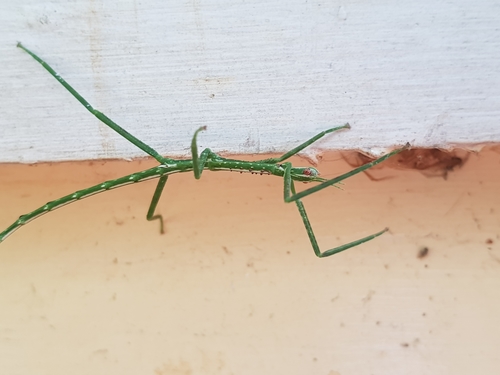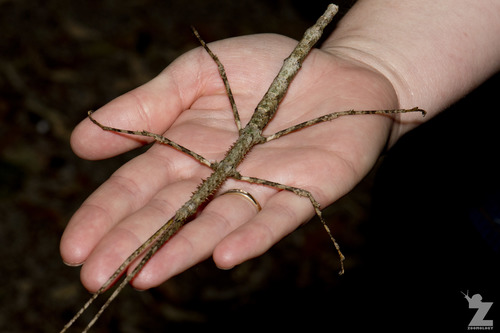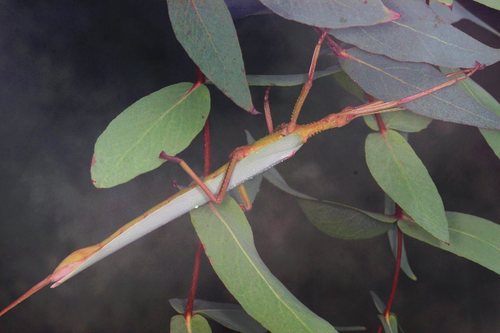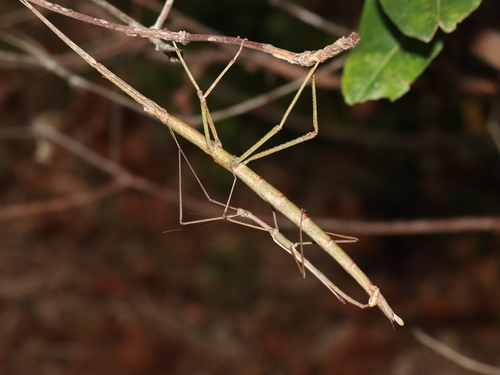
About Acanthoxyla inermis Salmon, 1955
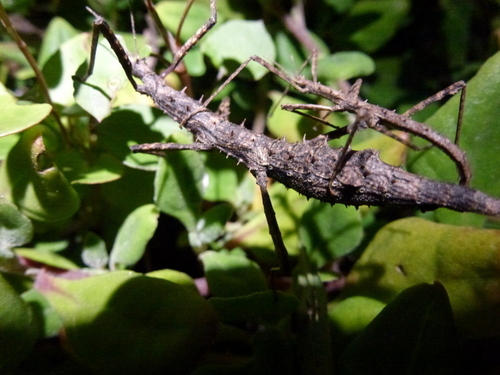
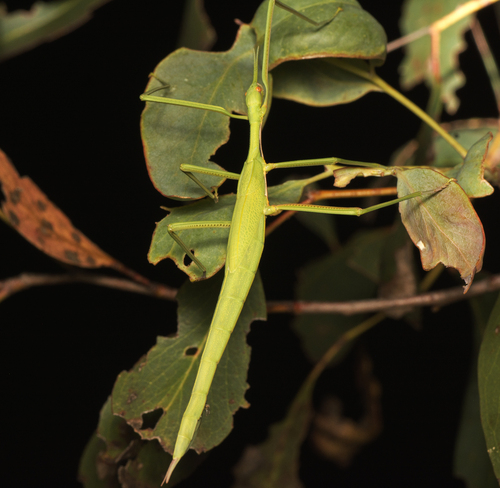
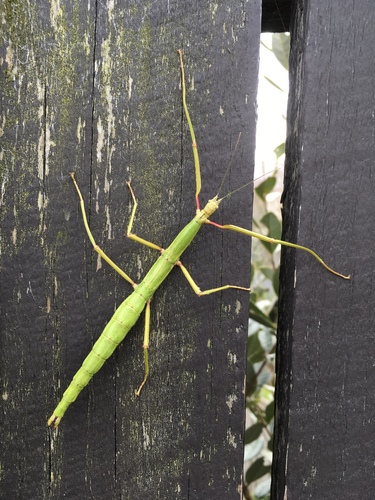
Acanthoxyla inermis, commonly called the unarmed stick insect, was first described by John Salmon in 1955. It is classified in the genus Acanthoxyla, family Phasmatidae, and no subspecies of this species are currently recognized. This insect is native to New Zealand, but was accidentally introduced to Great Britain, where it has established a stable wild population. In the UK, it is the longest insect ever observed, and also the most common of the stick insect species that have become established on the island. As a member of Phasmatidae, A. inermis grows through incomplete metamorphosis via a series of moults. Individuals typically moult between five and ten times from hatching through to mature adulthood. The species has a four-stage life cycle. Adults lay their eggs, called ova, either by dropping them to the ground or depositing them in a suitable substrate. Ova are typically hardy, able to withstand falling from height and the cold winter conditions they often experience. The egg stage can last anywhere from as little as two weeks to more than 18 months. After hatching, nymphs quickly move to find appropriate vegetation they can climb, to access leaf food and the camouflaged safe habitat they are adapted for. Nymphs go through a series of moults to grow, since their hard exoskeleton cannot expand; moulting also allows them to regenerate limbs they lost through autotomy. Nymphs usually eat their shed skin after each moult. The sub-adult stage is the period before the final moult that produces a full reproductive adult, and it is a short stage of the life cycle. The adult stage generally lasts from six months to one year, and adult life is focused mostly on feeding and reproduction. A. inermis spends most of its life on trees, feeding on leaves while staying hidden in relative safety. This species appears to reproduce entirely asexually; females drop eggs while feeding, with no need to move or compete for mates. All observed reproduction of A. inermis is asexual via parthenogenesis, so the species is considered obligately parthenogenic. Unlike facultatively parthenogenic stick insects that can reproduce both sexually and asexually, only female A. inermis are produced. Females generate clones of themselves by recombining their own egg cells. Because populations can persist this way, males are functionally redundant. This reproductive strategy allows a single female A. inermis to establish an entire new breeding population. This is exactly what happened when timber was transported to the United Kingdom in the 1920s; since its arrival, A. inermis has become the most common stick insect in Great Britain, which has no native phasmatodean species, but hosts several introduced invasive stick insect species like the unarmed stick insect. Obligate parthenogenesis leaves A. inermis vulnerable to environmental change, because there is no mixing of genetic code between individuals, which reduces overall genetic diversity and eliminates opportunities for DNA repair. However, the entire Acanthoxyla lineage originates from interspecific hybridisation, so individual A. inermis have high allelic diversity. The whole genus Acanthoxyla formed through hybridisation, and its many parthenogenetic lineages are morphologically distinct, and most are triploid. Because of parthenogenesis, the biological species concept cannot be used to identify species within this group. In 2016, a single male A. inermis specimen was observed in the United Kingdom. While many Acanthoxyla lineages are triploid, Acanthoxyla inermis is diploid, so males can occasionally develop if one X-chromosome is lost during egg production.