About Acanthosoma haemorrhoidale (Linnaeus, 1758)
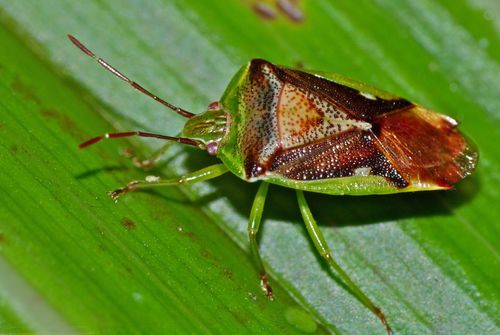
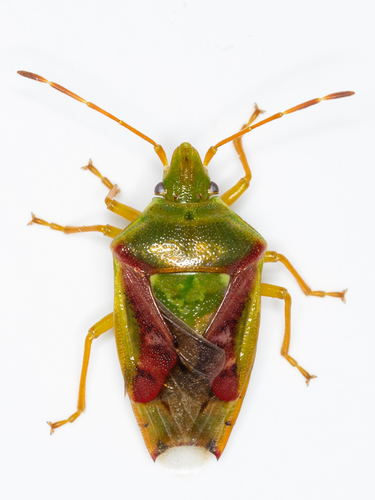
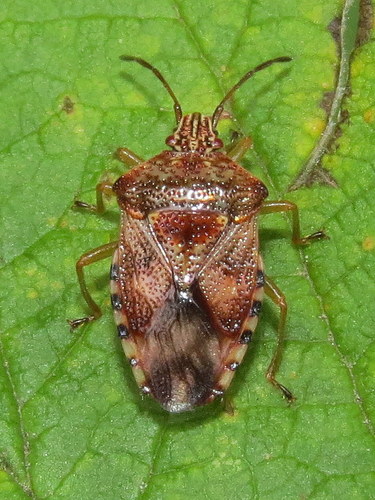
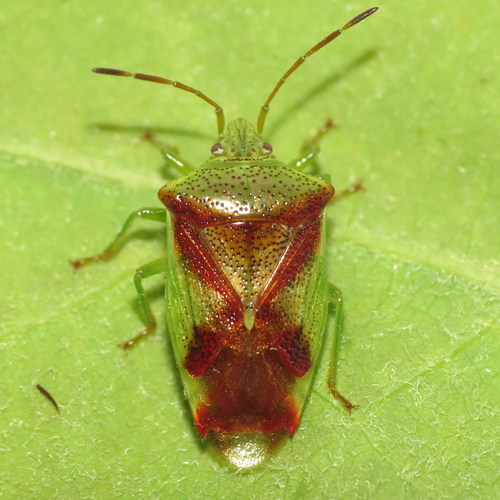
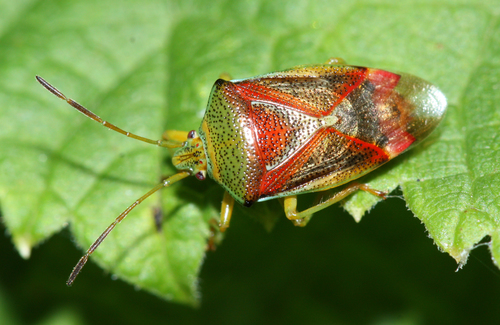
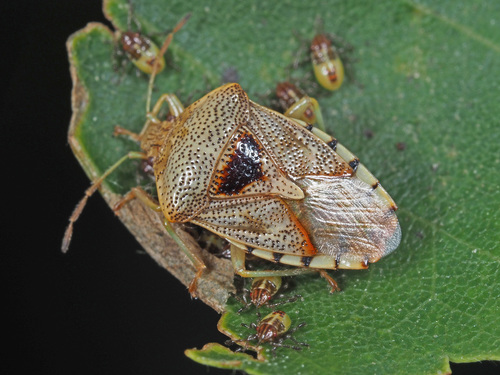
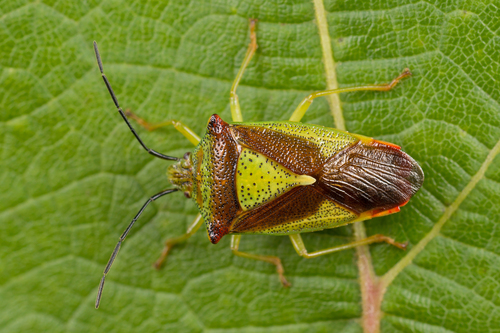
The hawthorn shield bug, scientifically named Acanthosoma haemorrhoidale, is a common shield bug species native to Europe. Its primary food source is haws, the fruit produced by hawthorn trees, though adult individuals can survive the winter by feeding on leaves. These bugs can be found on a wide range of other food plants, including pedunculate oak, sessile oak, and whitebeam. Full-grown hawthorn shield bugs can reach up to 17 mm (0.67 inches) in length, and their colouration in shades of green and brown provides effective camouflage. Like many other types of stink bugs, they release an unpleasant odour when they feel disturbed. This species occurs across the whole of Europe, ranging from Portugal all the way to Russia, and it is particularly common in the southern region of Great Britain. The range of the hawthorn shield bug is currently spreading northward. In 1892, the species was only recorded as far north as Manchester, but it has now expanded its range into Northern England and even the Scottish Highlands. In Britain and northwestern Europe, hawthorn shield bugs are typically active between April and October. However, specimens can leave hibernation to become active again during periods of unseasonably warm winter weather. While the hawthorn shield bug is a distinct species, it can be mistaken for the birch shield bug, Elasmostethus interstinctus.