About Acanthopleura granulata (Gmelin, 1791)
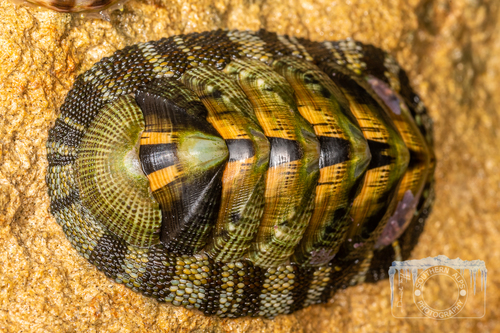
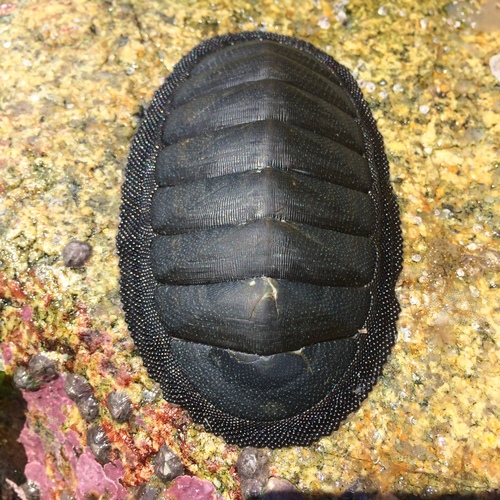
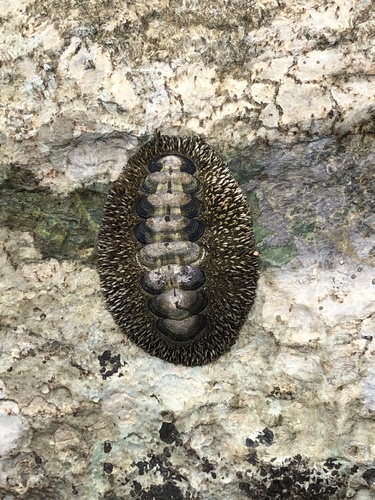
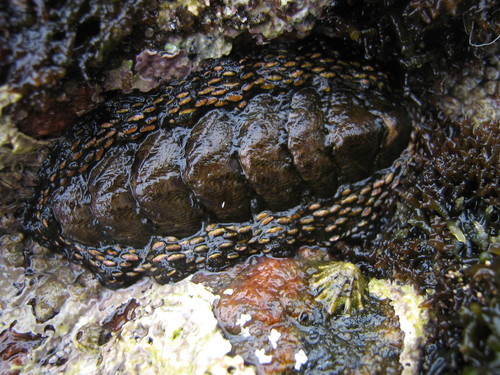
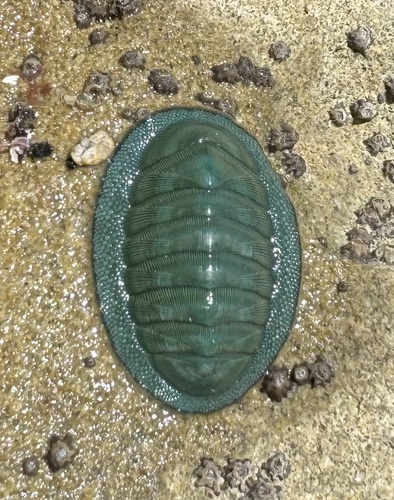
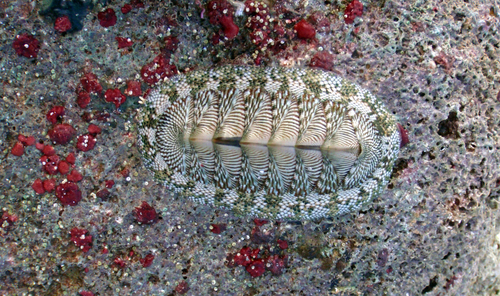
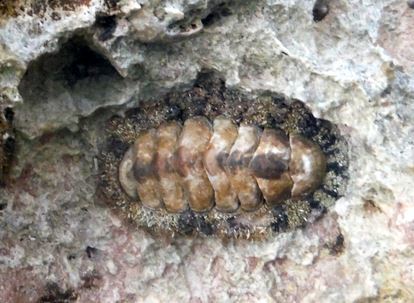
Acanthopleura granulata, commonly called the West Indian Fuzzy Chiton, is a species of chiton that reaches approximately 7 centimeters (2.8 inches) in length. Its girdle is densely spiky and typically marked with a few black bands. In adult individuals, the surface of the chiton's valves (plates) is almost always heavily eroded; when uneroded, the valve surface is granulated, and the valves themselves are thick and heavy. The fifth valve of this species is split into two symmetrical independent half-valves, separated from each other and the other valves by griddle-like tissue. Hundreds of shell eyes, each smaller than 100 μm, are embedded in the chiton's dorsal shell; these eyes have a lens, a retina, and a layer of screening pigment, and allow for specialized vision. This chiton is distributed from southern Florida to Mexico, extending south to Panama, and is also found in the West Indies. It orients itself to maintain a constant zonal level based on wave exposure along coastal shorelines, an organization shaped by its foraging behavior, which is restricted to nocturnal low tides. This species lives on rocks in the high intertidal zone and can tolerate high amounts of sunlight. Feeding is primarily nocturnal; natural nighttime conditions produce increased levels of Hsp70 heat shock proteins in the foot muscle, which protect the organism from environmental stressors including high temperatures. During the day, Hsp70 levels decrease again, following the daily curve of air temperature. Acanthopleura granulata feeds on several species of algae.