About Acanthogobius flavimanus (Temminck & Schlegel, 1845)
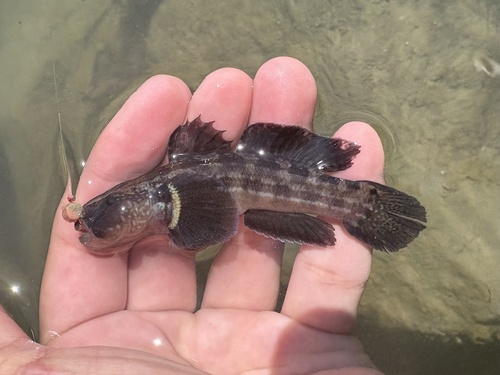
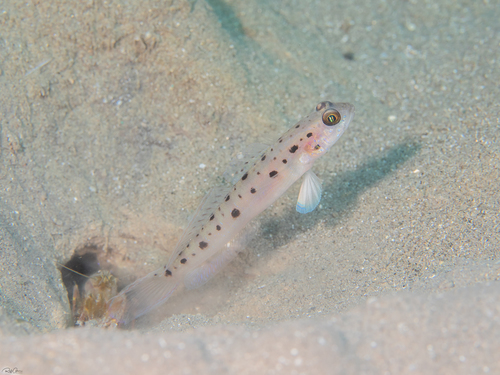
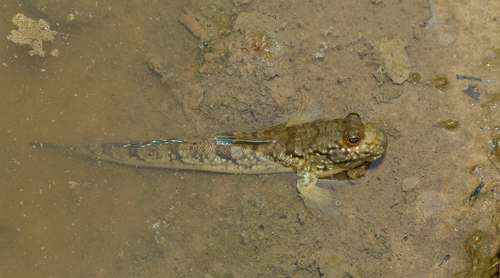
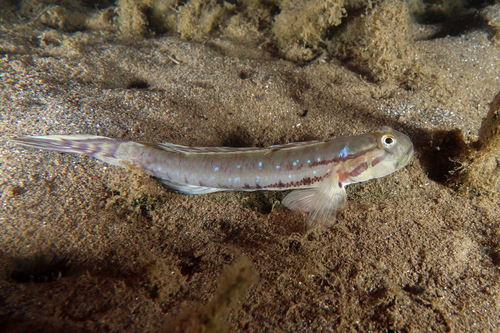
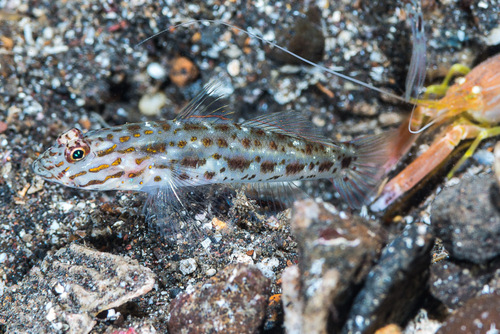
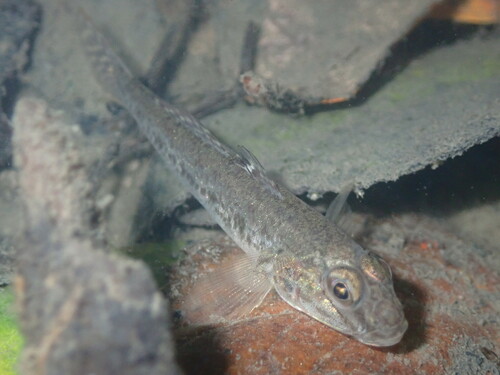
Acanthogobius flavimanus, commonly known as the yellowfin goby, mahaze, and Japanese river goby, is a species of goby native to the northwestern Pacific Ocean. It has spread beyond its native range to become an introduced, and often invasive, species, with confirmed records in Australia, Mexico, and the US states of Florida and California. Reports of maximum size for the yellowfin goby are variable. One study of specimens collected near the Kiso River in Japan found individuals ranged from 5 to 13 centimeters in length, while a species profile from the United States Geological Survey (USGS) describes the fish reaching 30 centimeters long. The yellowfin goby has a slender, primarily pale brown body, marked with darker brown spots and saddle-shaped markings along its body and on its dorsal fin. Individuals of all ages have yellow ventral fins, and juveniles additionally have pale yellow ventral and anal fins (Gomon, 1994). Its first dorsal fin holds 8 or 9 spines, and its second dorsal fin has 12 to 14 segmented rays. The head is moderately sized, with an interorbital space that is narrow, narrower than the diameter of a single eye. This species can be identified by 24 to 30 transverse rows of scales along the top of its head, as well as by the specific arrangement of several pores on its head. It can be distinguished from Gillichthys mirabilis, the longjaw mudsucker, by mouth morphology: the longjaw mudsucker’s mouth extends past the eyes and nearly reaches the gills, while the yellowfin goby’s mouth does not extend past the eye. The yellowfin goby is a demersal fish, meaning adults live and feed near the bottom of their water body. Like most demersal fish, its larval stage is pelagic, meaning larvae live in the open ocean away from the seabed or shore. The juvenile stage, however, lives near the bottom of the water it inhabits and is considered benthic; the transition from a pelagic larva to a benthic juvenile is called settlement. Acanthogobius flavimanus is native to northeastern Asia, and its native range includes the Bohai Sea, the Yellow Sea, Primorsky Krai, and the Japanese archipelago. As a bottom-dwelling fish, it generally inhabits bays and estuaries. Juvenile yellowfin gobies prefer tidal sloughs with peatmoss banks and muddy bottoms. Outside of spawning seasons, Acanthogobius flavimanus will sometimes move upstream into rivers and streams. Adults in freshwater environments will migrate back toward the coast to spawn. This species can spawn or live in a wide range of habitats, including seawater, freshwater, polyhaline, mesohaline, and oligohaline waters. It has invaded the coasts of the United States and Australia, where it is considered a pest. It is hypothesized that this species invades new waters via transport of its larvae or eggs in ship ballast water. When yellowfin gobies were first introduced to San Francisco Bay, their population grew explosively, and they became a common fish in local estuaries. Since their establishment, harbor seals in San Francisco Bay have been recorded preying on yellowfin gobies. A 2015 study found that the yellowfin goby was one of the most important prey items in the harbor seal diet, and as the abundance of invasive species in San Francisco Bay has increased, the proportion of invasive species in harbor seal diets has also increased. Aside from its role in harbor seal diets, the impact of the yellowfin goby on fish native to the San Francisco and San Joaquin estuaries remains poorly understood. Because the yellowfin goby does not typically spawn in waters with salinity below 5 ppt, it is unlikely to establish persistent populations in landlocked freshwater environments within California. The first recorded yellowfin goby off the coast of Australia was collected in Sydney Harbour in 1971, and a total of 17 individuals were collected between 1971 and 1973. The species has not experienced the same explosive population growth on the coast of Australia that it saw on the west coast of the United States, and a potential explanation for this difference is the warmer temperatures of the Australian region. This species is sometimes kept as an ornamental fish in aquariums.