About Acanthodoris pilosa (Abildgaard, 1789)
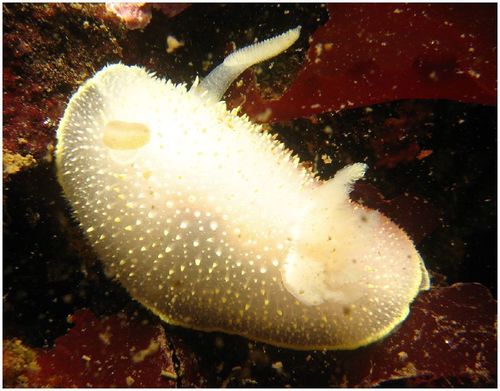
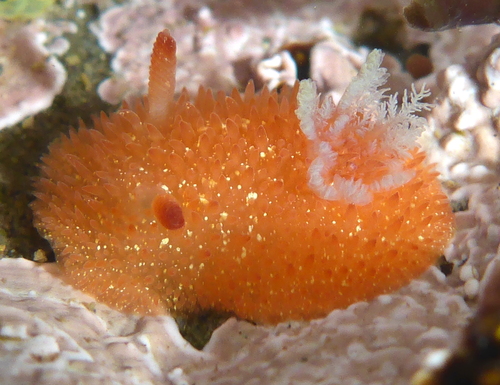
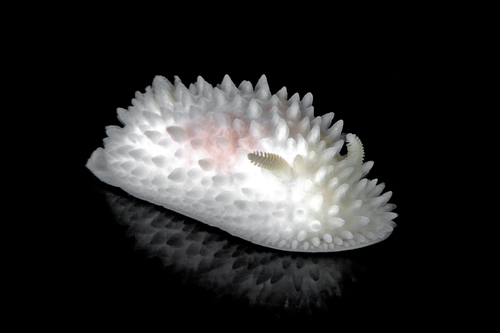
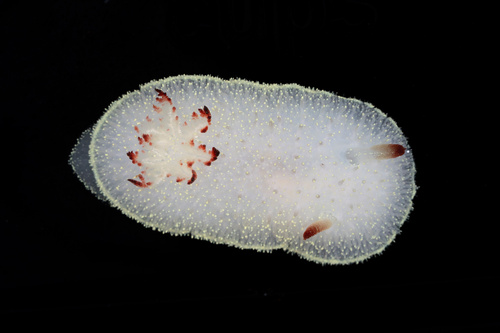
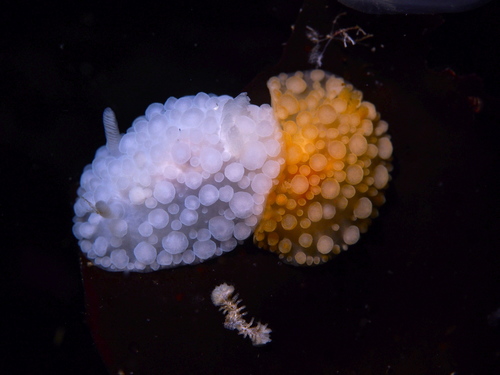
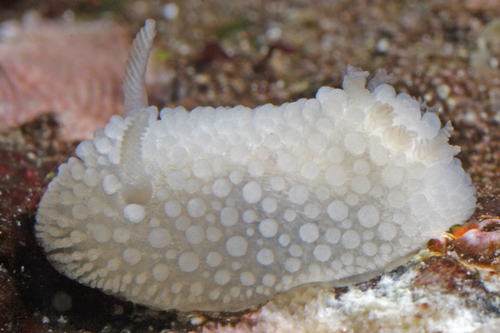
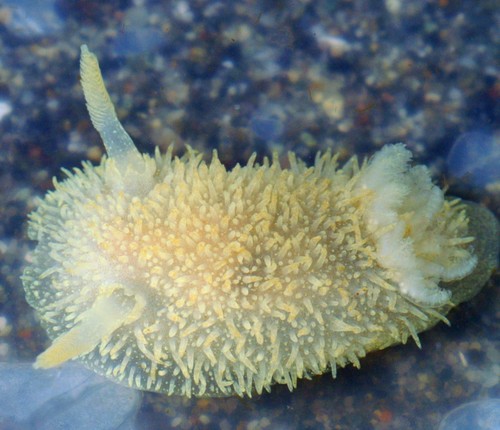
Acanthodoris pilosa grows to around 3 cm (1.2 in) in length, and occasionally reaches up to 7 cm (2.8 in). Its entire body is covered in long, fleshy, pointed papillae, giving it a distinctly fluffy appearance. Two large rhinophores, which are much bigger than the body papillae and contain the species' sensory organs, are located at the head end; these typically bend toward the rear of the animal. A distinctive ring of up to nine gills sits at the posterior end of the nudibranch. Adults of this sea slug have a uniform body color that can range from whitish, to pale purplish-brown, to darker brown or charcoal grey; juveniles are often speckled. This species was first formally described from material collected in Norway. It has been recorded from both the American and European coasts of the North Atlantic Ocean, as well as the Pacific Northwest. Genetic sequencing for the 16S ribosomal RNA, Histone H3 and CO1 genes has been carried out on specimens collected from Cobscook Bay, Washington County, Maine (United States) and Murles Point, County Donegal, Ireland. It is a common species throughout the British Isles, found in the shallow subtidal zone down to depths of approximately 80 m (262 ft). Reports of this species occurring in Japan are considered doubtful, following recent molecular phylogeny results that show at least some North Pacific specimens previously classified as Acanthodoris pilosa actually belong to Acanthodoris atrogriseata. This nudibranch lives on rocks and other hard substrates, and feeds on encrusting bryozoans.