About Acanthodoris lutea MacFarland, 1925
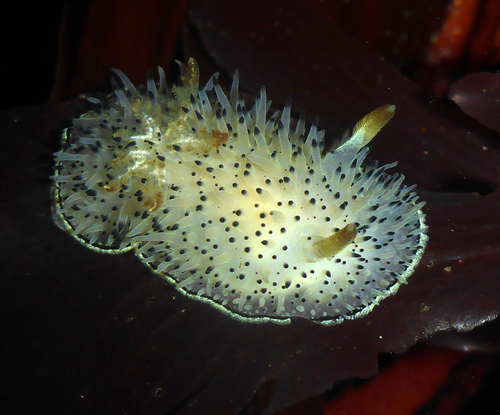
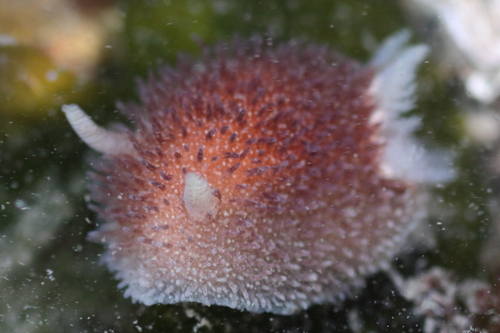
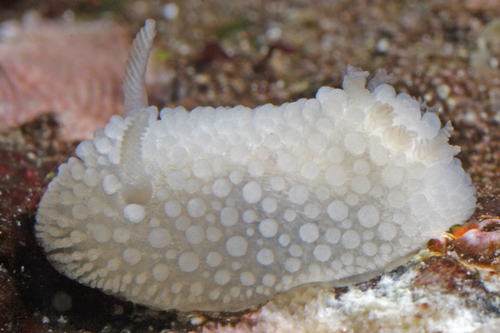
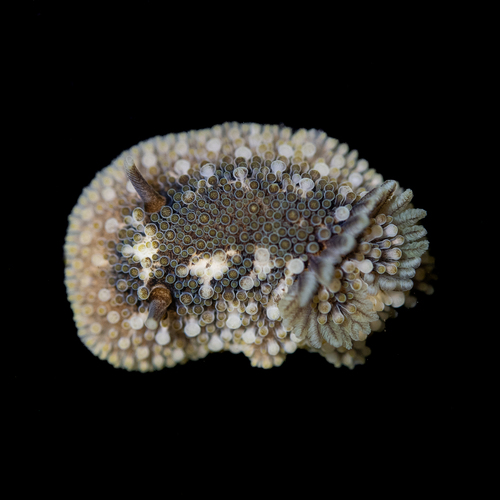
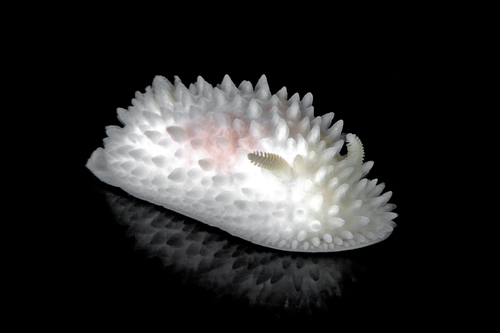
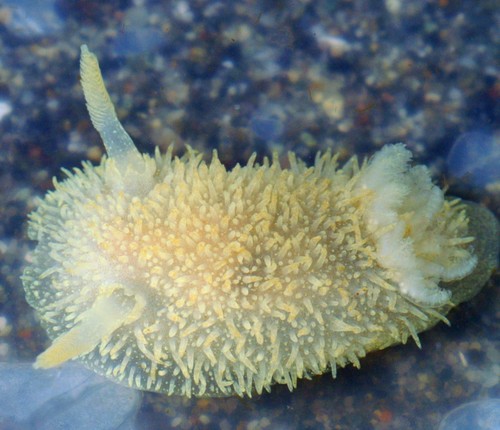
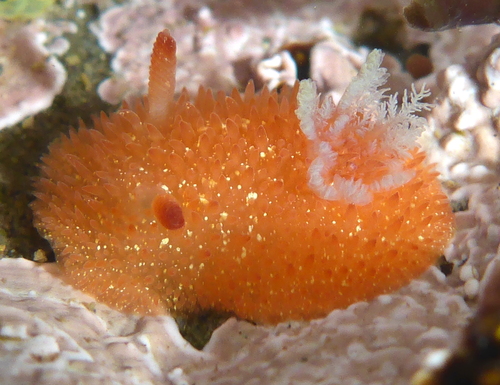
This nudibranch, Acanthodoris lutea, grows to around 30 mm in length. It has a bright orange papillated dorsum covered with yellow specks. Like many other nudibranchs, this bright coloration is thought to warn potential predators that it is distasteful, which is an example of aposematic coloration. Paler color variations of this species are found in British Canada. In the Salish Sea, A. lutea individuals have extremely variable color, ranging from nearly fully white to brown with whitish papillae, and this variation is caused by different habitats and diets. When handled, these slugs often smell like sandalwood. This dorid nudibranch was first described from Cayucos, San Luis Obispo County, California. It lives along the Pacific coast of North America from Cape Arago, Oregon down to northern Baja California, Mexico. Specimens from Duxbury Reef, Marin County, California and Puget Sound, Kitsap County, Washington have been sequenced for the 16S ribosomal RNA, Histone H3 and CO1 genes. The orange-peel doris inhabits the intertidal and subtidal zones of rocky shores.