About Acanthochitona crinita (Pennant, 1777)
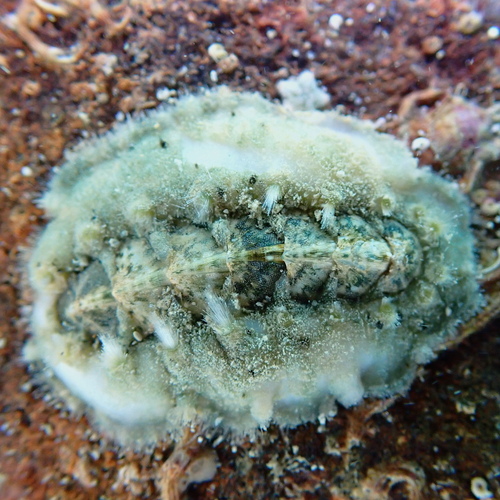
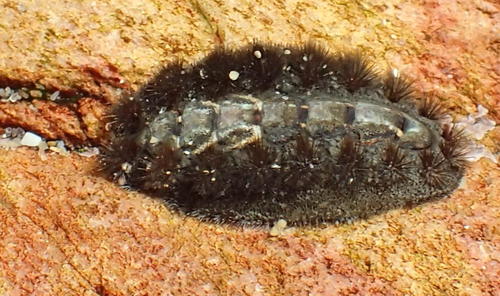
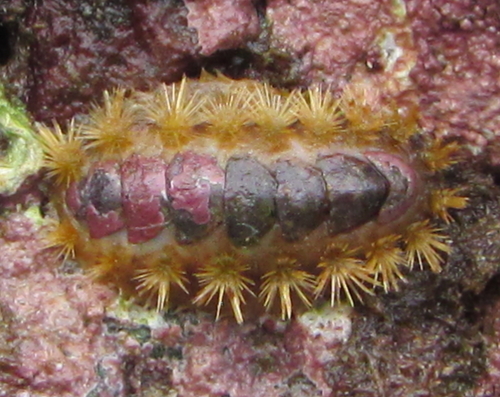
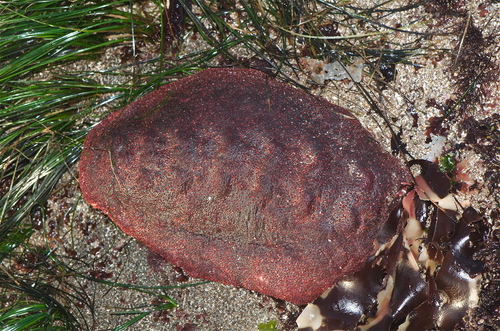
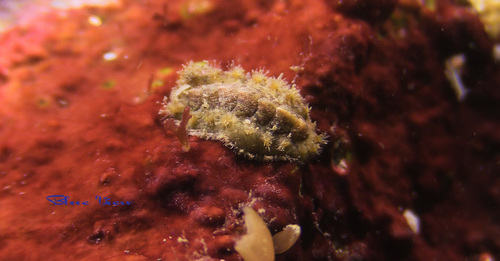
Acanthochitona crinita has an oval shape, and it is less than half as long as it is wide, reaching a maximum length of around 34 mm (1.34 in). Like all chitons, it has a protective shell made of eight articulating valves on its dorsal surface. These valves are embedded in a tough, muscular girdle. For this species, the valves are strongly arched, have moderately rounded keels, and feature fine longitudinal sculpting. The girdle holds 18 tufts of short bristles: four tufts are located at the front, and one tuft sits on either side of each junction between the valves. Its dorsal surface is rough, with irregular granulations and fine spines. Its base colour can range widely across shades of grey, fawn, brown, pink, pale green, or pale blue, and it is often marked with marbling or streaks. This species is native to the northeastern Atlantic Ocean. Its range extends from Norway and the North Sea, through the English Channel and the Bay of Biscay, to the Mediterranean Sea. A. crinita inhabits rocks located on the lower shore and shallow sublittoral zone, particularly in areas that experience strong surf. When not submerged, it typically stays under stones to avoid drying out through desiccation. Acanthochitona crinita is a herbivore. When submerged, especially at night, it crawls across rock surfaces to feed. It uses a radula lined with multiple rows of teeth to graze on coralline algae that grows on rocks, and it also consumes the thin films of unicellular algae that form on these surfaces. Chitons including this species have separate sexes, and fertilisation occurs inside the female’s mantle cavity. The larvae go through a short planktonic trochophore phase before settling onto the seabed. After settlement, they undergo metamorphosis and develop into juvenile chitons with six valve plates, which quickly move to hide under stones. Like other chitons, Acanthochitona crinita can adhere tightly to rocks using a powerful suction grip.