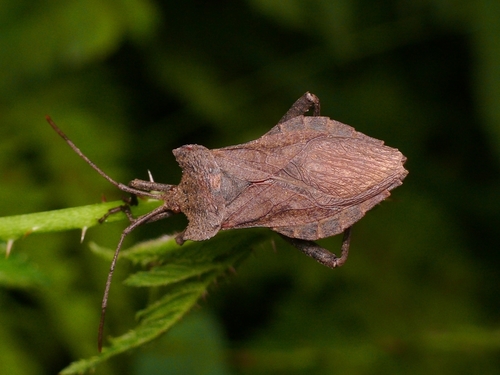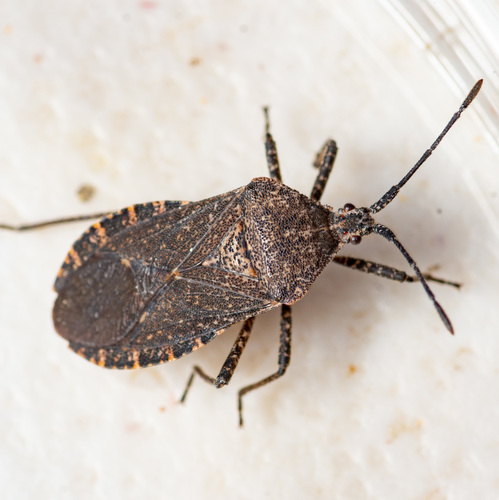
About Acanthocephala terminalis (Dallas, 1852)
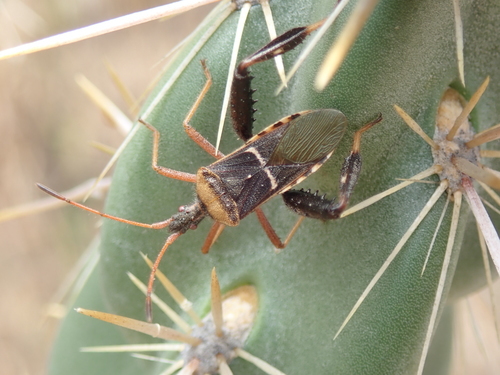
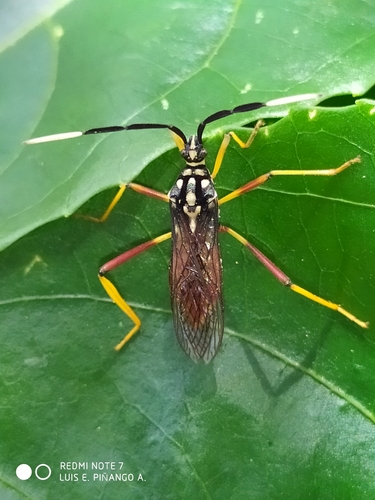
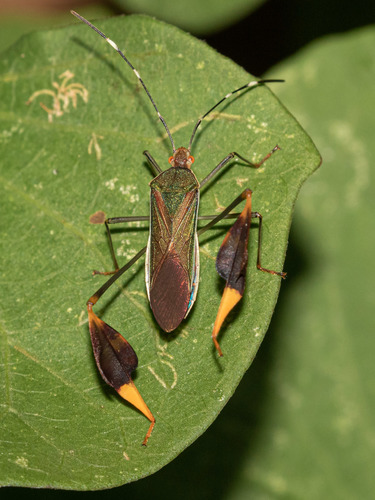
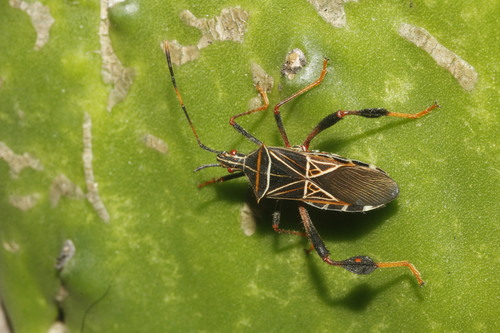
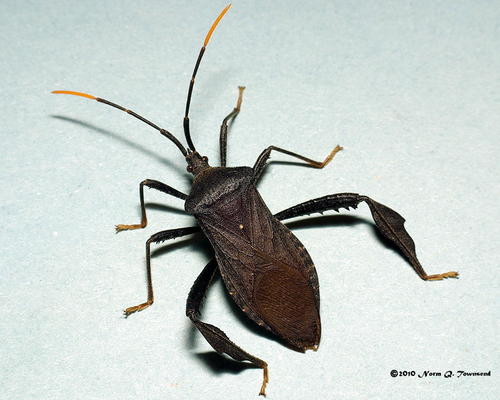
Acanthocephala terminalis typically measures 18–25 millimetres (0.71–0.98 in) long, and has a dark gray to black body. The fourth and final segment of its antennae is orange, and the tibia of its hind legs has a flat, leaf-like appearance. This species shows relatively limited sexual dimorphism: only the shape of the hind femora and the expanded hind tibia differ slightly between sexes, while overall body size stays relatively consistent across sexes. Acanthocephala terminalis is distributed across the eastern half of the United States and parts of southeastern Canada. It most commonly occurs in woodlands, fields, and meadows. Its mating season begins in late spring, after which females lay eggs on host plants. After hatching, juveniles molt five times to reach adulthood; with each molt, nymphs gradually become more similar in appearance to mature adults. This species overwinters in the adult life stage. Both juveniles and adults release a defensive scent from their thorax to repel threats. Known food plants for Acanthocephala terminalis are staghorn sumac, riverbank grape, and ninebark.