About Acanthiza reguloides Vigors & Horsfield, 1827
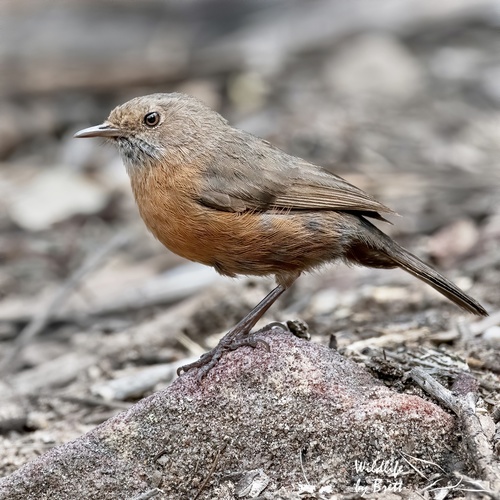
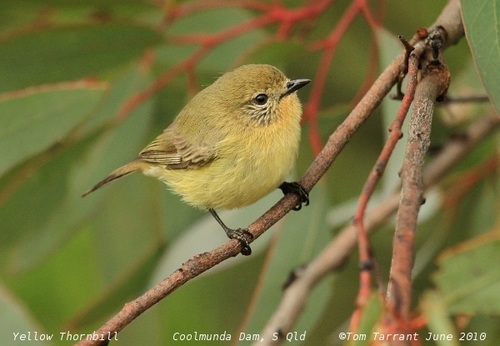
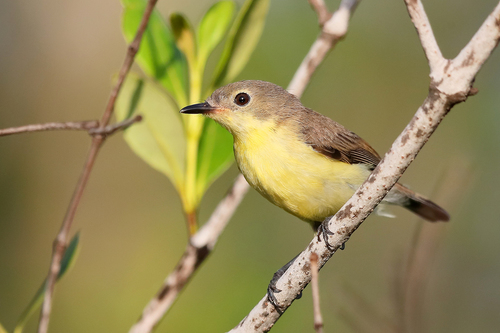
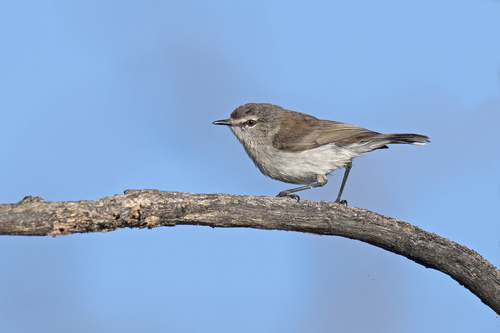
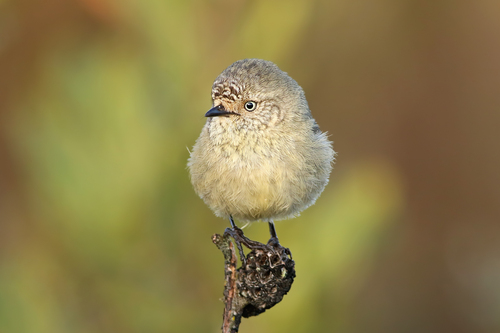
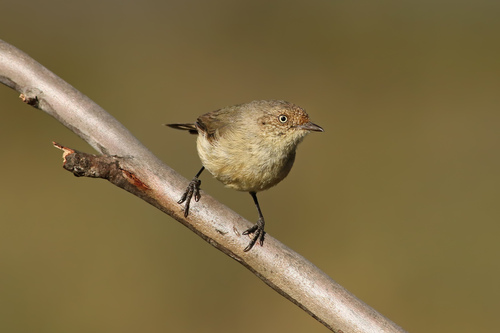
The buff-rumped thornbill, with the scientific name Acanthiza reguloides Vigors & Horsfield, 1827, is a small passerine bird species in the genus Acanthiza, most members of which are endemic to Australia. The genus Acanthiza is not related to hummingbirds despite the shared name. There are 14 total species in this genus, all identifiable by their thin, pointed bills, and each species is unique in its plumage and distribution. This thornbill measures 8–10 cm in length. It is an unassuming species characterized by plain greenish brown upperparts, very pale-yellow underparts, and a distinctive buff coloured rump. Its tail has a broad, blackish band with a paler tip. Adult individuals have white irises, while juveniles have dark eyes. The buff-rumped thornbill is primarily distributed across eastern Australia, with a range stretching from Chinchilla, Queensland west to Cobar, New South Wales, and extending across Victoria and southeastern South Australia. This range covers an area of approximately 2,000,000 km2. This adaptable species thrives in dry sclerophyll forests and open eucalypt woodlands that have an open or sparse understorey. A. reguloides builds a large, dome shaped nest from bark strips, dried grass and moss, and places the nest one to two metres above the ground. The nest is lined with fur, plant material or down, and bound with spider web on the outside. Buff-rumped thornbills breed cooperatively in groups, which usually consist of one female and three males. Females typically lay clutches of 2-4 eggs in late August, with an incubation period of 20 days. Egg hatching is highly synchronous, and all adults of the cooperative breeding group work together to feed the chicks. Horsfield's bronze-cuckoo (Chalcites basalis) is known to lay its eggs in the nests of A. reguloides. Cuckoo nestlings mimic the vocalisations of A. reguloides before evicting the thornbill's young from the nest.