About Acanthiza nana Vigors & Horsfield, 1827
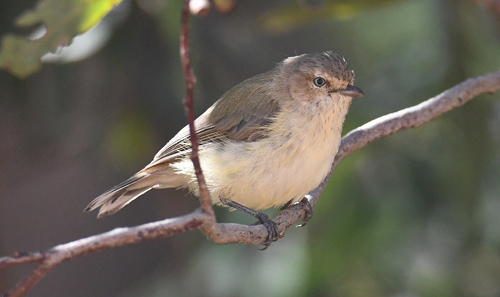
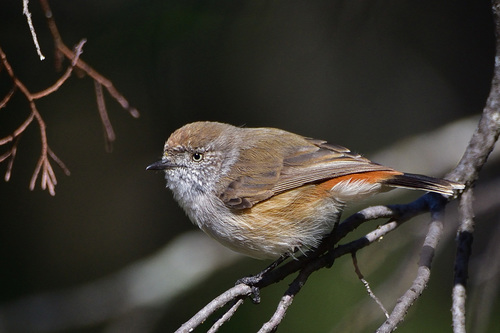
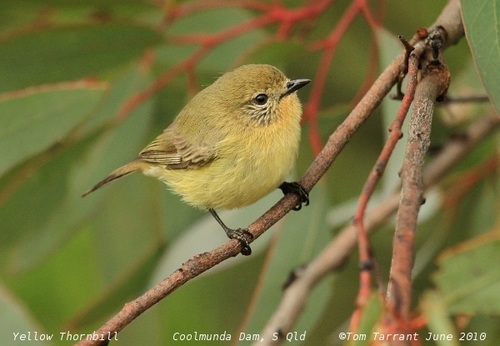
This species, the yellow thornbill (Acanthiza nana Vigors & Horsfield, 1827), is similar in size and shape to the striated thornbill and the brown thornbill, but has much more prominent yellow colouring. It shows no sexual dimorphism, meaning males and females look identical to one another. Adult yellow thornbills reach an average length of around 9 cm (3.5 in), with an average wingspan of 14 cm (5.5 in), and a body mass between 6 and 7 g (0.21 to 0.25 oz). Yellow thornbills occur primarily in temperate and semi-arid regions, with their distribution only just reaching into the subtropical zone. Within these climate zones, they occupy a wide range of habitat types including shrublands, forests, and thickets. They prefer vegetation that is dominated by casuarinas or eucalypts, and especially favour drier climate areas. Their geographic range stretches from northern and central western Queensland, south along Australia’s eastern coast through most of New South Wales, across all of Victoria and the Australian Capital Territory, and into the southeastern corner of South Australia.