About Acanthiza ewingii Gould, 1844
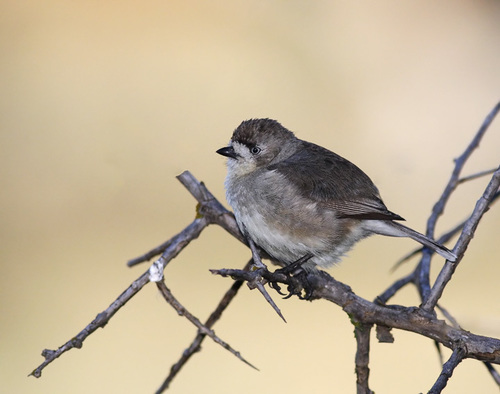
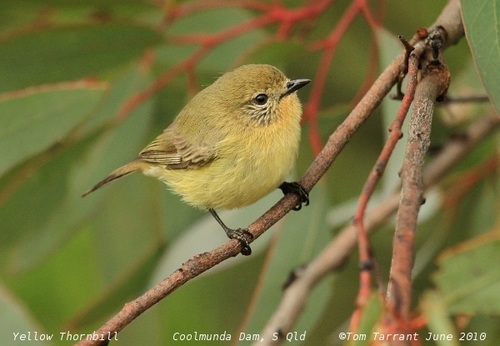
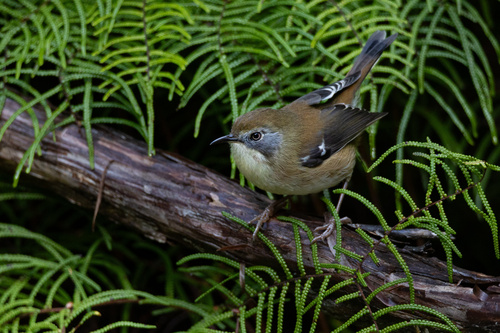
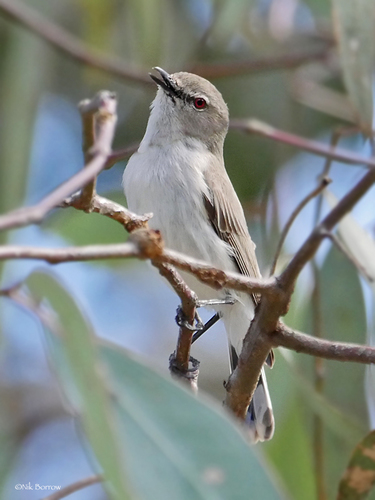
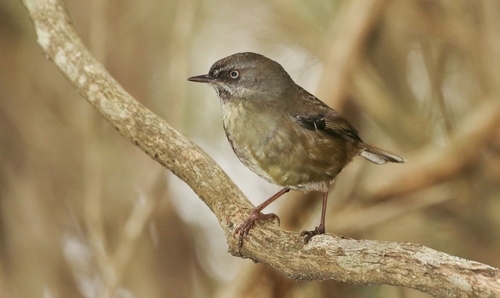
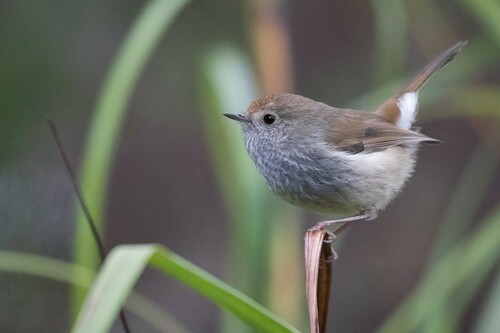
Description: The Tasmanian Thornbill is olive-brown on its upperparts, with darker coloration toward the back and tail, and may have a reddish-brown patch on the forehead. Its wings are dark grey, lined with olive-brown edges. From the chin to the breast, it has grey scalloping over a light grey base, and similar scalloping appears on the sides of the head. The bill, feet, and legs are all dark grey, while the eyes are distinctly large and dark, with red irises. Its long, thin, thorn-shaped beak is a defining characteristic of the Acanthiza (thornbill) family. Visibly fluffy, white under-tail coverts are a distinguishing feature of this specific species. The Tasmanian Thornbill averages around 10 cm in total size, and there is no significant difference in coloration or size between males and females. Habitat and distribution: The Tasmanian thornbill is endemic to Tasmania and the Bass Strait Islands, where it is a common resident of rainforests, wet forests, and scrublands. It shares much of its range with the brown thornbill, but tends to occupy wetter habitat areas, often living in dense scrub around wet gullies instead of drier, more open slopes. Temperate rainforest is confirmed to be the preferred habitat of the Tasmanian Thornbill, but its range of suitable habitats also includes Mediterranean-style shrubby vegetation, bogs, marshes, fens, swamps, peatlands, and shrub-dominated wetlands. The subspecies A. e. rufifrons, the King Island Tasmanian Thornbill, occupies similar habitat but is endemic to King Island.