About Acanthisitta chloris (Sparrman, 1787)
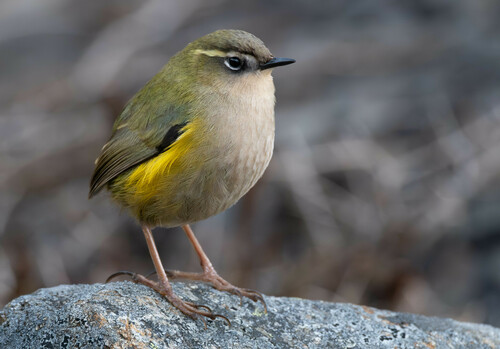
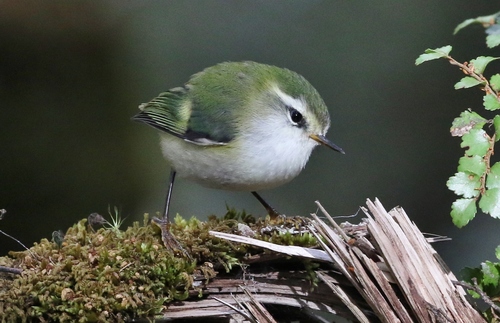
The rifleman, scientific name Acanthisitta chloris (Sparrman, 1787), is New Zealand's smallest endemic bird. Fully grown adults reach around 7 to 9 cm (2.8–3.5 in) in length. Males typically weigh around 6 g (0.21 oz), while females weigh around 7 g (0.25 oz). Females also have longer bills and longer hind claws than males. This sexual difference likely originated for ecological reasons, reflecting the different foraging niches the two sexes occupy during periods of high energy demand when they are feeding chicks. Male riflemen are bright green on their upper bodies, with a yellow-green rump. Their wings are patterned black, green, and white, with a yellow band across the flight feathers. Their tail is black with a whitish tip, and their throat, breast, and belly are white, sometimes with a pale yellow wash; their flanks are yellowish. Females have a more muted brownish coloration, with ochre flecks on their head and back. Both sexes have distinct white eyebrow stripes. They have short, rounded wings, a very short tail, and a long, thin, awl-like brownish bill that is slightly upturned to fit into cracks. When riflemen fly quickly, their wing beats produce a characteristic humming sound similar to that of a hummingbird. The natural preferred habitat of the rifleman is thinly wooded forests, while other related New Zealand species live near rocky outcrops. It is the most widespread acanthisittid species across New Zealand's two main islands, but only occurs rarely in regions north of Te Aroha. The North Island subspecies, A. c. granti, lives mainly in lowland tawa forest. The South Island subspecies, A. c. chloris, is found in high-altitude beech forest, or lowland areas forested with podocarp. Riflemen occupy the same or very similar territory every day, which mated male-female pairs defend together. They can only fly short distances, so they are unlikely to cross open areas. Once common throughout New Zealand, forest fragmentation caused by land development has reduced available habitat and left the species with more isolated populations.