About Acanthinodera cumingii (Hope, 1833)
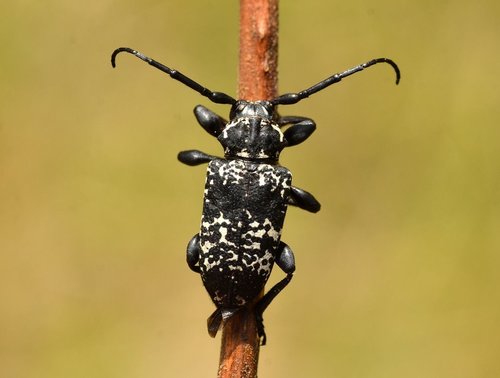
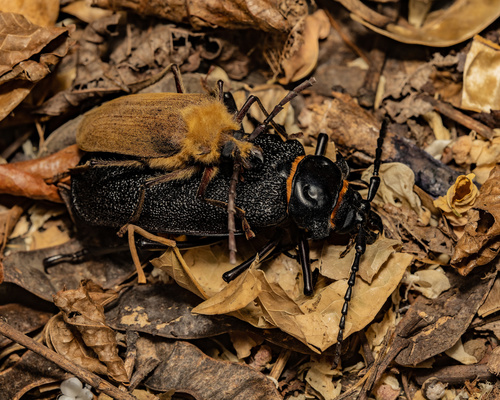
Acanthinodera cumingii (Hope, 1833) displays particularly prominent sexual dimorphism, which originally led naturalists to classify males and females as separate species. Males are 5–6 cm long, light brown, and covered in fur; they are nocturnal and capable of flight. Females are black, with an average length between 8–9 cm, though specimens over 12 cm long have been recorded; they are diurnal and cannot fly.
When disturbed, these beetles produce a hissing sound by rubbing their rear legs along the edge of their wing covers. They are slow-moving and non-aggressive, but can deliver a powerful bite if provoked. Their legs are powerful, and tipped with large claws, making them very difficult to remove from surfaces they grip well, including tree bark, clothing, and skin.
This species is endemic to Chile, where it occurs from the south of the Coquimbo Region to Malleco Province in the Araucanía Region, and can be found from sea level up to the Precordillera hills. The life cycle of Acanthinodera cumingii has not been extensively studied. Females lay more than 100 white eggs that resemble grains of rice, placing them in dry tree trunks and decomposing vegetation. Development from egg to adulthood can take up to six years, depending on humidity and food availability. Larvae can grow as large as 13 cm in length, which is why the species has the Spanish common name "mother of the snake".
Acanthinodera cumingii plays an important role in the decomposition of dead wood within its ecosystem. Its larval stage has been recorded living in approximately 30 tree species, both native and invasive to Chile, including the invasive tree Eucalyptus.