About Acantharchus pomotis (Baird, 1855)
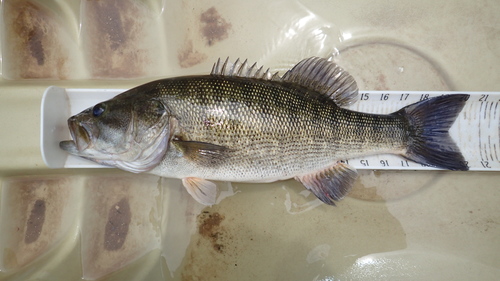
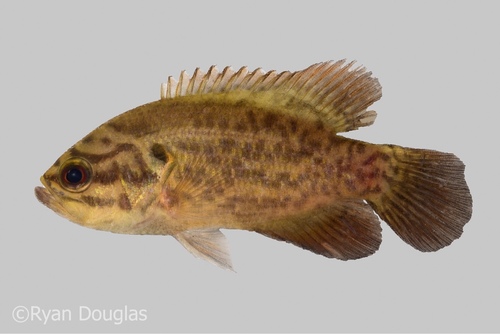
Acantharchus pomotis, commonly known as the mud sunfish, is a small fish species that can be distinguished from other members of its family by several key characteristics: it has five or more spines in its anal fin, fewer than 15 gill rakers, and is the only species in its family to have cycloid scales. Its body is oblong and compressed, with a large mouth and large eyes. This species has rounded pectoral and caudal fins. The fins range in color from clear to dark olive, and the anal fin has a black margin. There is a dark spot on the gill cover. The body color of adult mud sunfish ranges from brown on the back to yellowish tan on the flanks, while juveniles are pale olive. Three or four parallel dusky horizontal stripes extend from the cheek along the length of the body. Mud sunfish can reach a maximum total length of 21 centimeters (8.3 inches), though a more common total length is 14.1 centimeters (5.6 inches).
Mud sunfish occur along the eastern seaboard of the United States, ranging from southern New York south to northern Florida. Their range extends just into Alabama, where they have been recorded in Beaver Dam Creek, Washington County. There is a gap in their range in Maryland and Virginia, along the western part of Chesapeake Bay between the Susquehanna River and the Potomac River. This species is not common anywhere within its range. Mud sunfish live in dark tannin-stained freshwaters. They have been recorded in slow-moving, sluggish, well-vegetated creeks, rivers, ponds, lakes and swamps. As their common name suggests, they prefer substrates made up of mud or detritus.