About Acanalonia conica (Say, 1830)
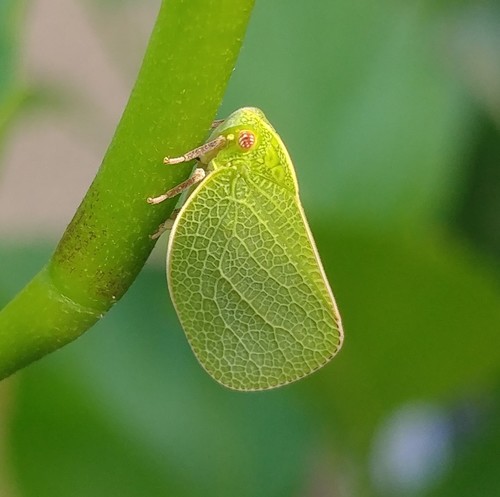
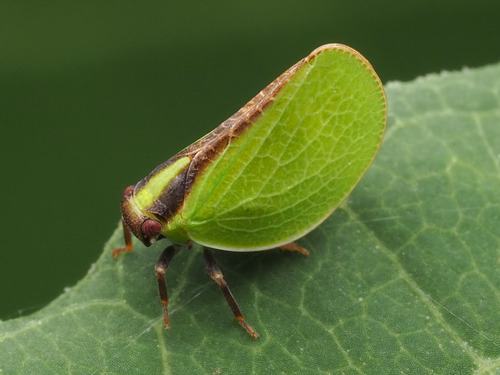
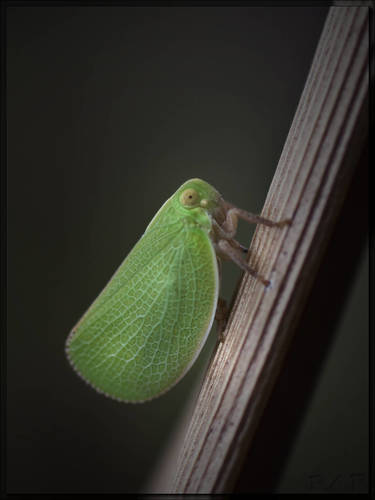
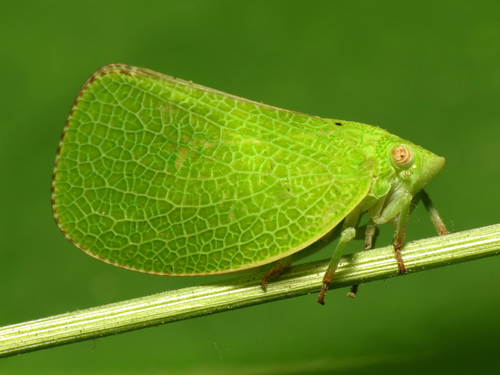
Acanalonia conica (Say, 1830) is a species of planthopper belonging to the family Acanaloniidae. This species is native to North America, and was first discovered in Europe in Italy in 2003, most likely introduced via human activity. It has since spread across much of Europe. Its native range falls within the Nearctic realm, and after the first 2003 record in Northern Italy, it has also been recorded in Slovenia, Switzerland, France, Hungary, Austria, Romania and Bulgaria. Acanalonia conica is univoltine, meaning it produces only one generation per year. Eggs are laid during summer and autumn, with each individual egg encased in a concavity cut into the woody tissue of a host plant. Nymphs of this species are brown, with a characteristic hump-backed or generally more spherical shape, and are covered in long white waxy filaments. Adults are bright green, with a conical head and bright red eyes. Their forewings have a clearly visible network of veins. Both nymph and adult life stages produce large amounts of honeydew.