About Acalypha hispida Burm.f.
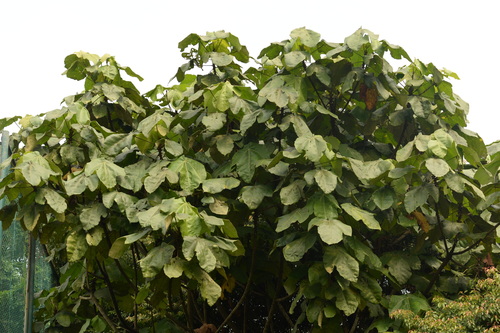
### Description Acalypha hispida Burm.f. reaches 1.5–3.7 m (5–12 feet) in height and spreads 0.91–1.83 m (3–6 feet) wide; potted specimens are smaller in size. It has been partially domesticated for the unique appearance and color of its flowers. This species can be propagated from both seeds and cuttings, and grown as either an outdoor plant or a houseplant.
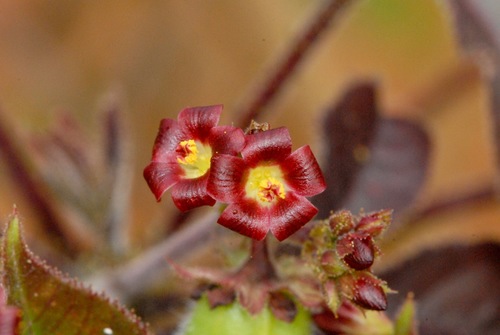
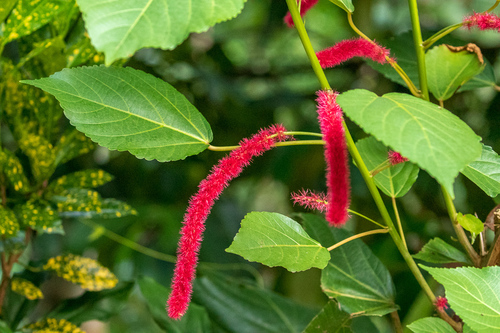
Acalypha hispida is dioecious, meaning it has separate male and female individual plants. Female plants produce pistillate flowers that are 0.7 mm long, colored purple to bright red, and grow in clusters along catkins that can reach 50 centimeters (19.5 inches) or more in length. This distinctive trait is the origin of its common nickname "red-hot cat tail". Pistillate flowers bloom year-round when temperatures are favorable. Its leaves are large, oval-shaped, and range in color from bright green to reddish copper.
### Cultivation When grown as a houseplant, Acalypha hispida requires bright indirect light (not direct full sun), high humidity, and a minimum temperature of 16 °C (61 °F). It should be planted in loose potting soil enriched with organic matter and mixed with sand, and kept consistently well-watered through spring and summer. Watering should be reduced moderately in autumn and winter. It is most commonly propagated from cuttings.