About Acalitus stenaspis (Nalepa, 1891)
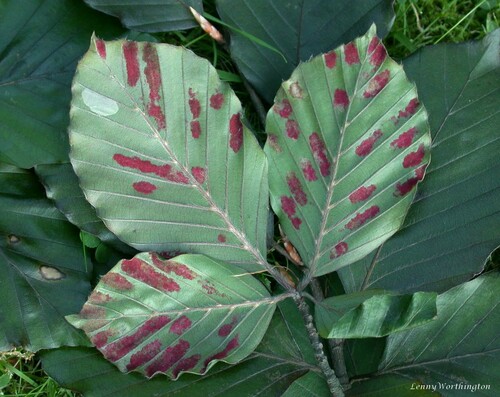
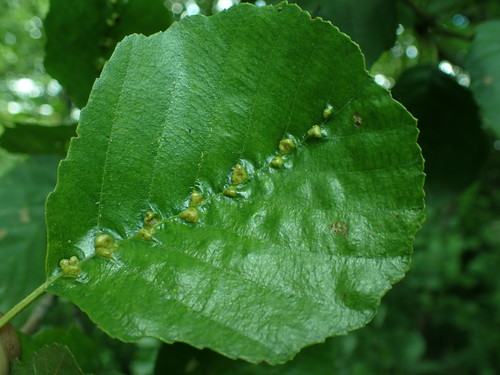
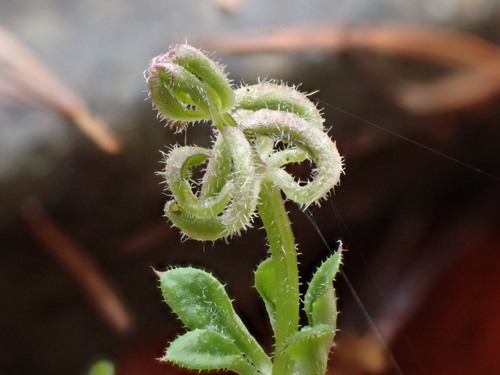
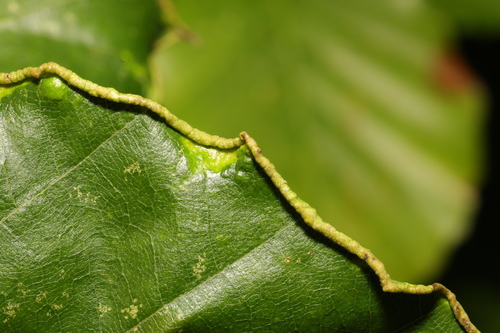
Acalitus stenaspis (Nalepa, 1891) induces three distinct types of galls on beech trees. In spring, infected leaves may become stunted, thickly covered in silver-grey hairs, folded with wavy veins, and contain the mites that cause the galls. The gall most commonly associated with this species is a tight upward roll along the edge of the leaf, which is often overlooked. During summer, numerous mites live inside this gall, feeding on a mass of tiny hairs. This leaf roll is pale green or yellow in color. The mites leave the gall before the leaf falls, and overwinter inside dormant beech buds. Downward leaf rolls found in Scotland may be caused by this same species. The third type of gall affects buds, causing them to grow up to 3 cm long. Infected shoots become disfigured, while the resulting leaves are wavy, have irregular venation, and are covered in long hairs. If the shoot outgrows the mite infestation, any younger leaves that emerge will appear normal. Most published sources and online references note that galls from this species are mainly recorded on common beech (Fagus sylvatica). Galls have also been recorded on Crimean beech (Fagus × taurica). This species is distributed across Europe, with confirmed records from Bosnia and Herzegovina, Croatia, Czech Republic, Denmark, France, Germany, Great Britain, Ireland, Italy, Kosovo, Latvia, Lithuania, Montenegro, North Macedonia, Poland, Serbia, Spain and Switzerland.