About Acalitus brevitarsus (Fockeu, 1890)
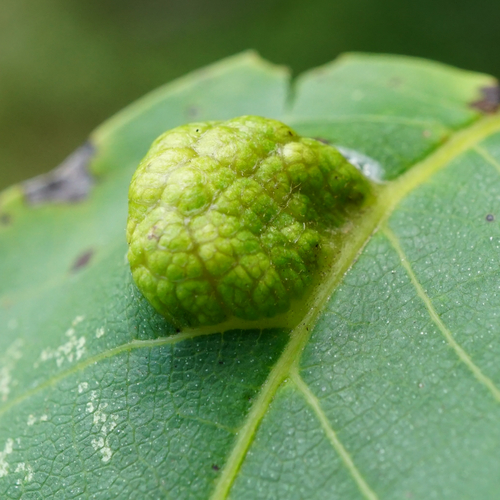
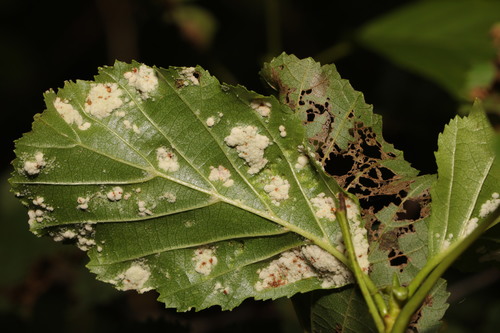
Acalitus brevitarsus (Fockeu, 1890) induces the formation of a specific plant gall on the leaves of alder species. The gall appears as a pale, slightly domed swelling on the upper leaf surface. The mite that causes the gall lives and feeds within a mass of modified leaf hairs called an erineum, located on the lower leaf surface. The hairs of the erineum are white or yellowish when young, and turn rust-brown as they mature. When examined with a hand lens, the erineum looks like a mat of shiny, glass-like hairs. In autumn, the mites leave the gall to overwinter in old cones and bark crevices. This gall occurs on five alder species: Italian alder (Alnus cordata), European alder (Alnus glutinosa), grey alder (Alnus incana), Alnus x pubescens, and Alnus viridis. A fungus called Taphrina sadebeckii produces an upper leaf surface growth that can look similar to this gall. This species is distributed across Europe, ranging from Spain to Russia and including the Balkan region.