About Acacia pubescens (Vent.) R.Br.
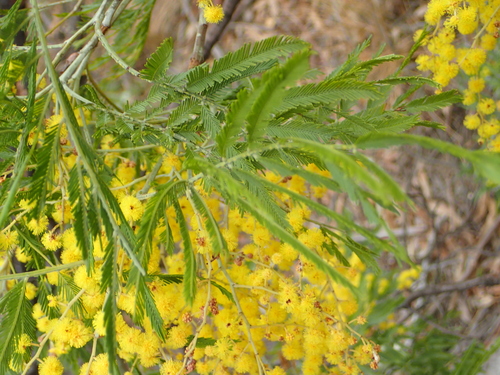
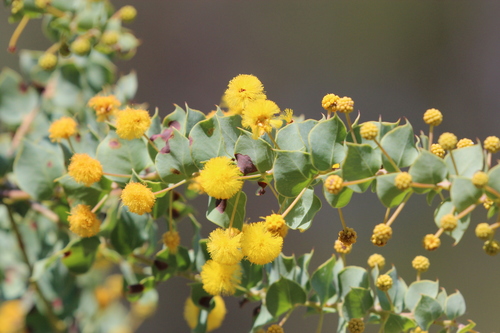
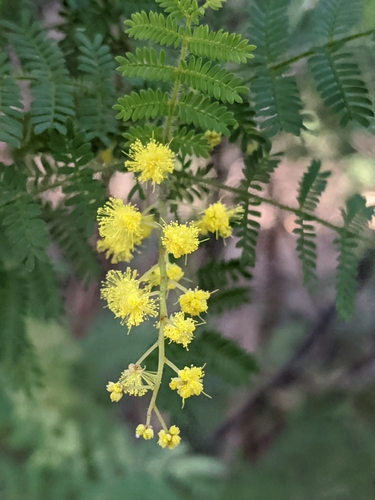
Acacia pubescens (Vent.) R.Br., commonly called downy wattle, grows as a shrub or small tree reaching 1 to 5 metres (3 to 20 feet) in height. It has smooth grey-brown bark, and its branches often have a slightly drooping or weeping habit. Like other wattles, this species has leaf-like structures called phyllodes that are pinnately compound. These phyllodes measure 1.5–6.5 cm (0.59–2.56 in) in length, and hold 3 to 12 pairs of smaller pinnae. Each pinna is 0.5–2.5 cm (0.20–0.98 in) long, and is itself split into 5 to 20 pairs of tiny pinnules. Bright yellow globular flower heads are arranged in racemes, and bloom from late winter to spring, between August and October, with peak flowering in September. Each individual flower head holds 12 to 20 small flowers. After flowering, the plant produces elongated seed pods 3–7 cm long; these pods ripen between October and December. This species is endemic to New South Wales, Australia, and is restricted to the Sydney Basin. It occurs in scattered populations stretching from Bardwell Valley to Oakdale and Mountain Lagoon, with most existing plants found around Bankstown, Fairfield and Rookwood in southwestern Sydney, and Pitt Town in northwestern Sydney. Most of the species' original habitat has been lost to suburban housing development in Sydney, so it is currently classified as Vulnerable. It grows on clay-based alluvial and shale soils, within open sclerophyll forest. Its common associated plant species include grey box (Eucalyptus moluccana), broad-leaved ironbark (Eucalyptus fibrosa), white feather honeymyrtle (Melaleuca decora), and blackthorn (Bursaria spinosa). In the wild, downy wattle individuals are estimated to live up to 50 years. They can resprout from root suckers after bushfires.