About Abronia taeniata (Wiegmann, 1828)
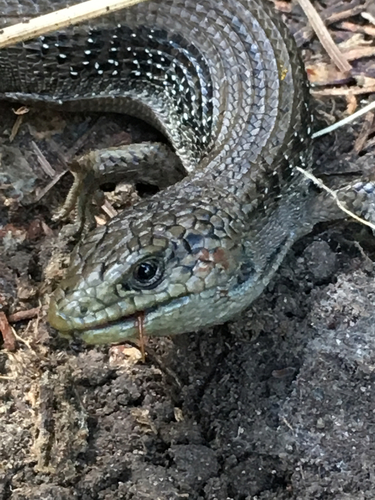
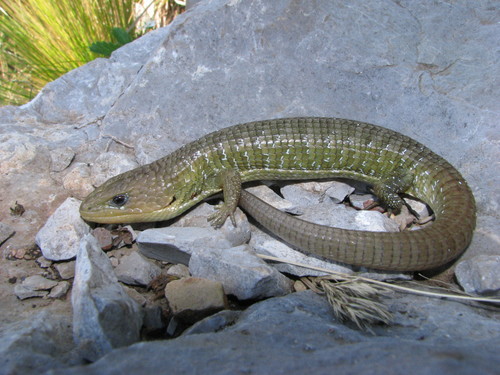
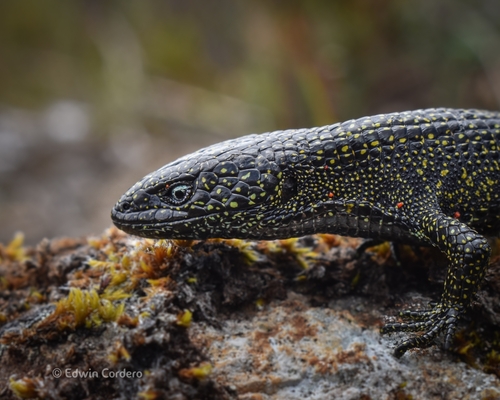
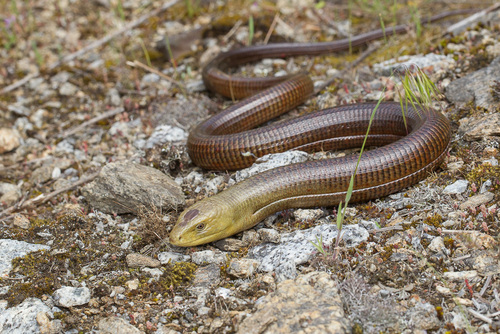
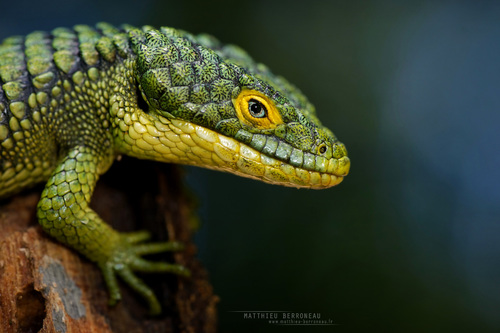
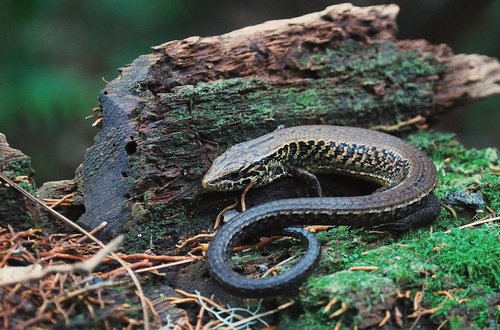
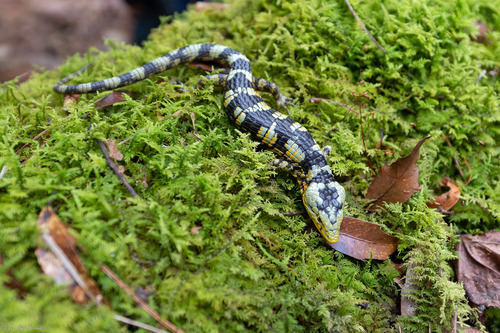
Abronia taeniata, commonly known as the banded arboreal alligator lizard or bromeliad arboreal alligator lizard, is a vulnerable species of arboreal alligator lizard. It was first described in 1828 by Arend Friedrich August Wiegmann. This species is eurythermic, meaning it can remain active across a wide range of temperatures. It actively avoids favorable microhabitats during spring, and acts as a moderate thermoregulator during autumn and winter. Regarding reproduction, males reach sexual maturity at a smaller snout-vent length (SVL) than females. This size pattern also holds for body mass at maturity, though mature males and females have similar overall body weights. In males, testicular volume changes with the month: it is smallest in November, increases from December through January, stays at a consistent level from April to August, peaks in September and October, then declines back to its smallest size the following November. This increase in testicular volume correlates with mean monthly precipitation, but does not correlate with temperature or photoperiod. There is no correlation between litter size and female snout-vent length (SVL).