About Abies kawakamii (Hayata) T.Itô
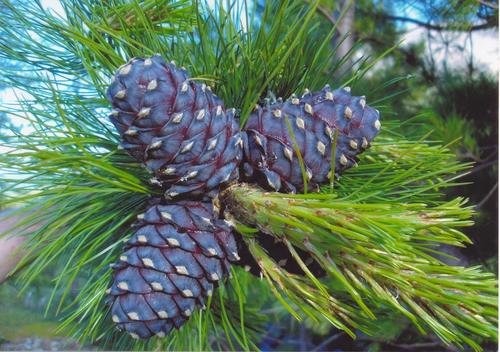
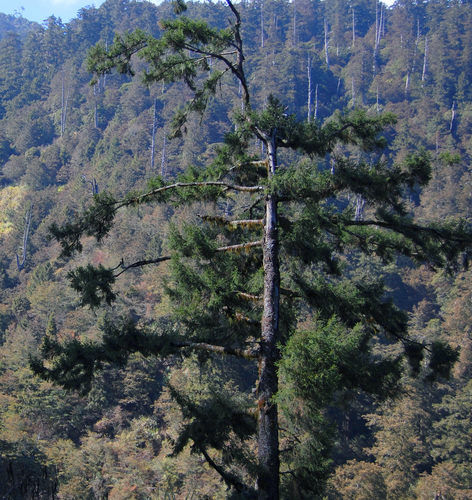
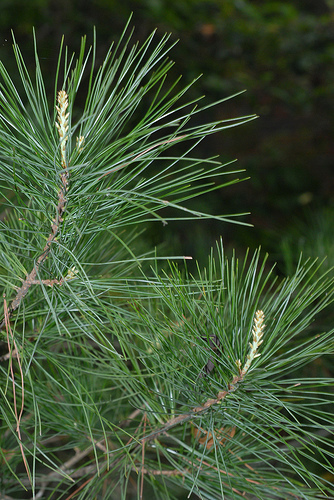
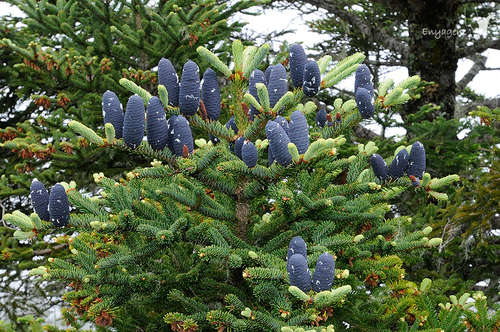
Abies kawakamii is a conifer species in the Pinaceae family that is found exclusively in Taiwan. It was first described in 1908 by Bunzō Hayata as a variety of Abies mariesii, a high-mountain fir native to Japan; the following year, Tokutarô Itô elevated it to full species rank. Along with Abies fansipanensis from Vietnam and Abies guatemalensis from Mexico and Guatemala, it is one of the southernmost true fir species. As a high-mountain species, it grows in northern and central Taiwan at elevations between 2400 and 3800 m, growing alongside other temperate, predominantly coniferous plants. These associated plants include Juniperus formosana var. formosana, Tsuga formosana, and Juniperus morrisonicola. Taiwan fir is a small to medium-sized tree that can occasionally reach 35 m in height with a trunk 1 m in diameter. Young bark is scurfy or scaly, marked with lenticels; older bark detaches in elongated plates. Mature branchlets are yellowish-brown, furrowed, and covered in hairs. Needles measure 1–2.8 cm long, are pruinose, and have stoma lines on the upper surface along with two stomatal bands on the lower surface. Its cones are rather small at 5–7.5 cm long, cylindrical or conical-cylindrical, dark blue, and have included bracts. It has been protected by law in Taiwan since 2015.