About Abaeis nicippe (Cramer, 1779)
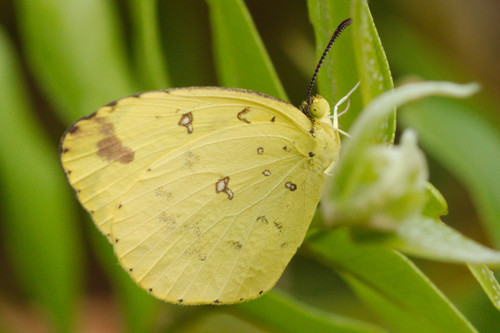
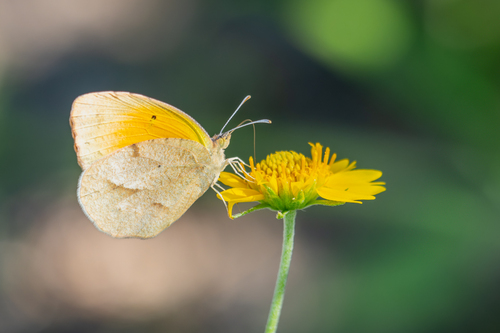
Abaeis nicippe (Cramer, 1779), commonly called the sleepy orange, is a bright orange butterfly. The upperside of its wings have wide black borders, and the forewing costal margin has a small, narrow black marking that looks like a closed eye. Contrary to common belief, the species' name comes from this specific wing patterning, not from the butterfly's behavior; this butterfly flies very rapidly when disturbed. The underside of the sleepy orange's wings changes appearance based on season: summer forms are bright yellow with brick-red markings, while winter forms are browner with more extensive markings. This species has a wingspan of 35–50 mm, which equals 1 3/8–2 1/4 inches.
The sleepy orange generally favors low elevation areas, agricultural land, and disturbed sites. It can be found in or near old fields, roadsides, wood edges, swamps, wet meadows, open woodlands, pond margins, waterways, and valleys.
When first laid, the eggs of the sleepy orange are spindle-shaped and white, and they quickly turn yellow. Eggs are laid on the underside of leaves of the species' host plants, which are most often members of the legume family. The larva is pale green, with a narrow white stripe running along its length on each side, and is covered in very short hairs. The chrysalis ranges in color from pale green to brown-black as it progresses through the life cycle. This species produces two to four broods per year. Individuals can be found year-round in more southern regions, and migrate north during the warmer summer months.