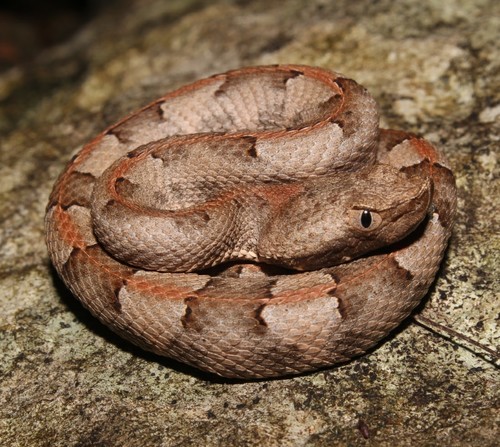
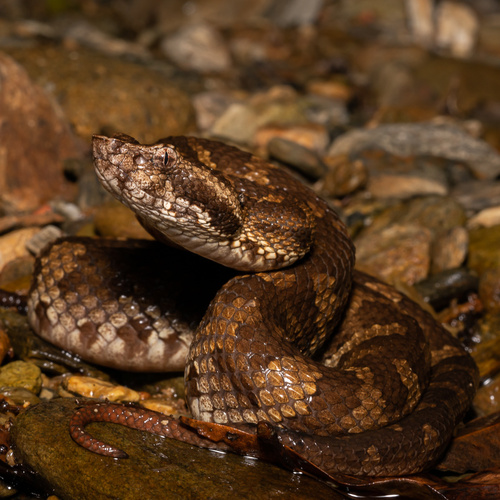
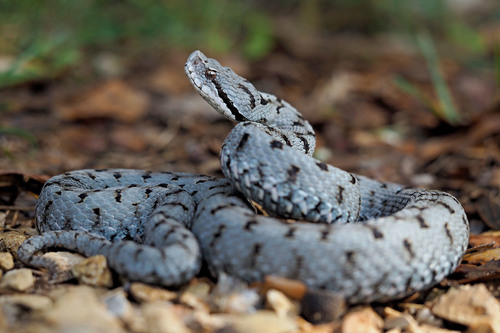
How to Identify Viperidae

Viperidae is a animal family in the Animalia kingdom, order , class Squamata. The family contains 160 accepted species worldwide.

Key Identification Features

For instant identification in the field, use the iNature app — AI-powered, works offline.
Representative Viperidae Species

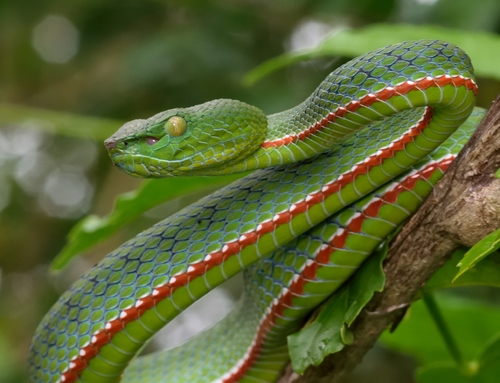
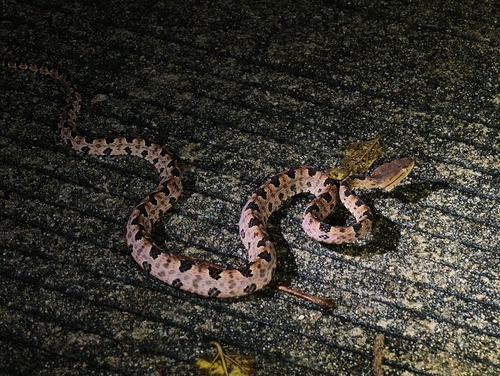
How to identify Protobothrops mucrosquamatus (Cantor, 1839)

Protobothrops mucrosquamatus (Cantor, 1839)

Protobothrops mucrosquamatus (Cantor, 1839)

Protobothrops mucrosquamatus is a venomous pit viper species native to South and…

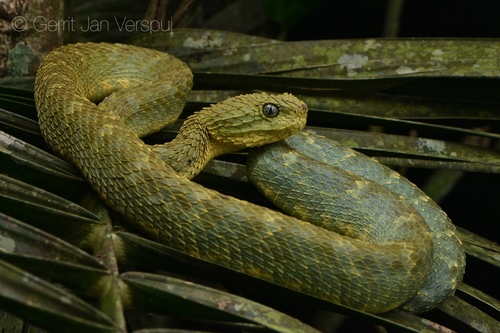
How to identify Atheris squamigera Hallowell, 1854

Atheris squamigera Hallowell, 1854

Atheris squamigera Hallowell, 1854

Atheris squamigera is a widely distributed viviparous viper found in rainforests…

How to identify Vipera latastei Bosca, 1878

Vipera latastei Bosca, 1878

Vipera latastei Bosca, 1878

Vipera latastei is a horn-nosed viper found in southwestern Europe and northwest…

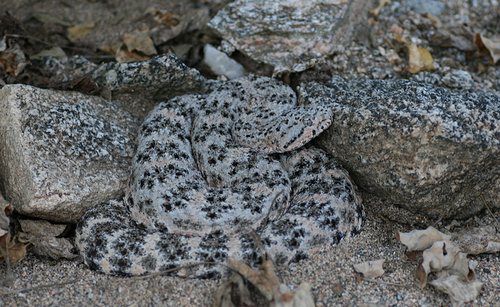
How to identify Crotalus mitchellii (Cope, 1861)

Crotalus mitchellii (Cope, 1861)

Crotalus mitchellii (Cope, 1861)

Crotalus mitchellii, the speckled rattlesnake, is a small North American desert …

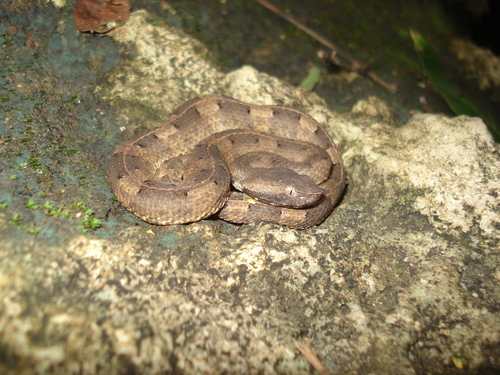
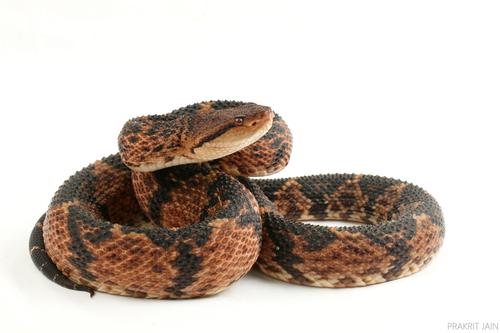
How to identify Porthidium lansbergii (Schlegel, 1841)

Porthidium lansbergii (Schlegel, 1841)

Porthidium lansbergii (Schlegel, 1841)

Porthidium lansbergii is a moderately slender terrestrial viviparous snake found…

How to identify Trimeresurus sabahi Regenass & Kramer, 1981

Trimeresurus sabahi Regenass & Kramer, 1981

Trimeresurus sabahi Regenass & Kramer, 1981

Trimeresurus sabahi is a green pit viper found in Bornean mountain low vegetatio…

How to identify Lachesis acrochorda (Garcia, 1896)

Lachesis acrochorda (Garcia, 1896)

Lachesis acrochorda (Garcia, 1896)

Lachesis acrochorda is an oviparous snake species found in northwestern South Am…

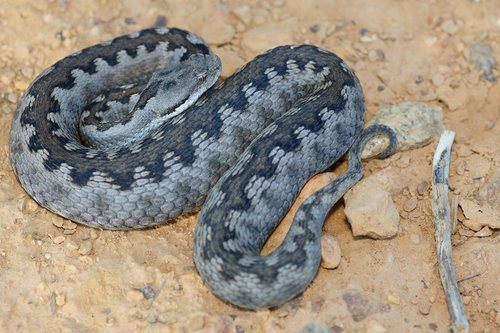
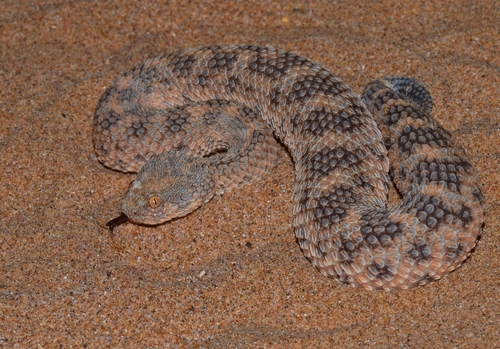
How to identify Cerastes vipera (Linnaeus, 1758)

Cerastes vipera (Linnaeus, 1758)

Cerastes vipera (Linnaeus, 1758)

Cerastes vipera is a small stout viper from North Africa and Sinai with a unique…

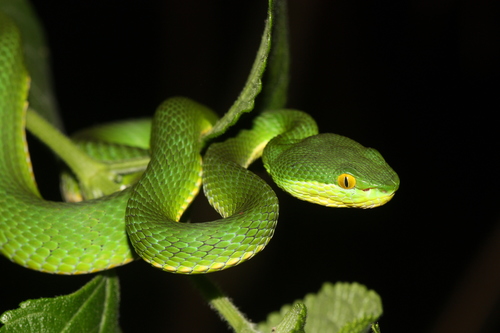
How to identify Trimeresurus albolabris Gray, 1842

Trimeresurus albolabris Gray, 1842

Trimeresurus albolabris Gray, 1842

Trimeresurus albolabris Gray, 1842 is a pit viper with defined scalation, color …

How to identify Porthidium yucatanicum (Smith, 1941)

Porthidium yucatanicum (Smith, 1941)

Porthidium yucatanicum (Smith, 1941)

Porthidium yucatanicum is a moderately stout terrestrial viper found in the nort…

How to identify Ovophis okinavensis (Boulenger, 1892)

Ovophis okinavensis (Boulenger, 1892)

Ovophis okinavensis (Boulenger, 1892)

Ovophis okinavensis is a Japanese pitviper found in the Ryukyu Islands that can …

How to identify Vipera aspis (Linnaeus, 1758)

Vipera aspis (Linnaeus, 1758)

Vipera aspis (Linnaeus, 1758)

Vipera aspis (Linnaeus, 1758), is a venomous viper species native to parts of We…

Browse all 160 Viperidae species →

Frequently Asked Questions

How do you identify Viperidae?

Viperidae animals belong to the order in the Animalia kingdom. This species has a broad, flat head that is clearly distinct from the neck, with a very large mouth gape. For instant identification, use the iNature app — AI-powered and works offline.

What are the key characteristics of Viperidae?

Viperidae is classified in the order , class Squamata, phylum Chordata. The tail has a distinct 7 to 12 mm long ivory white tip that extends back over 10 subcaudals.

Sources: GBIF, iNaturalist, Wikipedia · Disclaimer

Start Exploring Nature Today

Download iNature for free. 10 identifications on us. No account needed. No credit card required.

Download Free on App Store