Key Identification Features
- The flower buds are small and conical, with 4 distinct dark, silky bracts that remain on the plant after flowering.
For instant identification in the field, use the iNature app — AI-powered, works offline.
Thymelaeaceae is a plant family in the Plantae kingdom, order Malvales, class Magnoliopsida. The family contains 135 accepted species worldwide. Some species in this family are toxic — exercise caution when handling unknown specimens.
For instant identification in the field, use the iNature app — AI-powered, works offline.
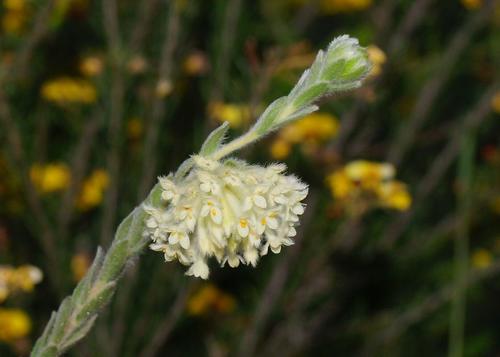
Pimelea octophylla R.Br.
Pimelea octophylla (woolly riceflower) is an erect hairy-stemmed shrub found in …
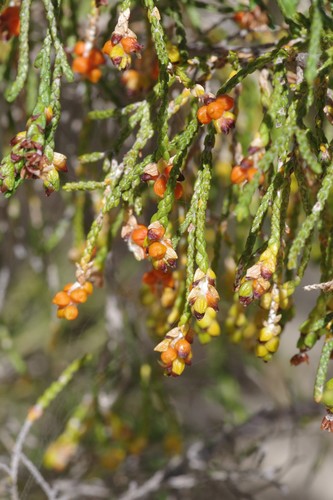
Passerina rigida Wikstr.
Passerina rigida is an endemic South African shrub commonly known as dune gonna.
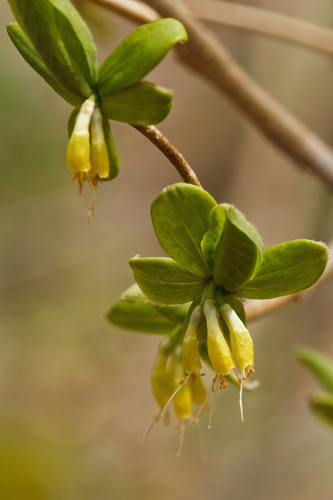
Dirca palustris L.
Dirca palustris L., leatherwood, is a North Eastern North American shrub with to…
⚠️ Poisonous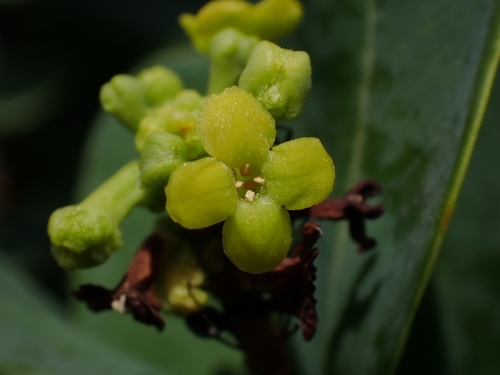
Wikstroemia indica (L.) C.A.Mey.
Wikstroemia indica is a toxic small shrub used in traditional Chinese medicine a…
⚠️ Poisonous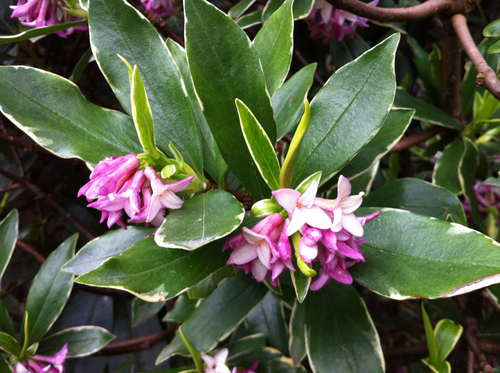
Daphne odora Thunb.
Daphne odora (winter daphne) is a fragrant evergreen shrub native to China, pois…
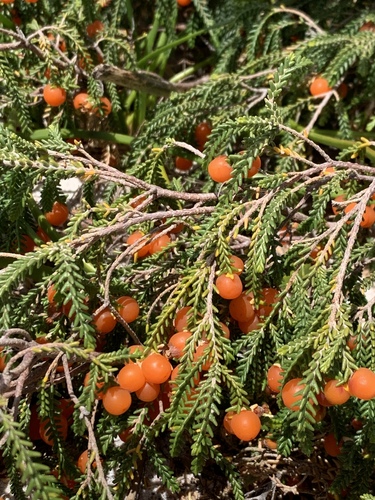
Passerina ericoides L.
Passerina ericoides is a tortoise berry shrub that stabilizes sand dunes and wor…
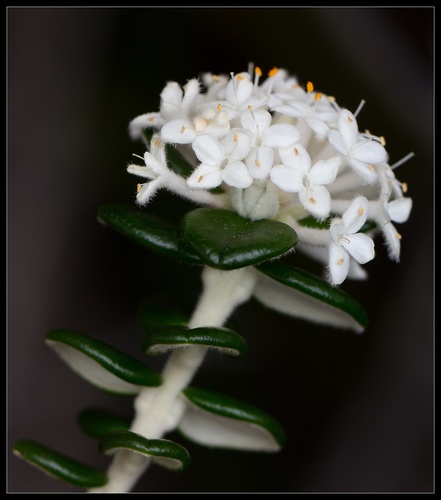
Pimelea nivea Labill.
Pimelea nivea Labill. is an erect flowering shrub found on rocky hillslopes in p…
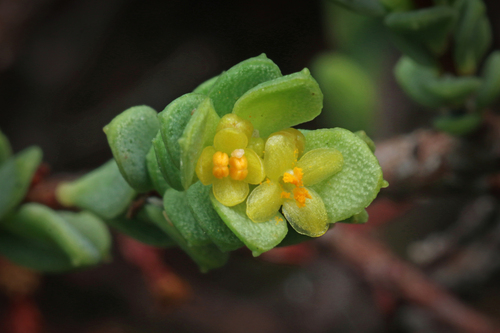
Pimelea serpyllifolia R.Br.
Pimelea serpyllifolia is a dioecious Australian shrub with colored flower heads,…
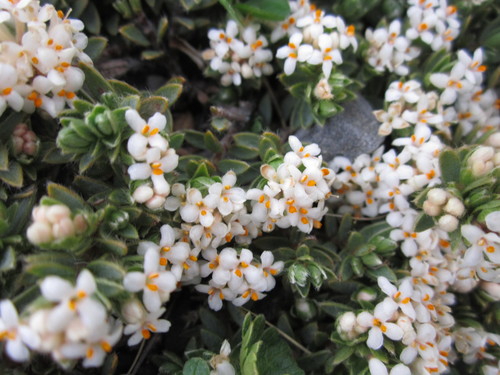
Pimelea prostrata (J.R. & G.Forst.) Willd.
Pimelea prostrata is a low prostrate New Zealand shrub with blue-green leaves, s…
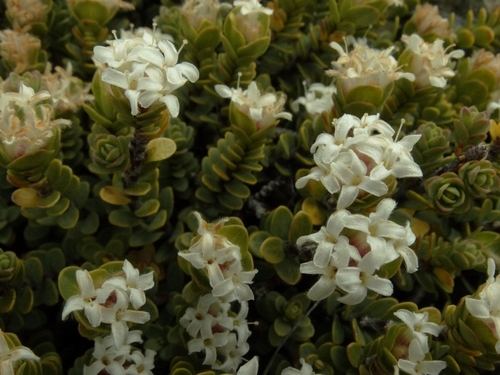
Pimelea traversii Hook.fil.
Pimelea traversii Hook.fil. is a bushy New Zealand shrub that hosts the endemic …
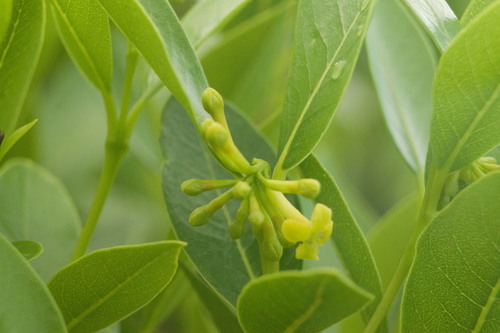
Wikstroemia oahuensis (A.Gray) Rock
Wikstroemia oahuensis, or ʻākia, is a variable endemic Hawaiian shrub with docum…
⚠️ Poisonous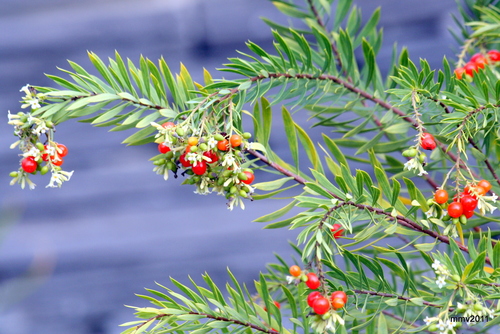
Daphne gnidium L.
Daphne gnidium L. is a poisonous evergreen shrub native to the Mediterranean are…
⚠️ PoisonousThymelaeaceae plants belong to the Malvales order in the Plantae kingdom. The flower buds are small and conical, with 4 distinct dark, silky bracts that remain on the plant after flowering. For instant identification, use the iNature app — AI-powered and works offline.
Thymelaeaceae is classified in the order Malvales, class Magnoliopsida, phylum Tracheophyta. The family contains 135 accepted species worldwide.
Yes, some Thymelaeaceae species are toxic or poisonous. Always exercise caution with unknown specimens. View poisonous Thymelaeaceae species or browse the full poisonous species guide.
Sources: GBIF, iNaturalist, Wikipedia · Disclaimer
Download iNature for free. 10 identifications on us. No account needed. No credit card required.
Download Free on App Store
