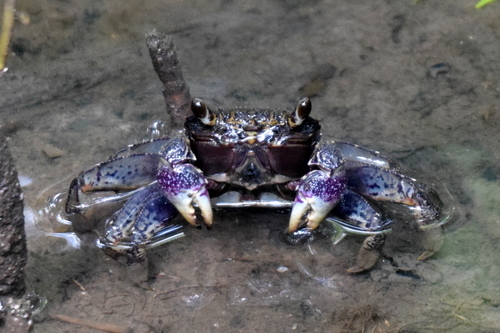
How to Identify Sesarmidae

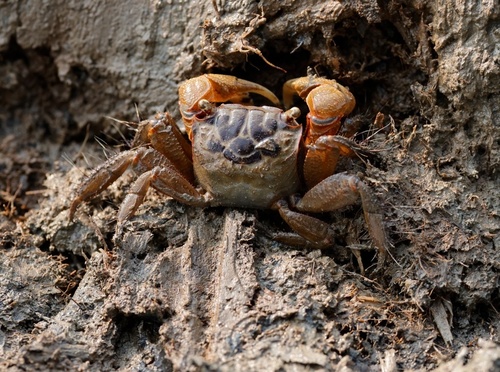
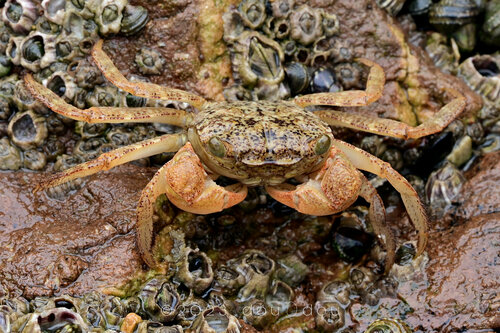
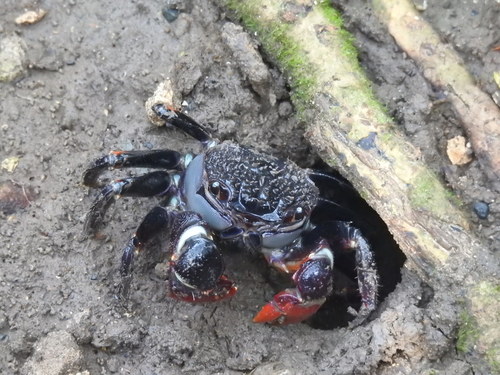
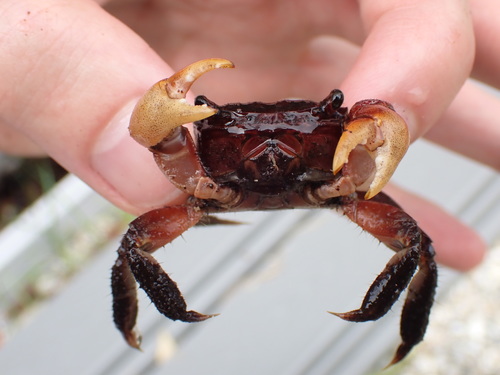
Sesarmidae is a animal family in the Animalia kingdom, order Decapoda, class Malacostraca. The family contains 39 accepted species worldwide.

Key Identification Features

For instant identification in the field, use the iNature app — AI-powered, works offline.
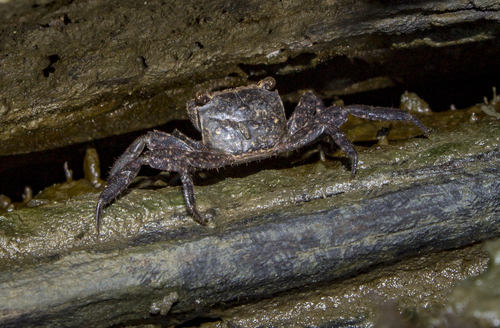
Representative Sesarmidae Species

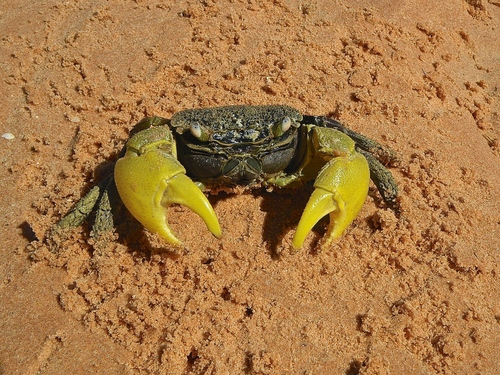
How to identify Armases cinereum (Bosc, 1801)

Armases cinereum (Bosc, 1801)

Armases cinereum (Bosc, 1801)

Armases cinereum, the squareback marsh or wharf crab, is a common omnivorous coa…

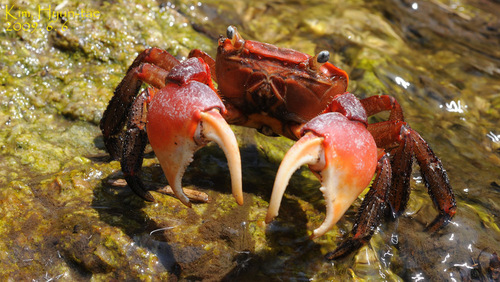
How to identify Neosarmatium australiense Ragionieri, Fratini & Schubart, 2012

Neosarmatium australiense Ragionieri, Fratini & Schubart, 2012

Neosarmatium australiense Ragionieri, Fratini & Schubart, 2012

Neosarmatium australiense is a mangrove crab species from northern Australia, sp…

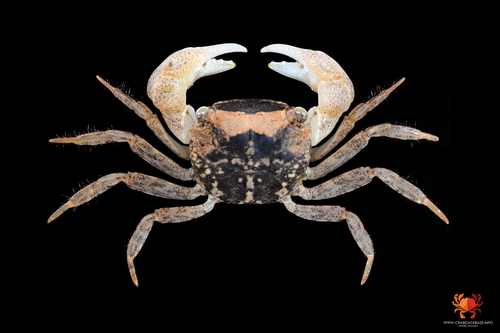
How to identify Chiromantes haematocheir (De Haan, 1833)

Chiromantes haematocheir (De Haan, 1833)

Chiromantes haematocheir (De Haan, 1833)

Chiromantes haematocheir is a crab species with distinct physical and color trai…

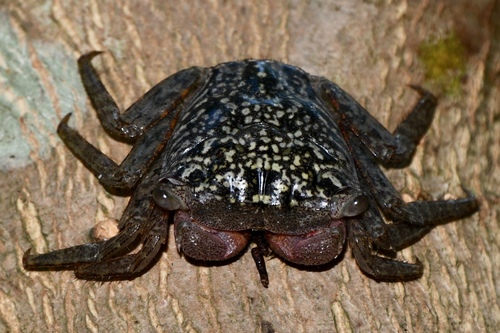
How to identify Tiomanium indicum (H.Milne Edwards, 1837)

Tiomanium indicum (H.Milne Edwards, 1837)

Tiomanium indicum (H.Milne Edwards, 1837)

Tiomanium indicum, the Tioman crab, is a supralittoral sesarmid crab found acros…

How to identify Metasesarma obesum (Dana, 1851)

Metasesarma obesum (Dana, 1851)

Metasesarma obesum (Dana, 1851)

Metasesarma obesum is a species known from Indian and Pacific Ocean shores, with…

How to identify Aratus pisonii (H.Milne Edwards, 1837)

Aratus pisonii (H.Milne Edwards, 1837)

Aratus pisonii (H.Milne Edwards, 1837)

Aratus pisonii, the mangrove tree crab, is a small omnivorous crab that lives in…

How to identify Orisarma dehaani (H.Milne Edwards, 1853)

Orisarma dehaani (H.Milne Edwards, 1853)

Orisarma dehaani (H.Milne Edwards, 1853)

Orisarma dehaani is an East Asian endemic mudflat crab that lives in mangrove sw…

How to identify Parasesarma pictum (De Haan, 1835)

Parasesarma pictum (De Haan, 1835)

Parasesarma pictum (De Haan, 1835)

Parasesarma pictum is a sesarmid crab with a square carapace and distinct anatom…

How to identify Neosarmatium smithi (H.Milne Edwards, 1853)

Neosarmatium smithi (H.Milne Edwards, 1853)

Neosarmatium smithi (H.Milne Edwards, 1853)

Neosarmatium smithi is a mangrove-dwelling swimming crab species found across In…

How to identify Sesarma reticulatum (Say, 1817)

Sesarma reticulatum (Say, 1817)

Sesarma reticulatum (Say, 1817)

Sesarma reticulatum is a crab species native to the North American Atlantic coas…

How to identify Parasesarma messa (Campbell, 1967)

Parasesarma messa (Campbell, 1967)

Parasesarma messa (Campbell, 1967)

Parasesarma messa, the maroon mangrove crab, is a burrowing mangrove crab specie…

How to identify Episesarma versicolor (Tweedie, 1940)

Episesarma versicolor (Tweedie, 1940)

Episesarma versicolor (Tweedie, 1940)

Episesarma versicolor is a large mangrove sesarmid crab distinguished by its whi…

Browse all 39 Sesarmidae species →

Frequently Asked Questions

How do you identify Sesarmidae?

Sesarmidae animals belong to the Decapoda order in the Animalia kingdom. A distinct row of hair occurs on the carapace’s lower margin, and the second walking legs have no pubescence. For instant identification, use the iNature app — AI-powered and works offline.

What are the key characteristics of Sesarmidae?

Sesarmidae is classified in the order Decapoda, class Malacostraca, phylum Arthropoda. Zoea are characterized by a large spine positioned on their dorsal side.

Sources: GBIF, iNaturalist, Wikipedia · Disclaimer

Start Exploring Nature Today

Download iNature for free. 10 identifications on us. No account needed. No credit card required.

Download Free on App Store