Key Identification Features
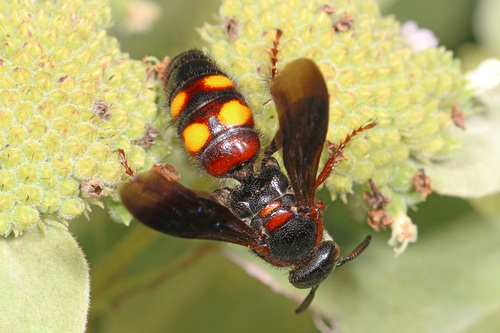
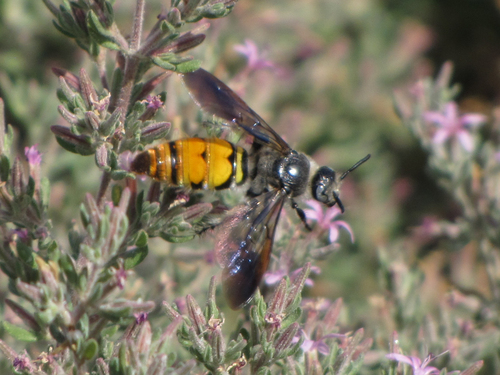
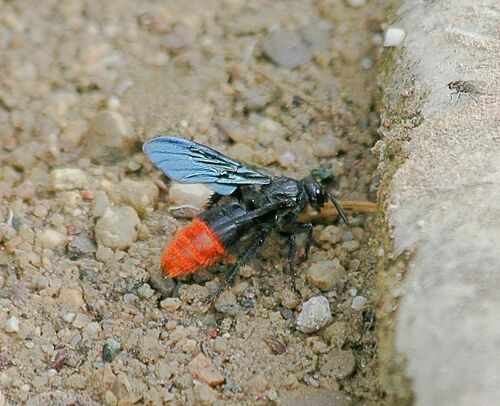
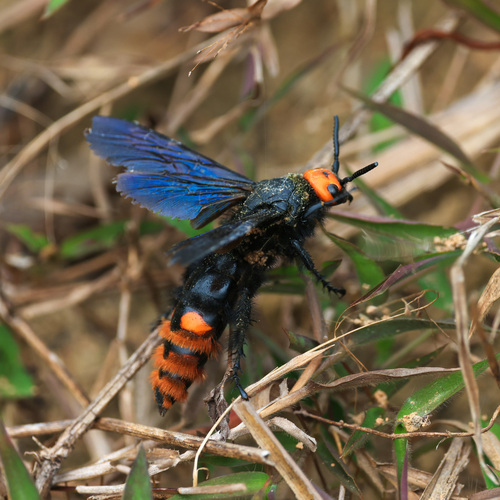
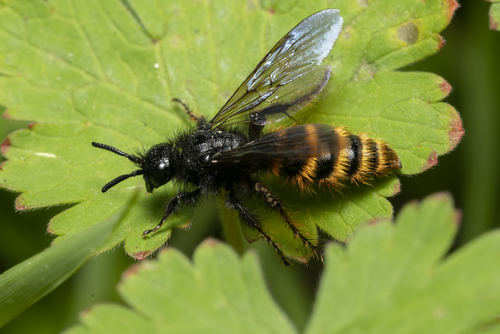
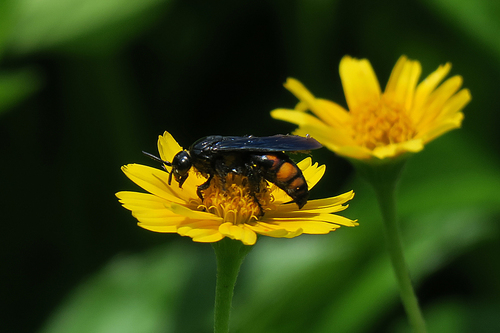
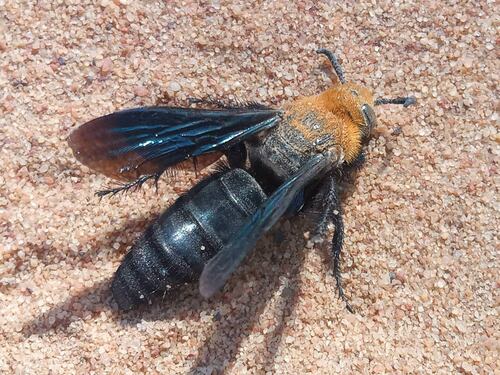
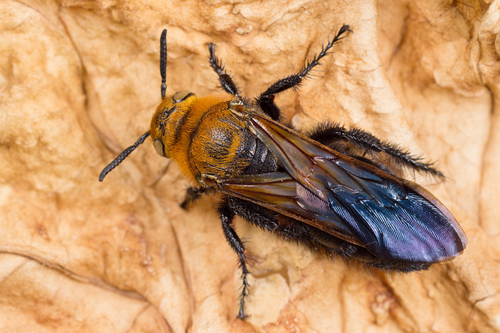
- dubia haematodes has a coloration very similar to Triscolia ardens, but can be distinguished by its forewing, which only has two submarginal cells; T.
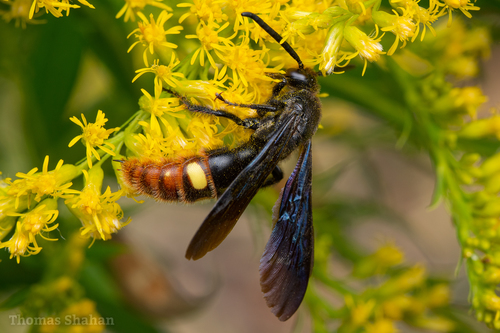
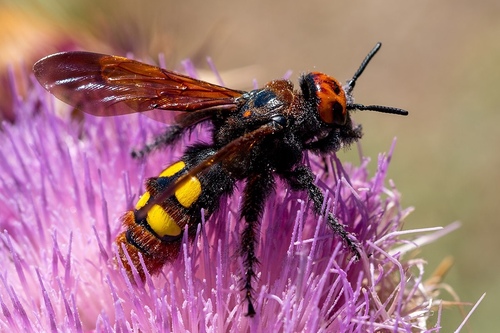
- pilipes is structurally distinct from all other members of the Dielis genus due to its unique microstructuring on the frons, propodeum, mesonotum, and hind tibiae.
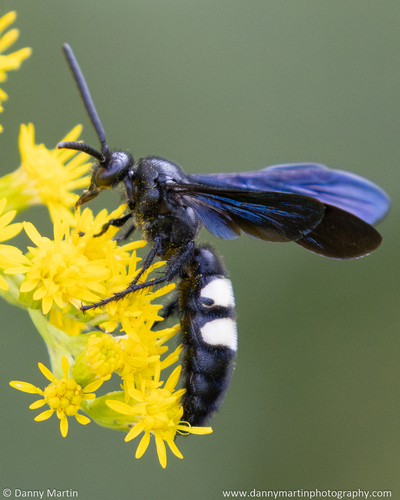
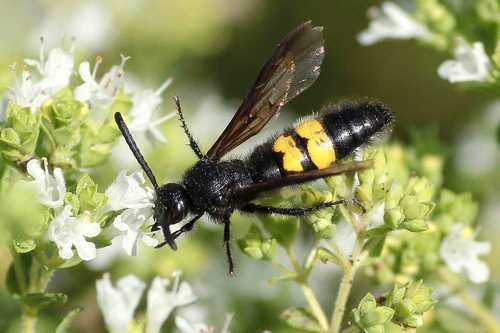
- In coloration, this species resembles the common Scolia dubia, but it lacks the distinctive yellow spots of S.
- It is white, segmented, and mostly featureless, tapering at both ends, and resembles a fly larva.
For instant identification in the field, use the iNature app — AI-powered, works offline.