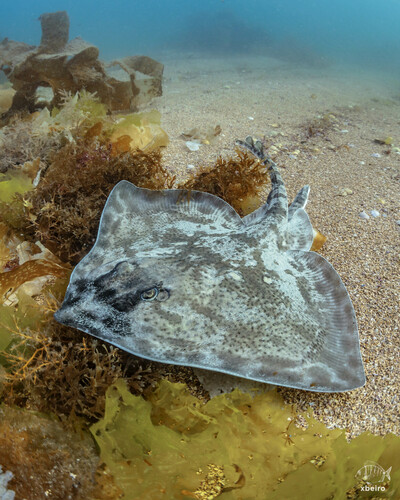
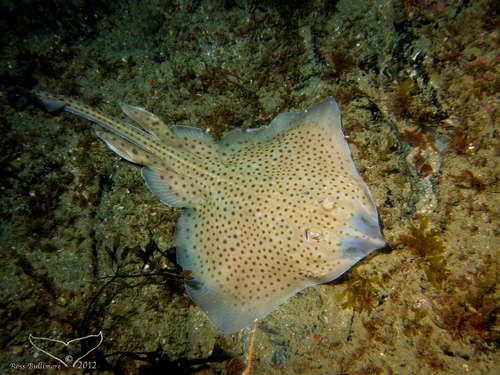
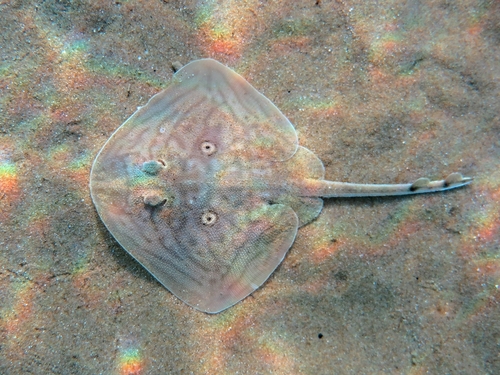
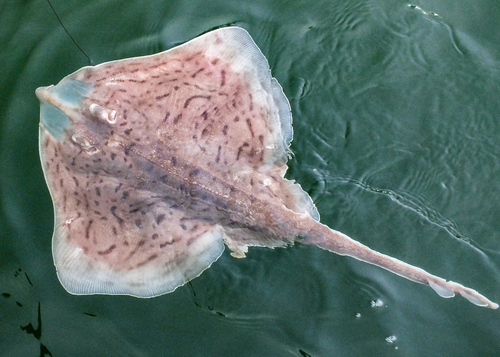
Key Identification Features
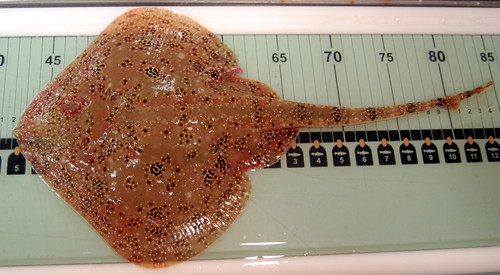
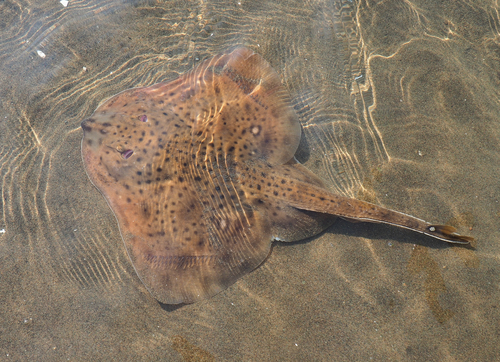
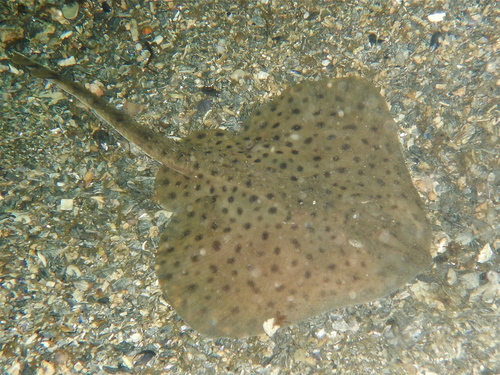
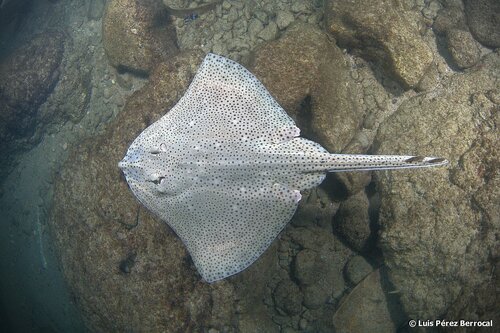
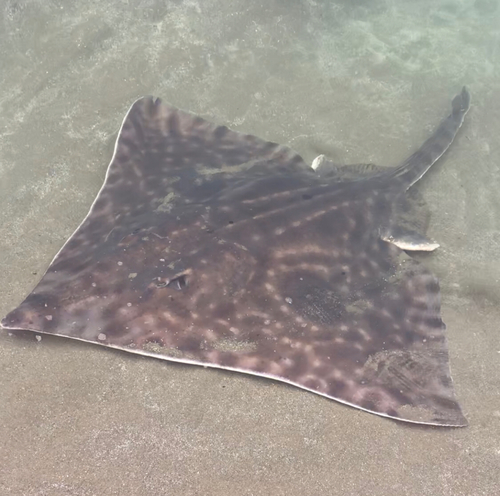
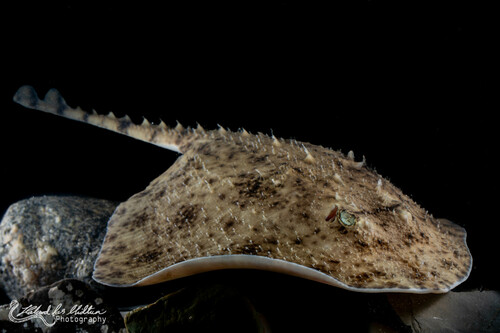
- ocellata typically has 1 to 4 eye-like markings called ocelli on the upper surface of its disc; each ocellus has a dark brown center and a pale outer edge.
- During cell division, regionalization of the developing skate becomes visible, with distinct head and tail regions.
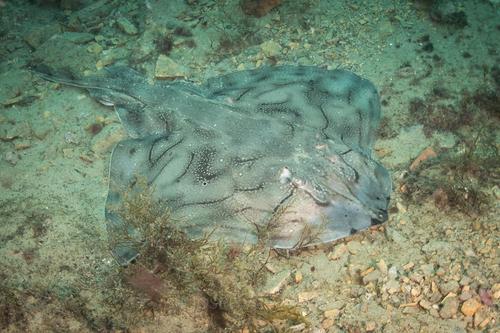
- Little skates are more active at night, and spend most of the day buried in sediment, usually near specific landscape features like depressions dug by other animals.
- They use a distinctive mode of locomotion that the first scientists to document it called "punting" to move across the sea floor.
For instant identification in the field, use the iNature app — AI-powered, works offline.