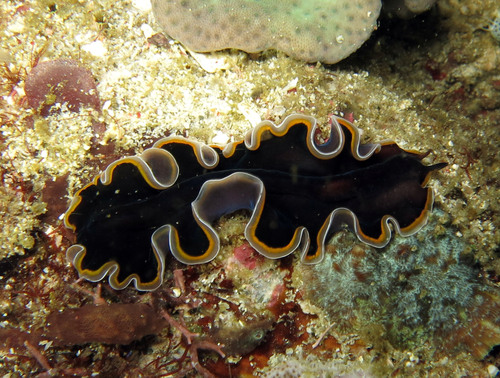
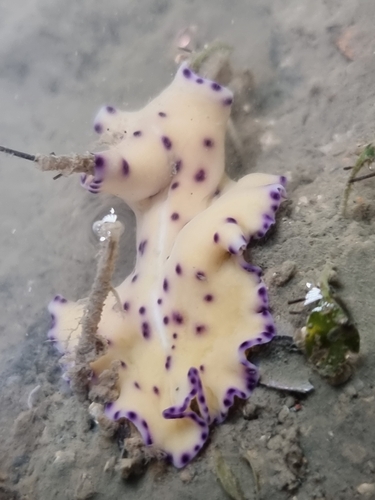
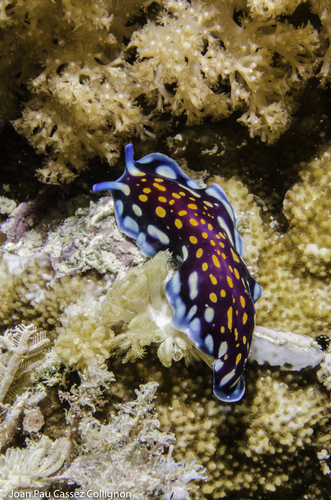
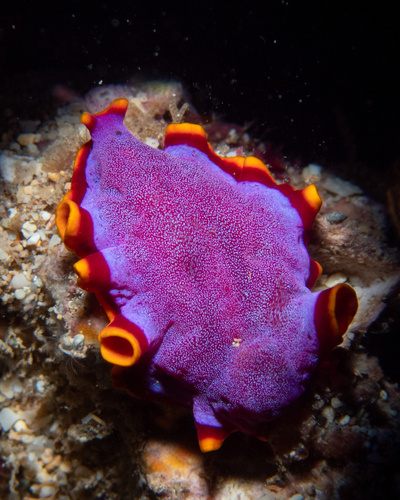
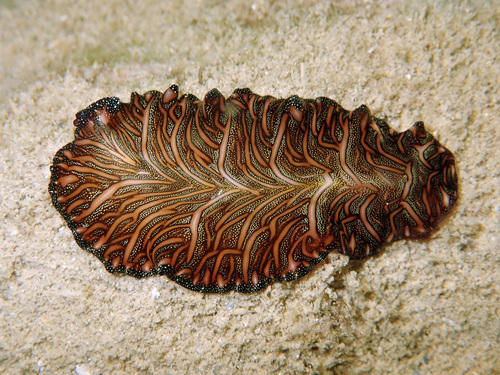
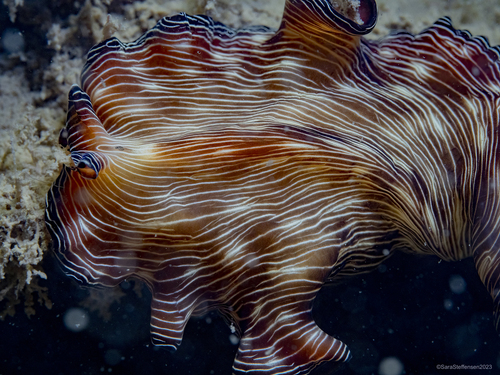
How to Identify Pseudocerotidae

Pseudocerotidae is a animal family in the Animalia kingdom, order , class Turbellaria. The family contains 21 accepted species worldwide.

Key Identification Features

For instant identification in the field, use the iNature app — AI-powered, works offline.
Representative Pseudocerotidae Species

How to identify Pseudoceros dimidiatus Graff, 1893

Pseudoceros dimidiatus Graff, 1893

Pseudoceros dimidiatus Graff, 1893

Pseudoceros dimidiatus, the divided flatworm, is a colorful aposematic reef flat…

How to identify Thysanozoon brocchii (Risso, 1818)

Thysanozoon brocchii (Risso, 1818)

Thysanozoon brocchii (Risso, 1818)

Thysanozoon brocchii, the carpet flatworm, is a marine flatworm with distinct co…

How to identify Yungia aurantiaca (Delle Chiaje, 1822)

Yungia aurantiaca (Delle Chiaje, 1822)

Yungia aurantiaca (Delle Chiaje, 1822)

Yungia aurantiaca is a fairly large predatory flatworm, with distinct features a…

How to identify Thysanozoon nigropapillosum (Hyman, 1959)

Thysanozoon nigropapillosum (Hyman, 1959)

Thysanozoon nigropapillosum (Hyman, 1959)

Thysanozoon nigropapillosum is a widely distributed tropical Indo-Pacific flatwo…

How to identify Pseudobiceros gloriosus Newman & Cannon, 1994

Pseudobiceros gloriosus Newman & Cannon, 1994

Pseudobiceros gloriosus Newman & Cannon, 1994

Pseudobiceros gloriosus is a large flatworm species with distinct colored body m…

How to identify Pseudobiceros hancockanus (Collingwood, 1876)

Pseudobiceros hancockanus (Collingwood, 1876)

Pseudobiceros hancockanus (Collingwood, 1876)

Pseudobiceros hancockanus is a hermaphroditic marine flatworm that engages in di…

How to identify Pseudoceros laingensis Newman & Cannon, 1998

Pseudoceros laingensis Newman & Cannon, 1998

Pseudoceros laingensis Newman & Cannon, 1998

Pseudoceros laingensis is a flatworm species found in the Central Tropical Indo-…

How to identify Pseudoceros lindae Newman & Cannon, 1994

Pseudoceros lindae Newman & Cannon, 1994

Pseudoceros lindae Newman & Cannon, 1994

Pseudoceros lindae is a brightly colored polyclad flatworm from the tropical Ind…

How to identify Pseudoceros ferrugineus Hyman, 1959

Pseudoceros ferrugineus Hyman, 1959

Pseudoceros ferrugineus Hyman, 1959

Pseudoceros ferrugineus is a colorful flatworm widespread in tropical Indo-Pacif…

How to identify Pseudobiceros bedfordi (Laidlaw, 1903)

Pseudobiceros bedfordi (Laidlaw, 1903)

Pseudobiceros bedfordi (Laidlaw, 1903)

Pseudobiceros bedfordi is a large Indo-Pacific hermaphroditic polyclad flatworm …

How to identify Pseudobiceros fulgor Newman & Cannon, 1994

Pseudobiceros fulgor Newman & Cannon, 1994

Pseudobiceros fulgor Newman & Cannon, 1994

Pseudobiceros fulgor, the lightning worm, is a bilaterally symmetrical acoelomat…

Browse all 21 Pseudocerotidae species →

Frequently Asked Questions

How do you identify Pseudocerotidae?

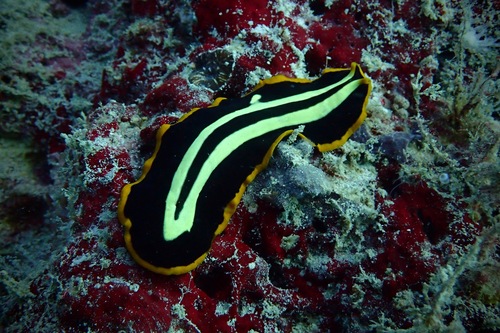
Pseudocerotidae animals belong to the order in the Animalia kingdom. Two broad, longitudinal yellow-greenish stripes, typically separated by a narrow black central line, are also common features. For instant identification, use the iNature app — AI-powered and works offline.

What are the key characteristics of Pseudocerotidae?

Pseudocerotidae is classified in the order , class Turbellaria, phylum Platyhelminthes. It can display at least three distinct color patterns, all using the same set of colors, which signal that it is inedible to predators.

Sources: GBIF, iNaturalist, Wikipedia · Disclaimer

Start Exploring Nature Today

Download iNature for free. 10 identifications on us. No account needed. No credit card required.

Download Free on App Store