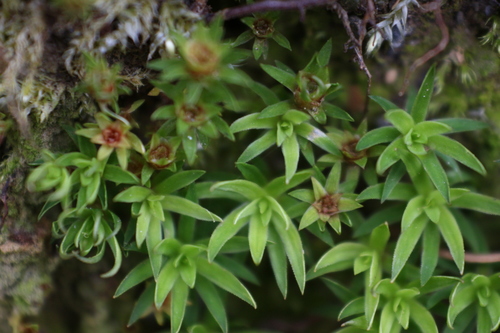
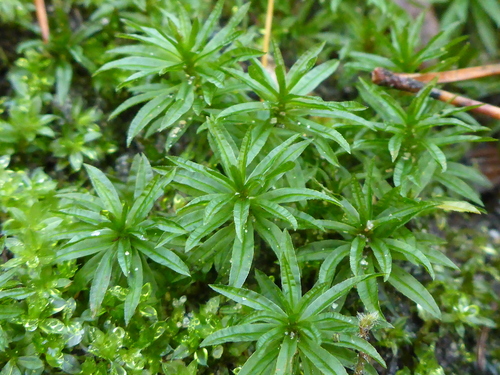
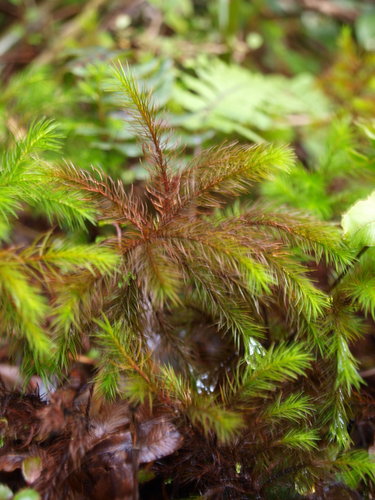
How to Identify Polytrichaceae

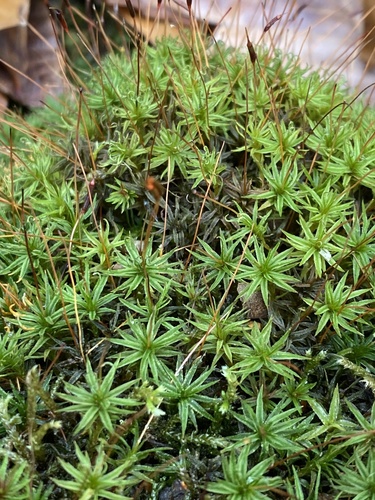
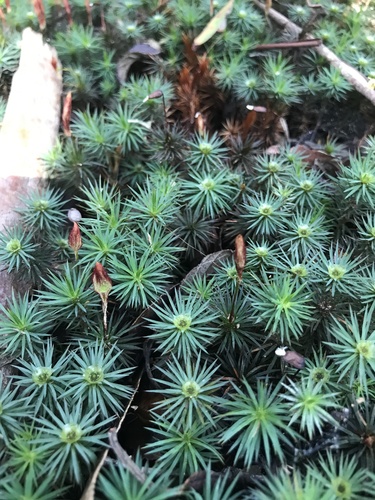
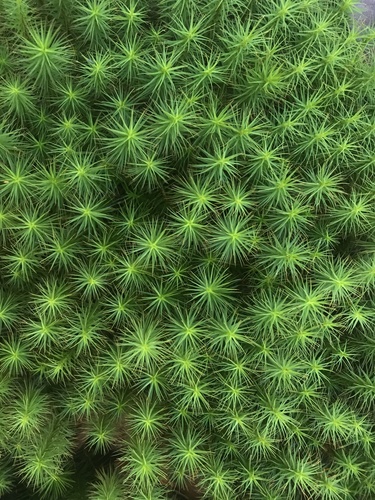
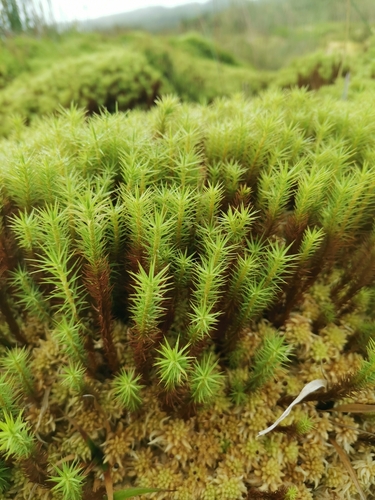
Polytrichaceae is a plant family in the Plantae kingdom, order Polytrichales, class Polytrichopsida. The family contains 27 accepted species worldwide.

Key Identification Features

For instant identification in the field, use the iNature app — AI-powered, works offline.
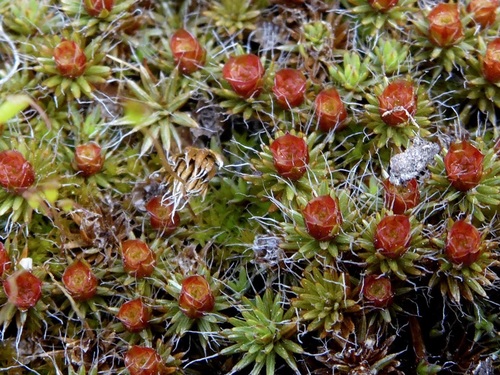
Representative Polytrichaceae Species

How to identify Polytrichum piliferum Hedw.

Polytrichum piliferum Hedw.

Polytrichum piliferum Hedw.

Polytrichum piliferum is a dioicous bipolar moss with common sporophytes that pr…

How to identify Atrichum angustatum (Brid.) Bruch & Schimp.

Atrichum angustatum (Brid.) Bruch & Schimp.

Atrichum angustatum (Brid.) Bruch & Schimp.

Atrichum angustatum, or slender starburst moss, is a vulnerable rare moss native…

How to identify Dawsonia polytrichoides R.Br.

Dawsonia polytrichoides R.Br.

Dawsonia polytrichoides R.Br.

Dawsonia polytrichoides is an Australian moss species with stems up to 20cm long…

How to identify Polytrichum commune Hedw.

Polytrichum commune Hedw.

Polytrichum commune Hedw.

Polytrichum commune Hedw. is a medium-to-large dioicous haircap moss with a deta…

How to identify Polytrichum strictum Menzies ex Brid.

Polytrichum strictum Menzies ex Brid.

Polytrichum strictum Menzies ex Brid.

Polytrichum strictum, the strict haircap moss, is a dioicous peatland pioneer mo…

How to identify Polytrichum ohioense Renauld & Cardot

Polytrichum ohioense Renauld & Cardot

Polytrichum ohioense Renauld & Cardot

Polytrichum ohioense is a common North American and European hair-cap moss found…

How to identify Polytrichum juniperinum Hedw.

Polytrichum juniperinum Hedw.

Polytrichum juniperinum Hedw.

Polytrichum juniperinum, or juniper haircap moss, is a distinct moss species wit…

How to identify Pogonatum urnigerum (Hedw.) P.Beauv.

Pogonatum urnigerum (Hedw.) P.Beauv.

Pogonatum urnigerum (Hedw.) P.Beauv.

Pogonatum urnigerum is a species of moss found across multiple continents, with …

How to identify Dawsonia longiseta Hampe

Dawsonia longiseta Hampe

Dawsonia longiseta Hampe

Dawsonia longiseta Hampe is an erect moss native to eastern Australia that grows…

How to identify Pogonatum aloides (Hedw.) P.Beauv.

Pogonatum aloides (Hedw.) P.Beauv.

Pogonatum aloides (Hedw.) P.Beauv.

Pogonatum aloides is a moss species in the Polytrichaceae family, native to Eura…

How to identify Atrichum undulatum (Hedw.) P.Beauv.

Atrichum undulatum (Hedw.) P.Beauv.

Atrichum undulatum (Hedw.) P.Beauv.

Atrichum undulatum is a native-to-Eurasia-and-North-America moss species in the …

How to identify Dendroligotrichum tongariroense (Colenso) Tangney

Dendroligotrichum tongariroense (Colenso) Tangney

Dendroligotrichum tongariroense (Colenso) Tangney

Dendroligotrichum tongariroense is a tall moss species native to New Zealand wit…

Browse all 27 Polytrichaceae species →

Frequently Asked Questions

How do you identify Polytrichaceae?

Polytrichaceae plants belong to the Polytrichales order in the Plantae kingdom. Their margins are distinctly grooved with 2 rows of paired, projecting knobs. For instant identification, use the iNature app — AI-powered and works offline.

What are the key characteristics of Polytrichaceae?

Polytrichaceae is classified in the order Polytrichales, class Polytrichopsida, phylum Bryophyta. juniperinum) shares these features.

Sources: GBIF, iNaturalist, Wikipedia · Disclaimer

Start Exploring Nature Today

Download iNature for free. 10 identifications on us. No account needed. No credit card required.

Download Free on App Store