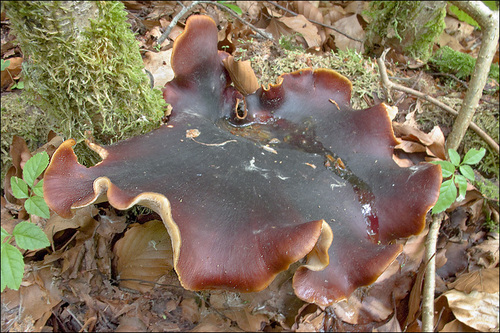
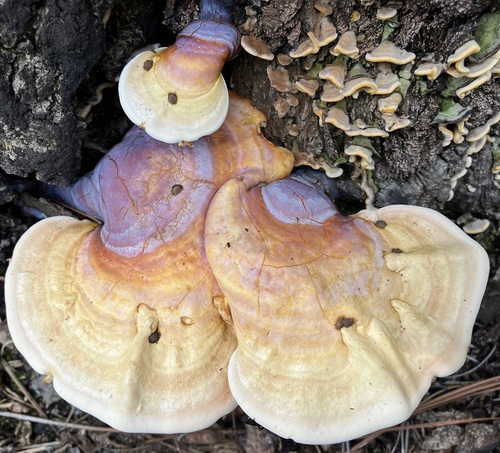
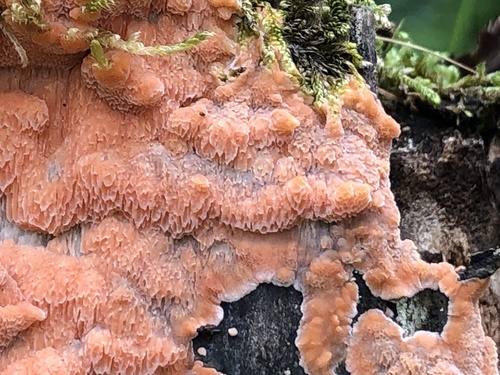
How to Identify Polyporaceae

Polyporaceae is a fungus family in the Fungi kingdom, order Polyporales, class Agaricomycetes. The family contains 94 accepted species worldwide.

Key Identification Features

For instant identification in the field, use the iNature app — AI-powered, works offline.
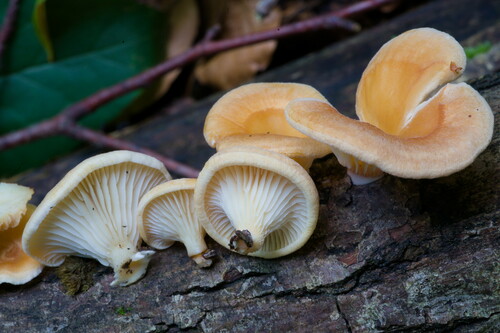
Representative Polyporaceae Species

How to identify Neofavolus suavissimus (Fr.) Seelan, Justo & Hibbett

Neofavolus suavissimus (Fr.) Seelan, Justo & Hibbett

Neofavolus suavissimus (Fr.) Seelan, Justo & Hibbett

Neofavolus suavissimus is a fungus species in the Polyporaceae family, with Panu…

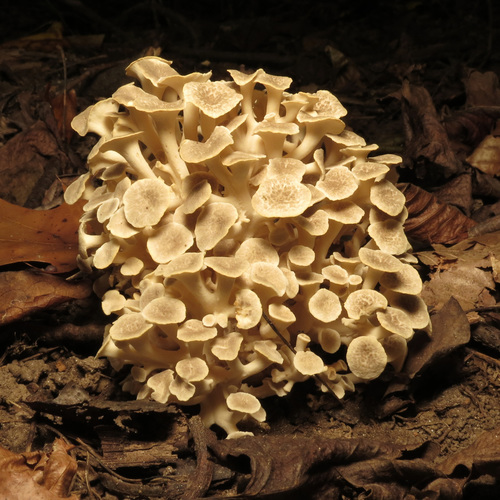
How to identify Polyporus umbellatus (Pers.) Fr.

Polyporus umbellatus (Pers.) Fr.

Polyporus umbellatus (Pers.) Fr.

Polyporus umbellatus is a choice edible mushroom that grows on old beech or oak …

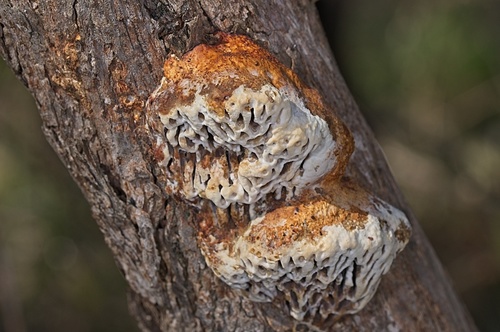
How to identify Hexagonia vesparia (Berk.) Ryvarden

Hexagonia vesparia (Berk.) Ryvarden

Hexagonia vesparia (Berk.) Ryvarden

Hexagonia vesparia, the wasp nest polypore, is a saprophytic Australian bracket …

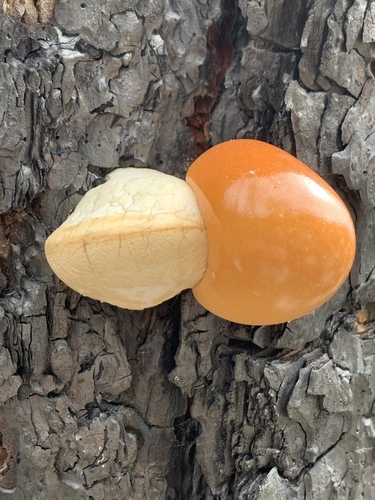
How to identify Cryptoporus volvatus (Peck) Shear

Cryptoporus volvatus (Peck) Shear

Cryptoporus volvatus (Peck) Shear

Cryptoporus volvatus is an inedible conifer-decomposing polypore fungus that app…

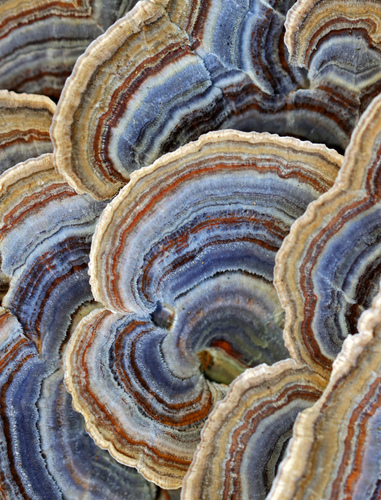
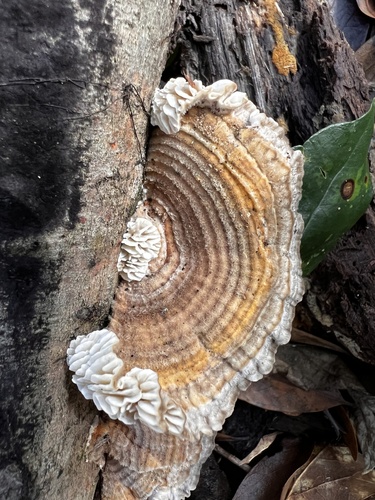
How to identify Trametes versicolor (L.) Lloyd

Trametes versicolor (L.) Lloyd

Trametes versicolor (L.) Lloyd

Trametes versicolor is a common white-rot deciduous wood fungus, marketed as a d…

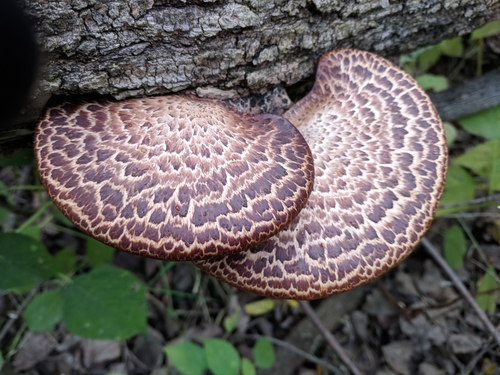
How to identify Cerioporus squamosus (Huds.) Quél.

Cerioporus squamosus (Huds.) Quél.

Cerioporus squamosus (Huds.) Quél.

Cerioporus squamosus, or Dryad's saddle, is an edible annual polypore mushroom t…

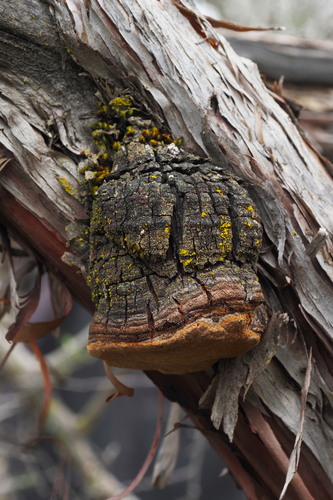
How to identify Fomes arctostaphyli Long

Fomes arctostaphyli Long

Fomes arctostaphyli Long

Phellinus arctostaphyli, the manzanita conk, is a poorly studied North American …

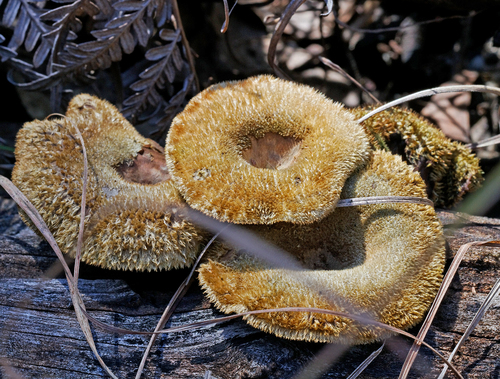
How to identify Lentinus fasciatus Berk.

Lentinus fasciatus Berk.

Lentinus fasciatus Berk.

Lentinus fasciatus Berk. is a saprotrophic wood-decaying fungus found across par…

How to identify Lenzites betulinus (L.) Fr.

Lenzites betulinus (L.) Fr.

Lenzites betulinus (L.) Fr.

Lenzites betulinus is an inedible tough polypore fungus with gills and researche…

How to identify Picipes badius (Pers.) Zmitr. & Kovalenko

Picipes badius (Pers.) Zmitr. & Kovalenko

Picipes badius (Pers.) Zmitr. & Kovalenko

Picipes badius is a tough inedible polypore fungus that causes white rot on hard…

How to identify Ganoderma curtisii (Berk.) Murrill

Ganoderma curtisii (Berk.) Murrill

Ganoderma curtisii (Berk.) Murrill

Ganoderma curtisii is a polypore that resembles G. lucidum, grows on decaying ha…

How to identify Rhodonia placenta (Fr.) Niemelä, K.H.Larss. & Schigel

Rhodonia placenta (Fr.) Niemelä, K.H.Larss. & Schigel

Rhodonia placenta (Fr.) Niemelä, K.H.Larss. & Schigel

Rhodonia placenta is a fungus with effused poroid fruiting bodies, a monomitic h…

Browse all 94 Polyporaceae species →

Frequently Asked Questions

How do you identify Polyporaceae?

Polyporaceae funguss belong to the Polyporales order in the Fungi kingdom. The upper surface of the bracket, where it attaches to the substrate, may be hairy, and features bumps and channel-like grooves. For instant identification, use the iNature app — AI-powered and works offline.

What are the key characteristics of Polyporaceae?

Polyporaceae is classified in the order Polyporales, class Agaricomycetes, phylum Basidiomycota. arctostaphyli remains relatively poorly studied as a distinct species.

Sources: GBIF, iNaturalist, Wikipedia · Disclaimer

Start Exploring Nature Today

Download iNature for free. 10 identifications on us. No account needed. No credit card required.

Download Free on App Store