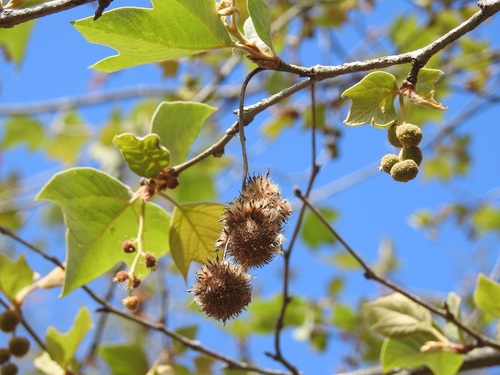
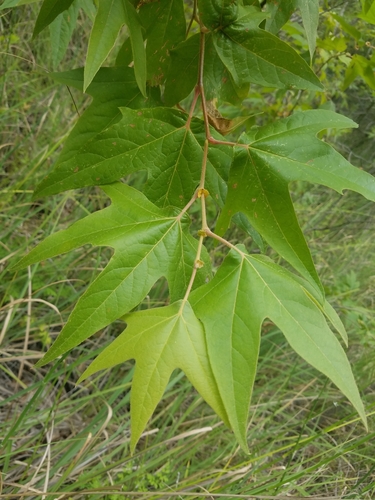
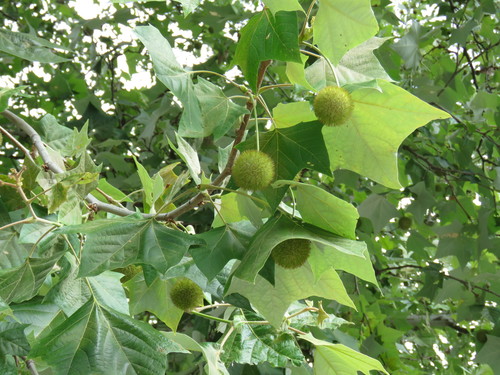
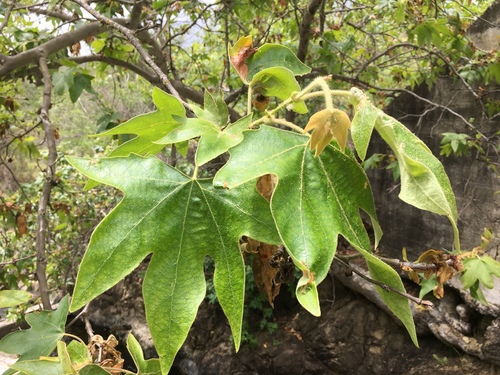
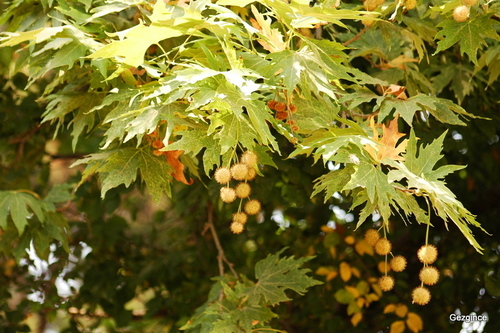
Key Identification Features
- The upper (adaxial) leaf surface typically has a darker waxy cuticle, while the lower (abaxial) leaf surface is noticeably lighter, covered in a fine layer of soft white hairs.
- Ongoing hybridization between Platanus racemosa and Platanus × hispanica is a threat to the genetic diversity and distinct identity of native Platanus racemosa.
- It usually has flaking bark, though occasional specimens have non-flaking bark that becomes thick and rugged.
- Its timber, commonly called lacewood, has a distinct figured grain and is valuable for making indoor furniture.
For instant identification in the field, use the iNature app — AI-powered, works offline.