How to Identify Phallaceae

Phallaceae is a fungus family in the Fungi kingdom, order Phallales, class Agaricomycetes. The family contains 38 accepted species worldwide.

Key Identification Features

For instant identification in the field, use the iNature app — AI-powered, works offline.
Representative Phallaceae Species

How to identify Itajahya galericulata Möller

Itajahya galericulata Möller

Itajahya galericulata Möller

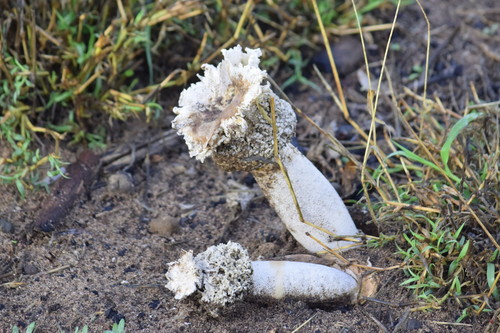
Itajahya galericulata is a rarely observed saprobic stinkhorn species found in a…

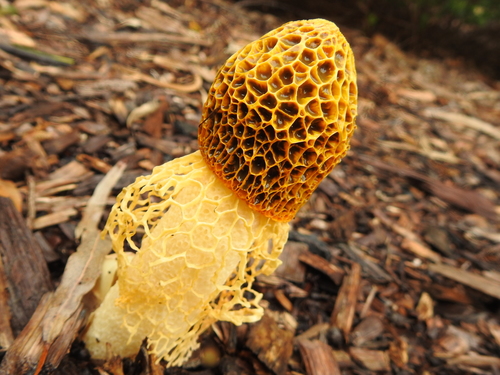
How to identify Phallus haitangensis H.Li Li, P.E.Mortimer, J.C.Xu & K.D.Hyde

Phallus haitangensis H.Li Li, P.E.Mortimer, J.C.Xu & K.D.Hyde

Phallus haitangensis H.Li Li, P.E.Mortimer, J.C.Xu & K.D.Hyde

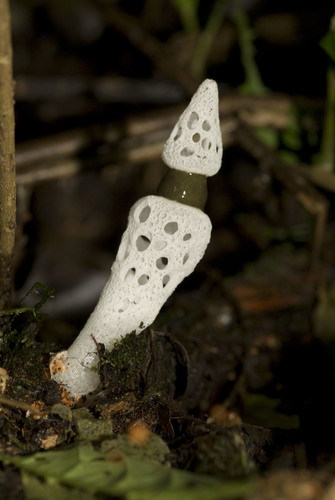
Phallus haitangensis is a Phallus genus fungus first documented in 2016 in Yunna…

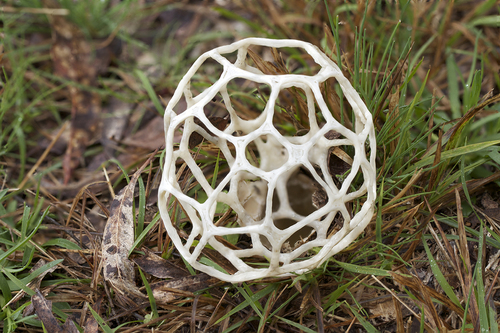
How to identify Ileodictyon gracile Berk.

Ileodictyon gracile Berk.

Ileodictyon gracile Berk.

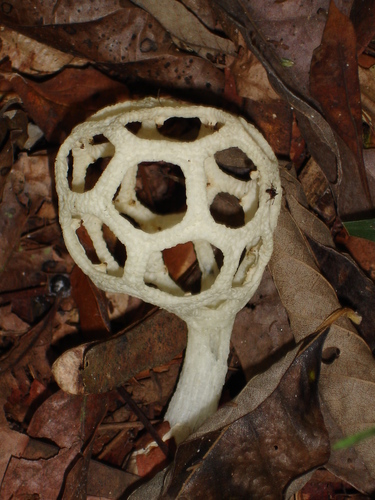
Ileodictyon gracile, the smooth cage fungus, is an Australian-native saprotrophi…

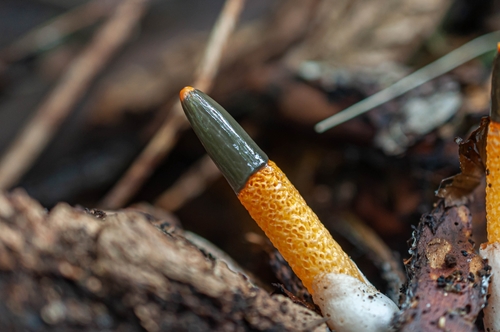
How to identify Mutinus caninus (Schaeff.) Fr.

Mutinus caninus (Schaeff.) Fr.

Mutinus caninus (Schaeff.) Fr.

Mutinus caninus, the dog stinkhorn, is a small phalloid fungus common in Europe,…

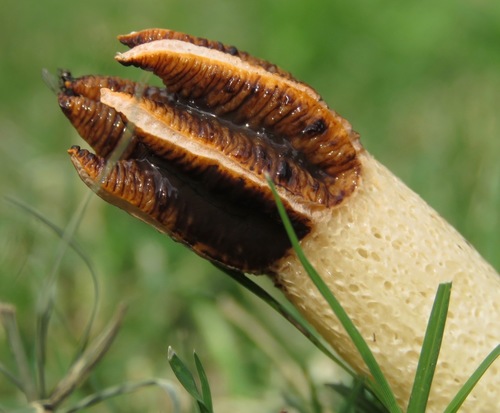
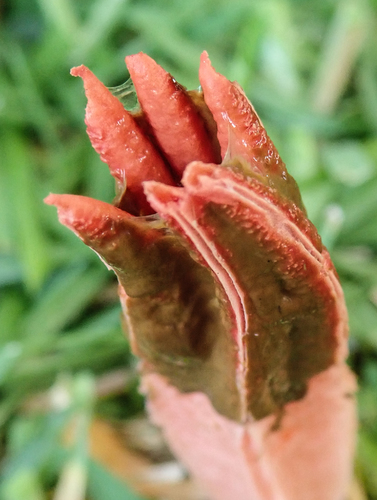
How to identify Lysurus cruciatus (Lepr. & Mont.) Henn.

Lysurus cruciatus (Lepr. & Mont.) Henn.

Lysurus cruciatus (Lepr. & Mont.) Henn.

Lizard's-claw stinkhorn, Lysurus cruciatus, is a foul-smelling stinkhorn fungus …

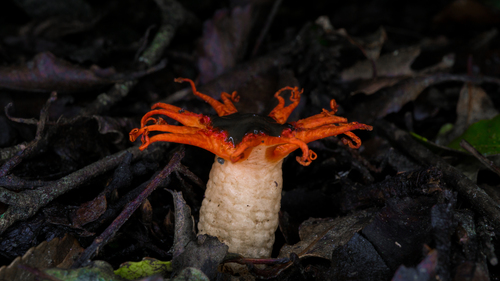
How to identify Aseroe rubra Labill.

Aseroe rubra Labill.

Aseroe rubra Labill.

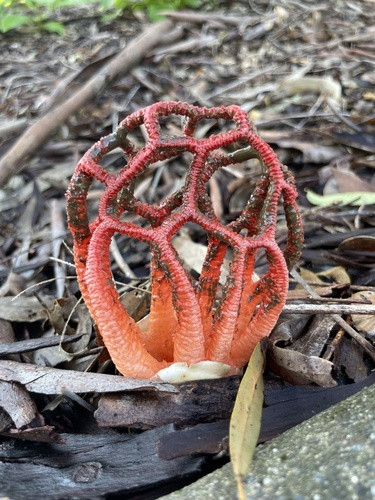
Aseroe rubra Labill. is a saprotrophic star-shaped fungus that originated in Aus…

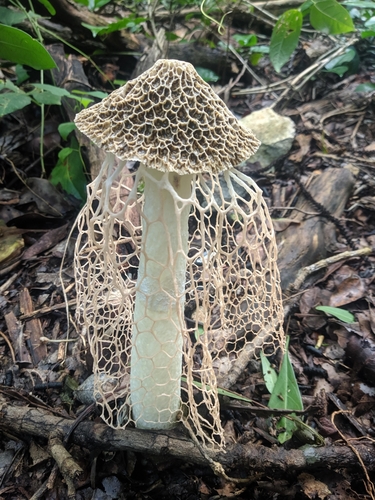
How to identify Phallus multicolor (Berk. & Broome) Cooke, 1882

Phallus multicolor (Berk. & Broome) Cooke, 1882

Phallus multicolor (Berk. & Broome) Cooke, 1882

Phallus multicolor is a stinkhorn fungus similar to Phallus indusiatus, found ac…

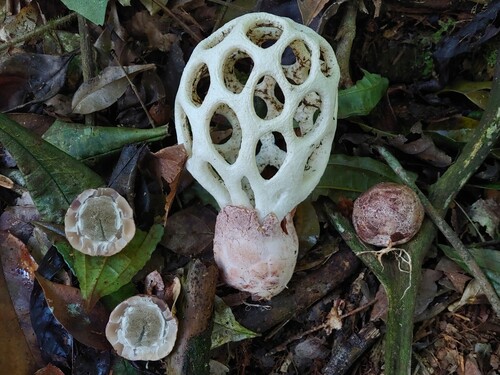
How to identify Clathrus roseovolvatus Lécuru, Mornand, Fiard & Courtec.

Clathrus roseovolvatus Lécuru, Mornand, Fiard & Courtec.

Clathrus roseovolvatus Lécuru, Mornand, Fiard & Courtec.

Clathrus roseovolvatus is a 2013-described stinkhorn family fungus found in Sout…

How to identify Lysurus mokusin (L.) Fr.

Lysurus mokusin (L.) Fr.

Lysurus mokusin (L.) Fr.

Lysurus mokusin is a foul-smelling saprobic fungus edible in its immature egg st…

How to identify Staheliomyces cinctus E.Fisch.

Staheliomyces cinctus E.Fisch.

Staheliomyces cinctus E.Fisch.

Staheliomyces cinctus is a stinkhorn fungus found from southern Mexico to southe…

How to identify Clathrus chrysomycelinus Möller

Clathrus chrysomycelinus Möller

Clathrus chrysomycelinus Möller

Clathrus chrysomycelinus is a stinkhorn fungus found in South America and report…

How to identify Colus pusillus (Berk.) Reichert

Colus pusillus (Berk.) Reichert

Colus pusillus (Berk.) Reichert

Colus pusillus is a saprobic stinkhorn fungus found in Australia, known for its …

Browse all 38 Phallaceae species →

Frequently Asked Questions

How do you identify Phallaceae?

Phallaceae funguss belong to the Phallales order in the Fungi kingdom. The main feature that separates the genus Itajahya from other groups in the stinkhorn family is a patch of whitish tissue called a calyptra or operculum that sits on top of the pileus. For instant identification, use the iNature app — AI-powered and works offline.

What are the key characteristics of Phallaceae?

Phallaceae is classified in the order Phallales, class Agaricomycetes, phylum Basidiomycota. Both species produce whitish, similarly sized mesh-ball fruit bodies, but they can be told apart by features of the receptacle arms that form the mesh.

Sources: GBIF, iNaturalist, Wikipedia · Disclaimer

Start Exploring Nature Today

Download iNature for free. 10 identifications on us. No account needed. No credit card required.

Download Free on App Store