Key Identification Features
- speciosum was one of the featured attractions at the 1851 exhibition held at the Crystal Palace in London.
For instant identification in the field, use the iNature app — AI-powered, works offline.
Orchidaceae (Orchid Family) is a plant family in the Plantae kingdom, order Asparagales, class Liliopsida. The family contains 1,416 accepted species worldwide. Some species in this family are toxic — exercise caution when handling unknown specimens.
For instant identification in the field, use the iNature app — AI-powered, works offline.
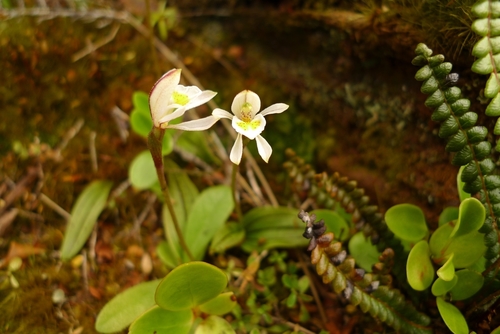
Aporostylis bifolia (Hook.f.) Rupp & Hatch
Aporostylis is an orchid genus that contains just one known species, Aporostylis…
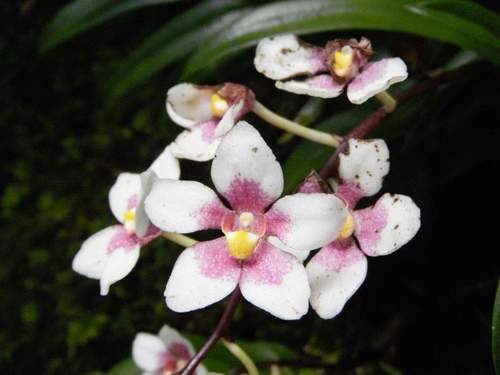
Sarcochilus fitzgeraldii F.Muell.
Sarcochilus fitzgeraldii is a lithophytic Australian orchid that grows on rocks,…
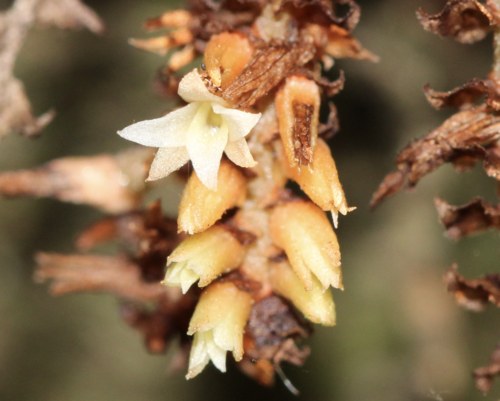
Campylocentrum pachyrrhizum (Rchb.f.) Rolfe
Campylocentrum pachyrrhizum is an orchid species native to regions from southern…
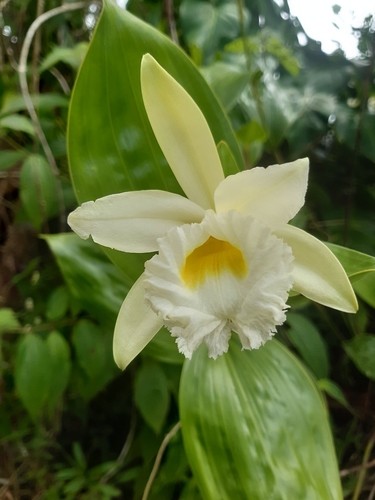
Sobralia macrophylla Rchb.f.
Sobralia macrophylla, the large-leafed sobralia, is a distinct orchid species ra…
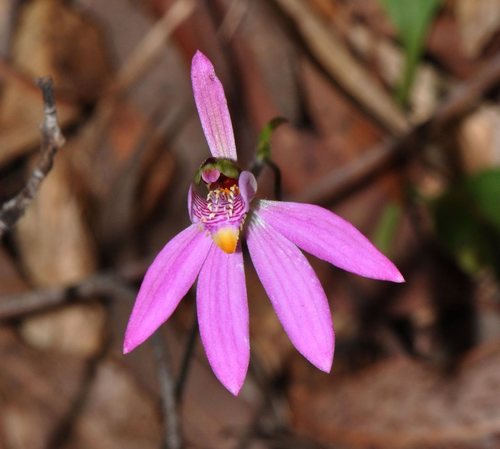
Caladenia quadrifaria (R.S.Rogers) D.L.Jones
Caladenia quadrifaria is a pink-flowered terrestrial orchid found in coastal New…
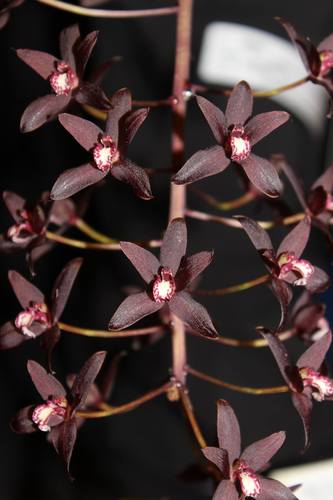
Cymbidium canaliculatum R.Br.
Cymbidium canaliculatum is an epiphytic clump-forming orchid that grows in Austr…
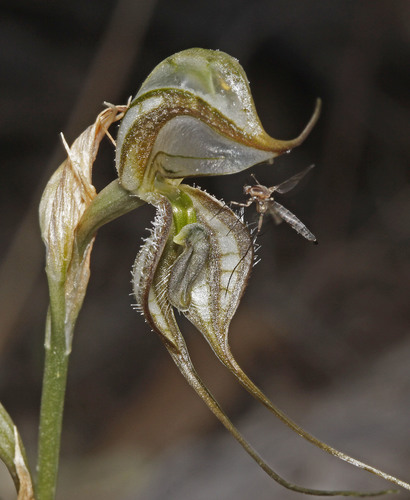
Pterostylis biseta Blackmore & Clemesha
Pterostylis biseta is a tuberous perennial herb with hooded flowers native to so…
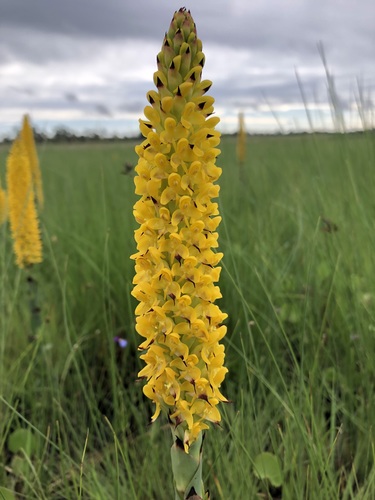
Disa woodii Schltr.
Disa woodii is a perennial geophyte of the genus Disa, native to several regions…
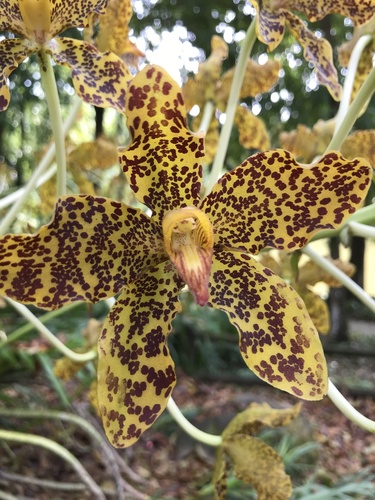
Grammatophyllum speciosum Blume
Grammatophyllum speciosum Blume is the giant, rarely cultivated orchid with pote…
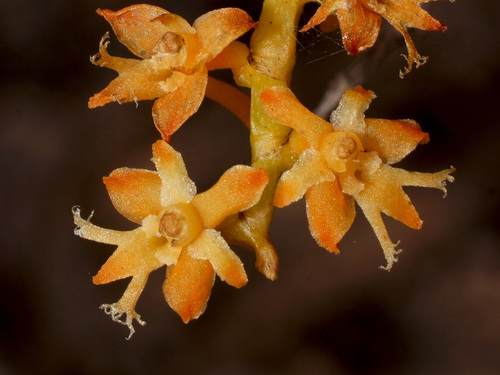
Tridactyle bicaudata (Lindl.) Schltr.
Tridactyle bicaudata is an African orchid species in Orchidaceae with canary yel…
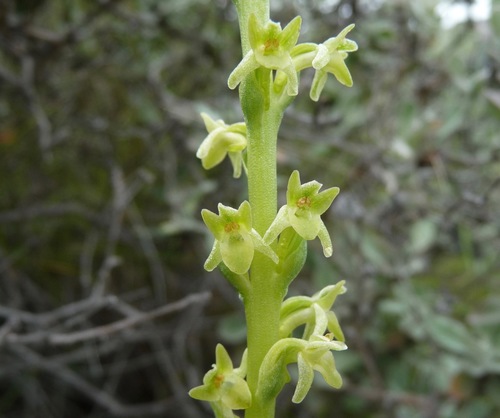
Platanthera cooperi (S.Watson) R.M.Bateman
Platanthera cooperi is a green-flowered orchid native to California and Baja Cal…
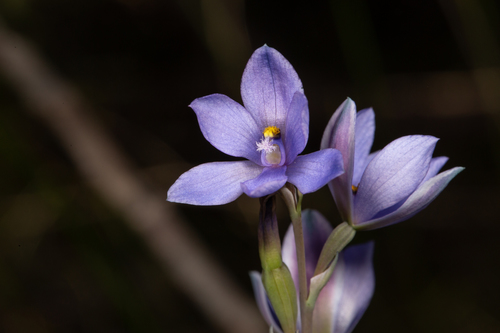
Thelymitra purpurata Rupp
Thelymitra purpurata is a tuberous perennial orchid common in coastal Australian…
Orchidaceae plants belong to the Asparagales order in the Plantae kingdom. speciosum was one of the featured attractions at the 1851 exhibition held at the Crystal Palace in London. For instant identification, use the iNature app — AI-powered and works offline.
Orchidaceae is classified in the order Asparagales, class Liliopsida, phylum Tracheophyta. The family contains 1,416 accepted species worldwide.
Yes, some Orchidaceae species are toxic or poisonous. Always exercise caution with unknown specimens. View poisonous Orchidaceae species or browse the full poisonous species guide.
Sources: GBIF, iNaturalist, Wikipedia · Disclaimer
Download iNature for free. 10 identifications on us. No account needed. No credit card required.
Download Free on App Store
