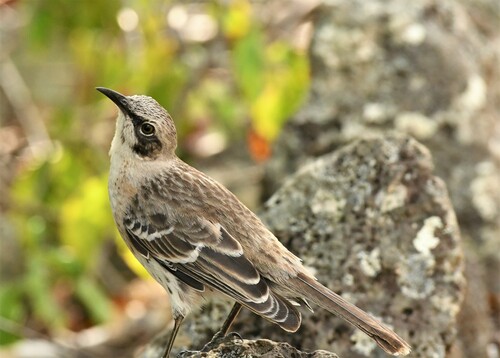
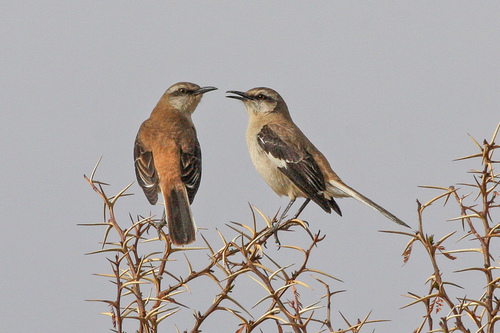
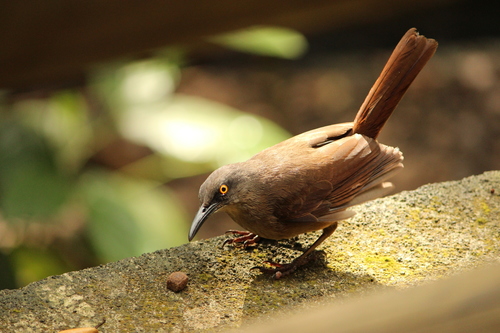
How to Identify Mimidae

Mimidae is a animal family in the Animalia kingdom, order Passeriformes, class Aves. The family contains 29 accepted species worldwide.

Key Identification Features

For instant identification in the field, use the iNature app — AI-powered, works offline.
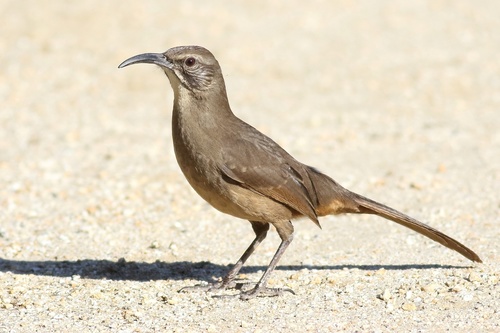
Representative Mimidae Species

How to identify Toxostoma redivivum (Gambel, 1845)

Toxostoma redivivum (Gambel, 1845)

Toxostoma redivivum (Gambel, 1845)

California thrasher (Toxostoma redivivum) is the largest thrasher, a year-round …

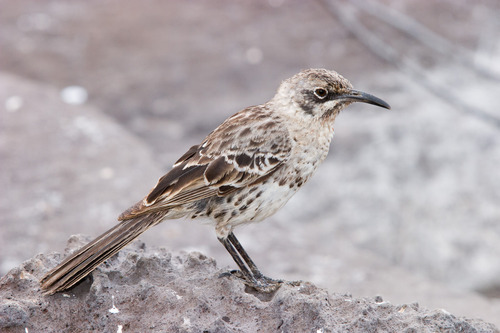
How to identify Mimus macdonaldi (Ridgway, 1890)

Mimus macdonaldi (Ridgway, 1890)

Mimus macdonaldi (Ridgway, 1890)

Mimus macdonaldi is a Galápagos mockingbird endemic to Española Island, with the…

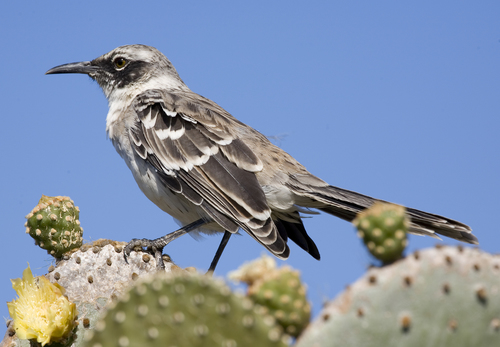
How to identify Mimus parvulus (Gould, 1837)

Mimus parvulus (Gould, 1837)

Mimus parvulus (Gould, 1837)

Mimus parvulus, the Galápagos mockingbird, is a widespread omnivorous mockingbir…

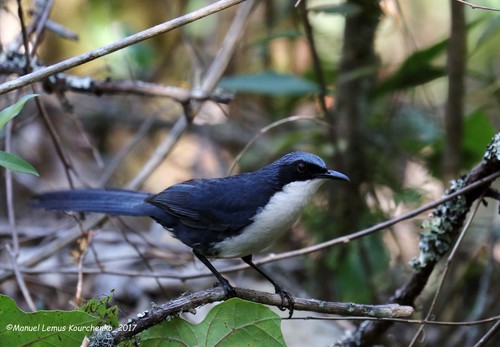
How to identify Melanotis hypoleucus Hartlaub, 1852

Melanotis hypoleucus Hartlaub, 1852

Melanotis hypoleucus Hartlaub, 1852

Melanotis hypoleucus, the blue-and-white mockingbird, is a resident bird of Cent…

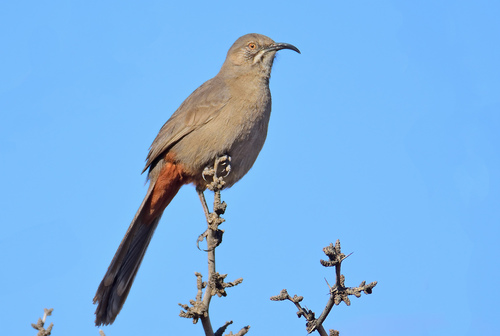
How to identify Toxostoma crissale Henry, 1858

Toxostoma crissale Henry, 1858

Toxostoma crissale Henry, 1858

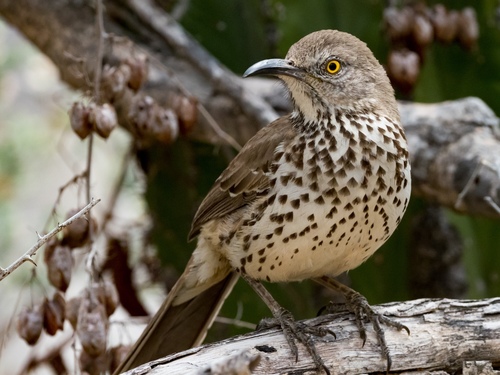
Toxostoma crissale, the crissal thrasher, is a 32 cm desert bird named for its c…

How to identify Toxostoma cinereum (Xantus de Vesey, 1860)

Toxostoma cinereum (Xantus de Vesey, 1860)

Toxostoma cinereum (Xantus de Vesey, 1860)

Toxostoma cinereum, the gray thrasher, is a medium-sized spotted bird native mos…

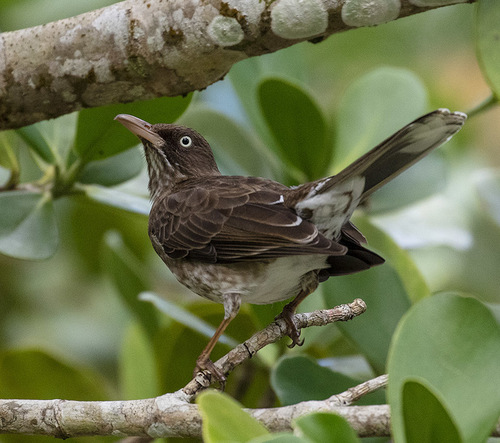
How to identify Margarops fuscatus (Vieillot, 1808)

Margarops fuscatus (Vieillot, 1808)

Margarops fuscatus (Vieillot, 1808)

Pearly-eyed thrasher is the largest Mimidae species found across the West Indies…

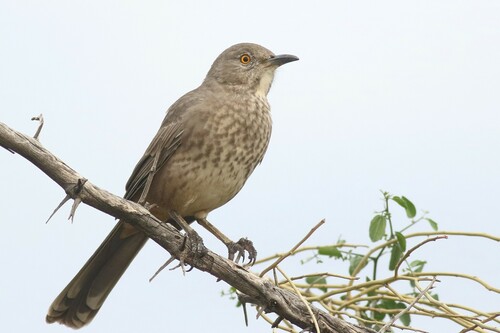
How to identify Toxostoma bendirei (Coues, 1873)

Toxostoma bendirei (Coues, 1873)

Toxostoma bendirei (Coues, 1873)

Bendire's thrasher is a bird species that lives in southwestern US drylands, wit…

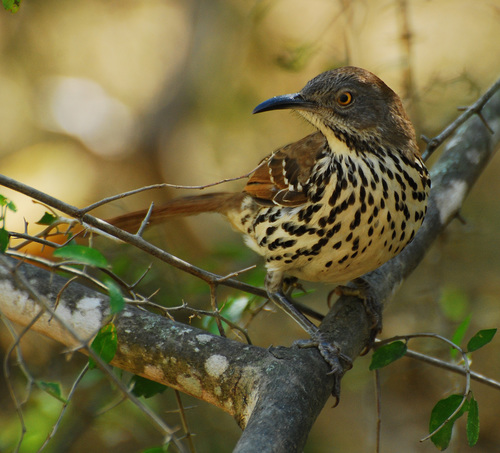
How to identify Toxostoma longirostre (Lafresnaye, 1838)

Toxostoma longirostre (Lafresnaye, 1838)

Toxostoma longirostre (Lafresnaye, 1838)

Toxostoma longirostre is a large thrasher resident from southern Texas to centra…

How to identify Mimus melanotis (Gould, 1837)

Mimus melanotis (Gould, 1837)

Mimus melanotis (Gould, 1837)

Mimus melanotis, the San Cristóbal mockingbird, is an endemic Galápagos bird fou…

How to identify Mimus dorsalis (Orbigny & Lafresnaye, 1837)

Mimus dorsalis (Orbigny & Lafresnaye, 1837)

Mimus dorsalis (Orbigny & Lafresnaye, 1837)

Mimus dorsalis, the brown-backed mockingbird, is a bird ranging from Bolivia to …

How to identify Cinclocerthia ruficauda (Gould, 1836)

Cinclocerthia ruficauda (Gould, 1836)

Cinclocerthia ruficauda (Gould, 1836)

Cinclocerthia ruficauda, the brown trembler, is a brown bird with four subspecie…

Browse all 29 Mimidae species →

Frequently Asked Questions

How do you identify Mimidae?

Mimidae animals belong to the Passeriformes order in the Animalia kingdom. It has a distinctive long, decurved beak and a long tail. For instant identification, use the iNature app — AI-powered and works offline.

What are the key characteristics of Mimidae?

Mimidae is classified in the order Passeriformes, class Aves, phylum Chordata. Its niche relationships include interactions with other bird species, making it a distinct part of Californian fauna.

Sources: GBIF, iNaturalist, Wikipedia · Disclaimer

Start Exploring Nature Today

Download iNature for free. 10 identifications on us. No account needed. No credit card required.

Download Free on App Store