Key Identification Features
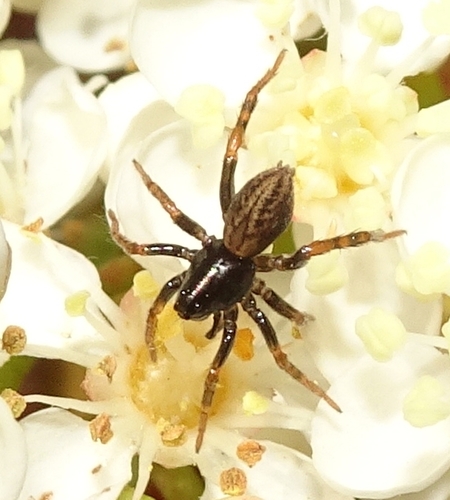
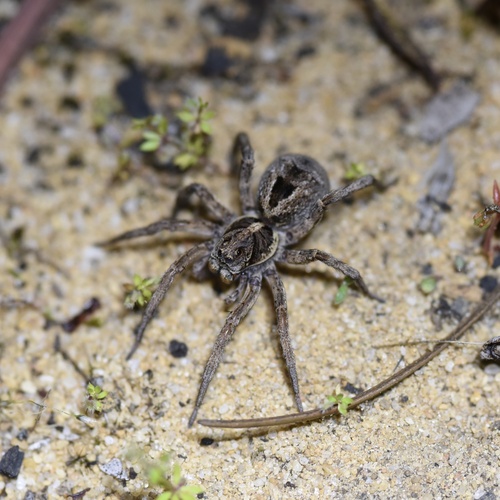
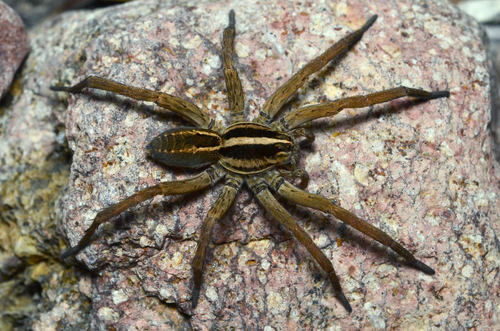
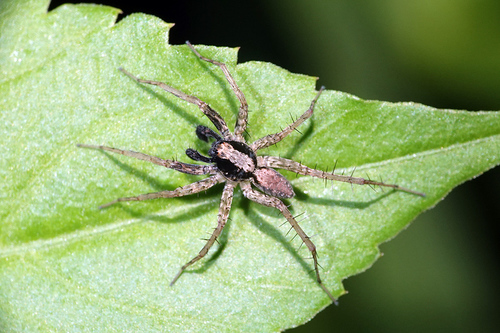
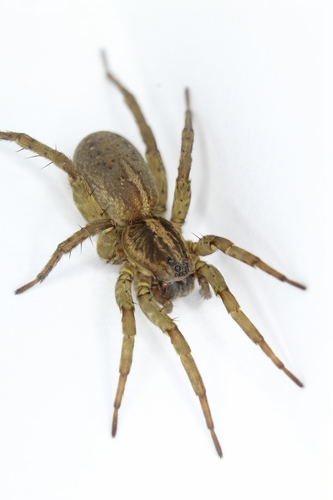
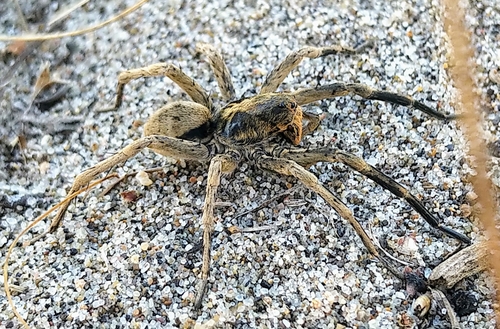
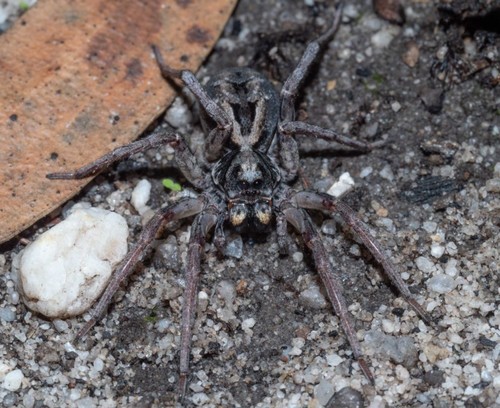
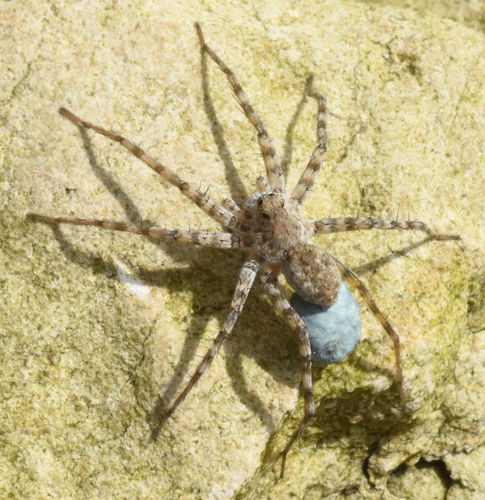
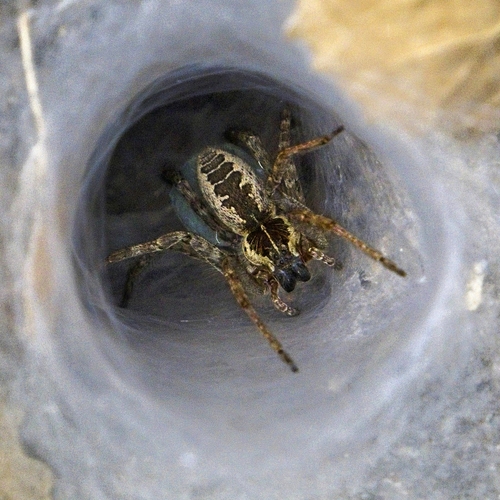
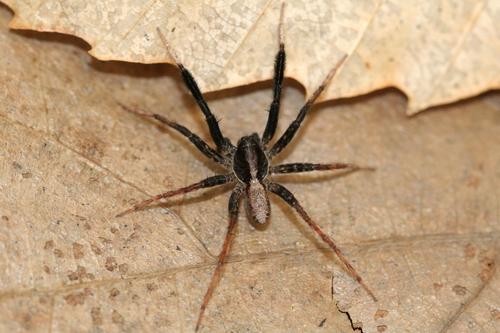
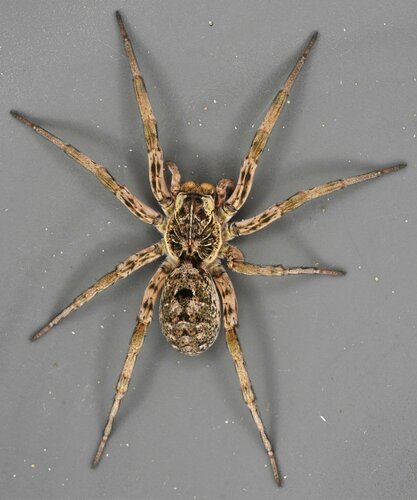
- Their bodies are typically brownish, and they have a distinct black patch that covers the anterior three-quarters of their ventral surface.
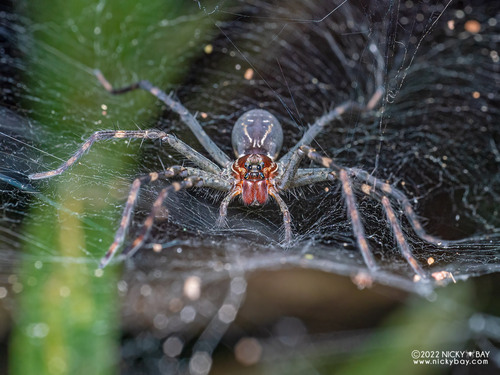
- The male carapace is orange, with a red cephalic region and a distinct orange median Y-shaped band.
- The female epigyne is characterized by a T-shaped septum that is shorter longitudinally and wider transversally than that of A.
- ocreata, paired tufts of bristles act as a secondary sexual characteristic, and this is the only physical feature that separates this species from its close sibling species.
For instant identification in the field, use the iNature app — AI-powered, works offline.