Key Identification Features
- It is a small, cylindrical species that has a long tail, and typically has reduced limbs.
For instant identification in the field, use the iNature app — AI-powered, works offline.
Gymnophthalmidae is a animal family in the Animalia kingdom, order , class Squamata. The family contains 18 accepted species worldwide.
For instant identification in the field, use the iNature app — AI-powered, works offline.

Anadia bogotensis (Peters, 1863)
Anadia bogotensis, the Bogota anadia, is a Gymnophthalmidae lizard species endem…
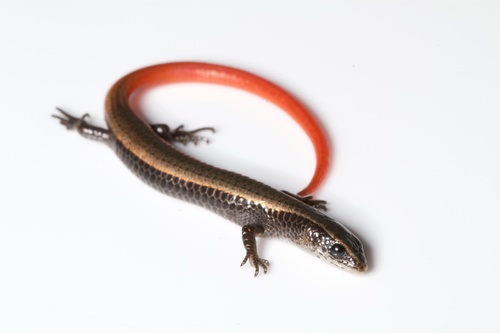
Gymnophthalmus speciosus (Hallowell, 1861)
Gymnophthalmus speciosus, the golden spectacled tegu, is a small microteiid liza…
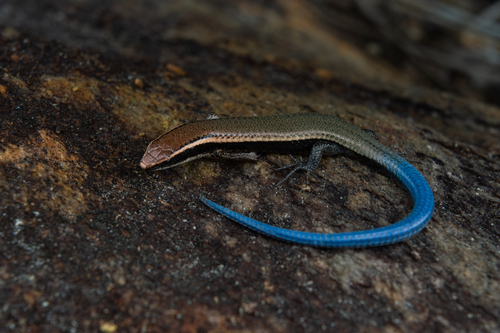
Micrablepharus maximiliani (Reinhardt & Lütken, 1862)
Micrablepharus maximiliani is a lizard with a brass body and bright blue tail fo…
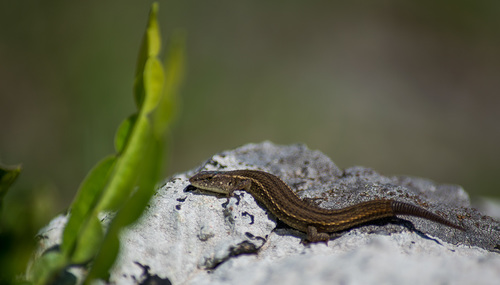
Cercosaura schreibersii Wiegmann, 1834
Cercosaura schreibersii is an oviparous lizard species in the Gymnophthalmidae f…
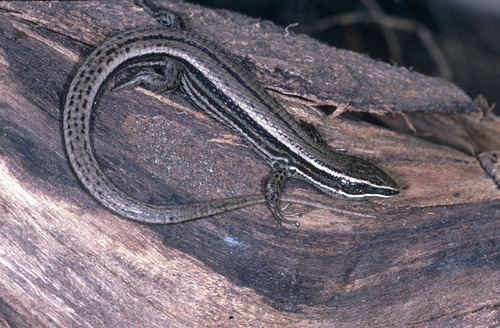
Pholidobolus montium (Peters, 1863)
Mountain pholidobolus (Pholidobolus montium) is a gymnophthalmid lizard found in…
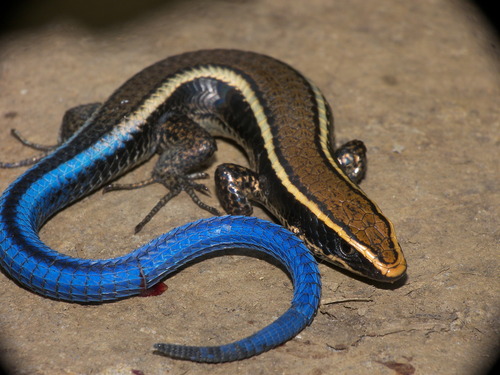
Tretioscincus bifasciatus (Duméril, 1851)
Tretioscincus bifasciatus, the Rio Magdalena tegu, is a Gymnophthalmidae lizard …
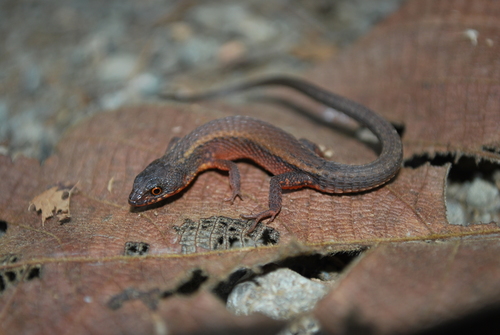
Loxopholis southi (Ruthven & Gaige, 1924)
Loxopholis southi is an oviparous gymnophthalmid lizard native to parts of Centr…
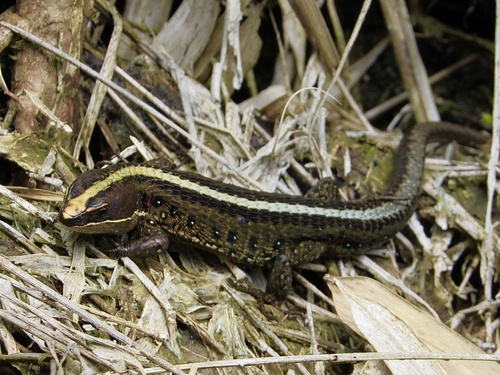
Pholidobolus vertebralis (O'Shaughnessy, 1879)
The brown pholidobolus (Pholidobolus vertebralis) is a Gymnophthalmidae lizard f…
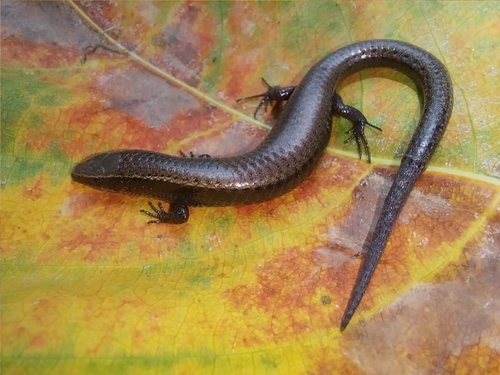
Gymnophthalmus underwoodi Grant, 1958
Underwood's spectacled tegu (Gymnophthalmus underwoodi) is a unisexual parthenog…
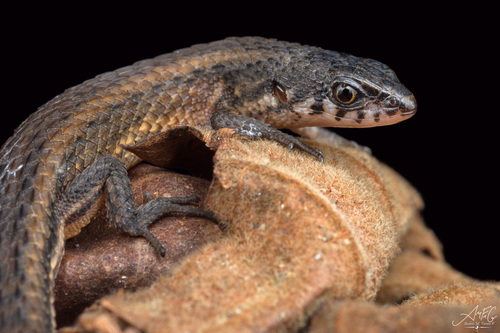
Loxopholis rugiceps Cope, 1869
Loxopholis rugiceps is a Gymnophthalmidae lizard species found in Colombia and P…
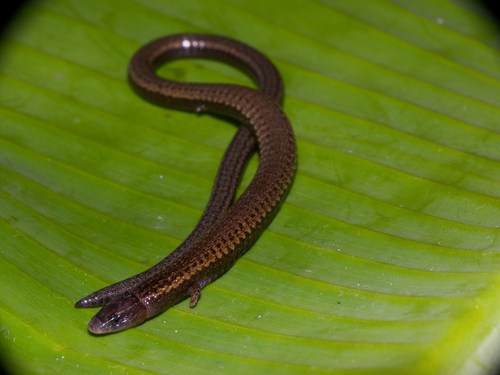
Bachia bicolor (Cope, 1896)
Bachia bicolor, the two-colored bachia, is a Gymnophthalmidae lizard found in Ve…
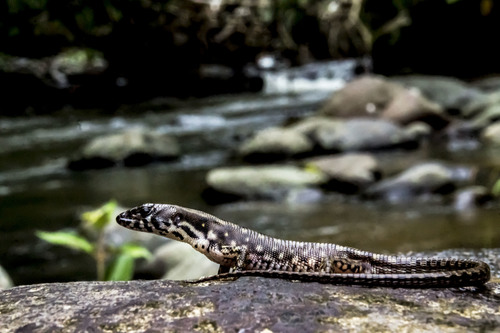
Potamites strangulatus (Cope, 1868)
Potamites strangulatus, the big-scaled neusticurus, is a Gymnophthalmidae lizard…
Gymnophthalmidae animals belong to the order in the Animalia kingdom. It is a small, cylindrical species that has a long tail, and typically has reduced limbs. For instant identification, use the iNature app — AI-powered and works offline.
Gymnophthalmidae is classified in the order , class Squamata, phylum Chordata. The family contains 18 accepted species worldwide.
Sources: GBIF, iNaturalist, Wikipedia · Disclaimer
Download iNature for free. 10 identifications on us. No account needed. No credit card required.
Download Free on App Store
